


What Is Key-Person Risk?
Key-person risk occurs when a company becomes unusually dependent on one individual’s expertise, leadership, relationships or decision-making.
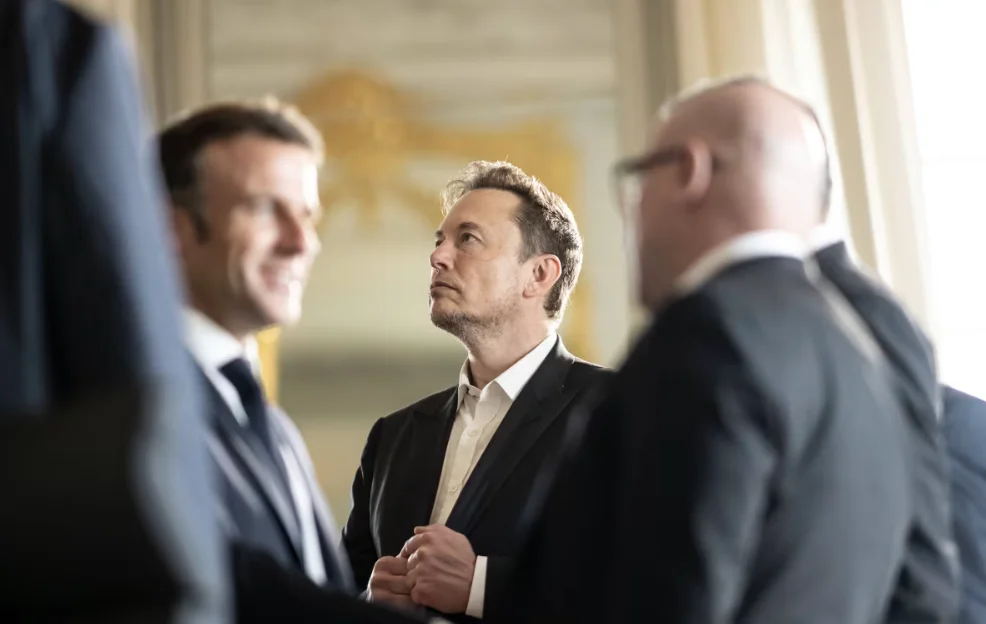
If that person leaves or becomes unavailable, the company may face uncertainty over strategy, management and operations. Musk is a particularly prominent example because of the extent to which his personal leadership is connected to the companies he runs.
Musk’s Role at Tesla
Musk has played a central role in Tesla’s transformation into a major global electric-vehicle company.
His influence extends beyond the company’s vehicle strategy to areas such as artificial intelligence, autonomous driving and robotics. Tesla is increasingly presenting itself as a technology and AI company rather than simply an electric-car manufacturer.
That makes the question of Musk’s long-term involvement particularly important to investors.
SpaceX Also Relies Heavily on His Leadership
Musk has been central to SpaceX since its creation. The company has transformed the commercial space industry through reusable rockets and has expanded its operations through projects including Starlink.
SpaceX is also pursuing ambitious long-term programmes requiring substantial investment, technological development and sustained execution. That makes leadership continuity an important consideration.
Musk Runs Multiple Companies
Musk’s responsibilities extend well beyond Tesla and SpaceX.
He is also closely involved with X, xAI, Neuralink and The Boring Company. The sheer number of companies competing for his attention has raised questions about how much time and focus he can devote to each business.
For Tesla in particular, investors have repeatedly debated whether Musk’s attention is sufficiently focused on the company’s core challenges.
Why Investors Are Concerned
When a company’s valuation, strategy and public identity are strongly tied to one individual, a sudden leadership change can create uncertainty.
Musk’s public comments and personal decisions can also influence investor sentiment around his companies. This makes succession planning and the strength of the broader management structure important issues for shareholders.
Personal Brand vs Corporate Brand
One of Musk’s biggest strengths is also part of the risk.
His personal brand is deeply connected to Tesla and SpaceX. Discussions about the companies frequently centre on Musk himself, giving the businesses enormous visibility.
That connection can be powerful from a marketing perspective, but it can also make it harder to separate the company’s long-term identity from its chief executive.
Succession Planning Matters
Companies typically reduce key-person risk by building strong second-tier leadership and ensuring that important decisions are not dependent on one individual.
A clear succession plan, capable senior executives and effective board oversight can help reassure investors that a company can continue operating smoothly even after a major leadership change.
Leadership Strength Can Also Become a Risk
Musk’s influence should not be viewed purely as a weakness.
His aggressive decision-making, technological vision and willingness to take major risks have helped Tesla and SpaceX move rapidly into highly competitive markets.
The challenge is ensuring that the companies can preserve those advantages without becoming excessively dependent on one person.
Conclusion
It is difficult to separate the success of Tesla and SpaceX from Elon Musk’s leadership. Yet the same dependence that has helped accelerate their growth also creates a significant key-person risk.
For investors, the long-term question is not simply whether Musk remains in charge, but whether both companies can maintain their momentum with strong management structures, clear succession plans and effective corporate governance beyond one individual.