


Hawala identified as a major laundering channel
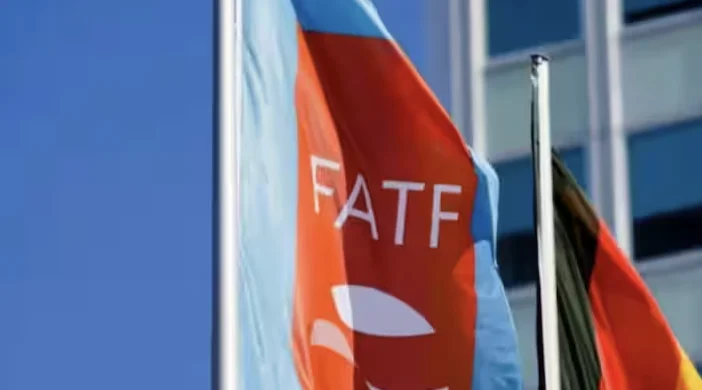
FATF said the criminal misuse of underground banking and hawala is now a widespread global phenomenon.
More than 80% of reporting jurisdictions identified underground banking and similar service providers among the principal channels or techniques used by professional money launderers.
The report also highlighted cases in which more than EUR 500 million was allegedly laundered through underground banking and hawala-based schemes within only a few months.
The rise of “money laundering as a service”
Professional money laundering has increasingly become a commercialised service, according to FATF.
Rather than handling every stage of laundering themselves, criminal groups can outsource financial concealment and movement to specialist networks.
These networks can operate like businesses, offering comparatively low commissions while moving large volumes of value across borders at high speed.
That model can support proceeds from drug trafficking, fraud, cybercrime, corruption, terrorist financing and other forms of organised crime.
What is digital hawala?
Nearly 70% of respondents to the FATF research identified the growing integration of technology into underground banking and hawala systems.
The report points to the use of encrypted messaging services, including WhatsApp, Telegram and Signal, to coordinate transactions.
Customers may initiate transfers through bank accounts, mobile wallets, fintech applications and instant-payment systems. Operators can also use virtual assets, including stablecoins, to settle balances between different parts of a network.
FATF also identified the use of AI-based tools and the emergence of purpose-built hawala applications.
Traditional hawala gets a digital upgrade
Traditional hawala relies heavily on trust-based networks to transfer equivalent value between locations, often without directly moving money through conventional banking channels for every individual transaction.
Digital tools can make those networks faster and more scalable.
Encrypted communication allows operators to coordinate remotely, while digital payment systems and virtual assets can facilitate value transfers and settlements across jurisdictions.
Criminal networks are exploiting the formal financial system
FATF warned that professional money laundering networks are not necessarily operating entirely outside the regulated financial system.
Bank accounts, fintech platforms, payment service providers, virtual IBANs, prepaid cards and virtual asset wallets can all become entry or exit points in laundering cycles.
This creates additional challenges for regulators and financial institutions because criminal networks can exploit gaps between different regulatory frameworks and financial services.
Professional services can also be misused
The FATF report also highlights the potential involvement or misuse of professionals such as lawyers, accountants, auditors, notaries, corporate formation agents and financial consultants.
Real estate agents, casinos and junket operators can also be exposed to or exploited by professional money laundering networks.
These services can potentially help criminals disguise the origin of illicit funds or move them into apparently legitimate economic activities.
The underlying crimes are becoming broader
The use of underground banking and hawala is no longer limited to traditional cash-intensive crimes such as drug trafficking and smuggling.
FATF said these systems are increasingly being used to launder proceeds associated with fraud, cyber-enabled crime, terrorist financing, illegal gaming and gambling, and transnational organised crime.
The evolution demonstrates how informal financial networks are adapting alongside the wider digital transformation of criminal activity.
FATF calls for stronger cooperation
FATF said governments and the private sector need stronger capabilities to detect and disrupt professional money laundering infrastructure.
The report draws on evidence from more than 50 jurisdictions and partners across the FATF Global Network. It highlights the importance of better intelligence sharing, stronger detection systems, public-private cooperation and international coordination.
The goal is not only to identify individual suspicious transactions but also to uncover the wider networks that enable large-scale illicit finance.
Conclusion
FATF's latest findings show that hawala and underground banking are entering a new technological phase. Encrypted communication, fintech platforms, virtual assets and AI are giving professional money laundering networks greater speed, reach and flexibility.
The challenge for authorities is therefore becoming increasingly complex. Tackling digital hawala will require financial institutions, technology companies, regulators and law enforcement agencies to work together to identify the infrastructure behind illicit financial flows rather than focusing only on individual transactions.