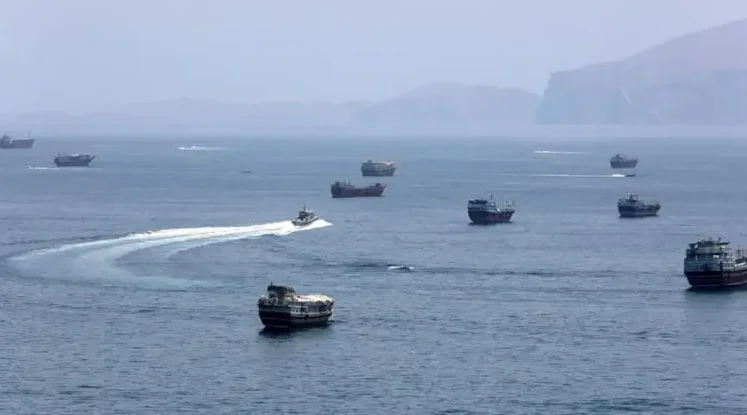
Iran is preparing to announce a new restricted or exclusion zone outside the Strait of Hormuz in the coming days.
Mohsen Rezaei said the proposed zone would begin around what Iran describes as the US naval blockade line and extend toward the Strait of Hormuz and into parts of the Persian Gulf. Details about the exact boundaries and enforcement mechanism have not yet been released.
Ships Could Face Iranian Sanctions
According to Rezaei, any vessel entering the proposed zone with the intention of passing through the Strait of Hormuz could be identified and added to Iran's sanctions list.
The announcement raises concerns for international shipping companies because the area is one of the world's most important maritime energy corridors.
Iran Links Hormuz Access to US Actions
Rezaei said Iran would commit to keeping the Strait of Hormuz open if the United States stops threatening and attacking Iran.
The statement effectively links the future movement of vessels through the strategic waterway to the broader military confrontation between Washington and Tehran.
Tensions Escalate After Oil Tanker Strikes
The announcement came shortly after the United States said it had struck three Iranian oil tankers following Iranian ballistic-missile attacks targeting US Navy warships.
US Central Command said its warships successfully evaded the Iranian attacks and that no US personnel were injured. Washington subsequently reported that two Iranian tankers were disabled and another was destroyed.
Why the Strait of Hormuz Matters
The Strait of Hormuz is a critical route for global energy supplies, connecting the Persian Gulf with the Gulf of Oman and the Arabian Sea.
Disruptions to tanker traffic through the waterway can quickly affect international oil markets, shipping costs and energy prices. Recent tensions have already pushed crude prices higher as traders assess the risk of prolonged disruption.
US Blockade and Iranian Response
The latest Iranian proposal comes against the backdrop of a US naval blockade aimed at restricting Iranian oil exports.
US officials say the naval presence is intended to enforce restrictions and protect maritime traffic, while Tehran views the measures as part of an effort to pressure its economy and restrict its oil trade.
Diplomacy Remains Uncertain
The latest developments also highlight the difficulties facing diplomatic efforts between Iran and the United States.
Iranian officials have said they now want stronger guarantees in any future diplomatic process, while Washington continues to combine economic pressure with military measures.