


A Major Chapter in Sri Lankan Music Comes to an End
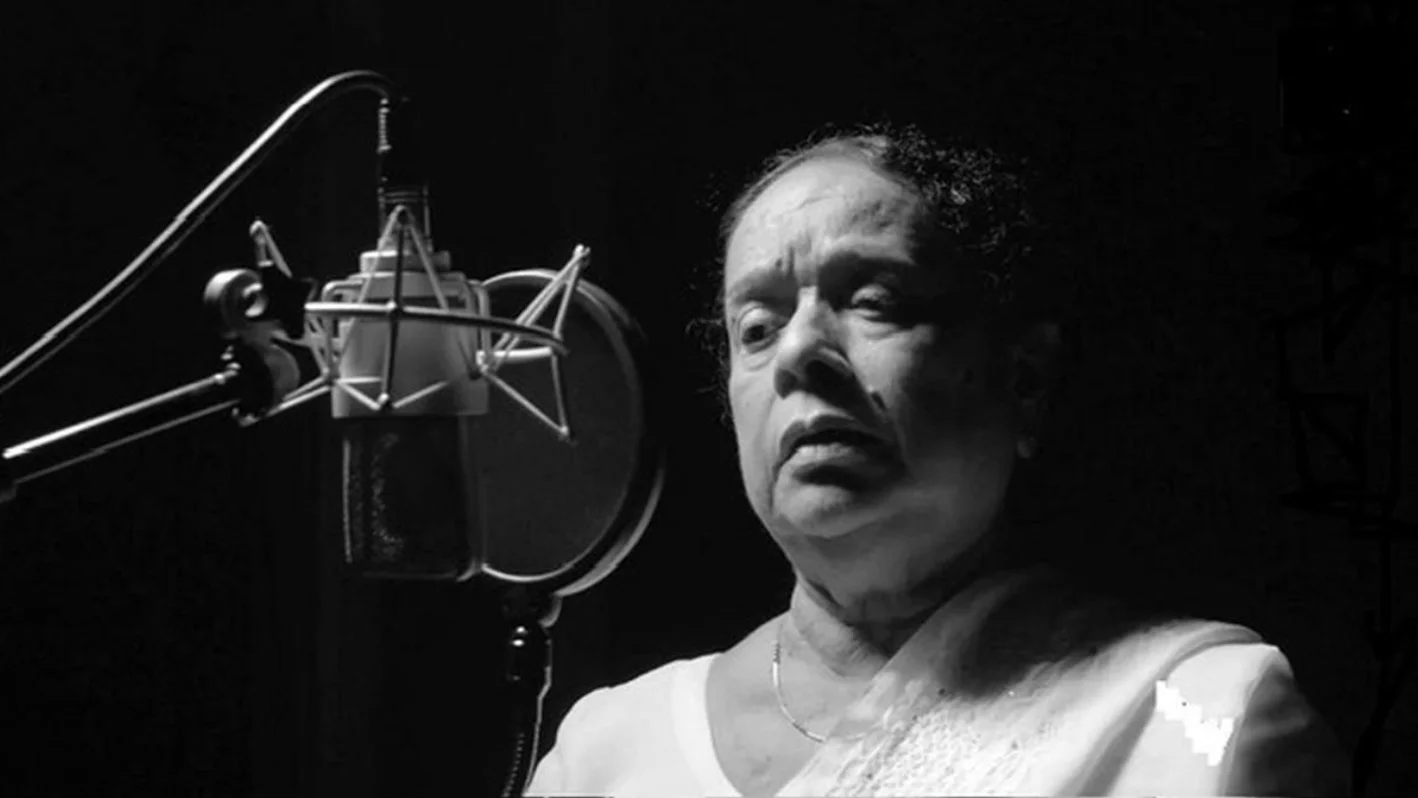
Sri Lanka is mourning the death of one of its most influential musical figures, veteran vocalist Dr. Nanda Malini, who died at the age of 82.
She passed away at her residence in Nawala on August 20, with her death confirmed by Sri Lanka Singers Association president Keerthi Pasquel.
Her death marks the end of a remarkable musical career that lasted for more than six decades and influenced generations of Sri Lankan listeners.
Early Recognition
Nanda Malini began attracting public attention at a young age through radio programmes.
She gained early national recognition through Radio Ceylon's children's programme Lama Mandapaya, where she performed the song ‘Budu Sadu’.
Her early success established the foundation for a career that would eventually make her one of the most recognised voices in Sri Lankan music.
A Presence in Cinema
Malini also made a significant contribution to Sri Lankan cinema.
She sang for Ranmuthu Duwa, released in 1962 and recognised as Sri Lanka's first colour film. Her performance of ‘Galana Gangaki Jeevithe’, under the musical direction of Pandit W. D. Amaradeva, helped establish her presence in the country's film music tradition.
Classical Training in India
Seeking formal training, Malini studied at the Bhatkhande Music Institute in Lucknow, India, where she obtained her Visharada qualification.
Her training strengthened her command of classical music and contributed to the distinctive vocal style that became one of her defining characteristics.
More Than an Entertainer
Nanda Malini's contribution went beyond conventional popular music.
Her songs often addressed social realities, human relationships, inequality and the experiences of ordinary people. Through her music, she became associated with a form of artistic expression that connected entertainment with social awareness.
The Significance of ‘Pawana’
Among the works associated with her socially conscious musical legacy is ‘Pawana’, which became particularly significant for its engagement with political and social themes.
Her music at times challenged injustice and gave expression to concerns about society and public life, strengthening her reputation as an artist with a distinctive social voice.
A Decorated Career
Malini received numerous awards and honours during her long career.
Reports say she received 11 Sarasaviya Awards and eight Presidential Awards for Best Female Singer. She was also honoured with an honorary doctorate for her contribution to the arts.
Sri Lanka Mourns
Tributes have poured in from across Sri Lanka following her death.
Musicians, artists, public figures and ordinary listeners have remembered the impact of her voice and the role her music played in the lives of several generations.
Her influence extended beyond music, with many remembering her as an important figure in Sri Lanka's cultural history.
Three Days of National Mourning
The Sri Lankan Government declared August 21, 22 and 23 as days of national mourning in honour of the singer.
State institutions were also instructed to fly the national flag at half-mast during the mourning period.
Public Pays Final Respects
Malini's remains have been made available for public homage at the Nanda Malini Music Ashram in Nugegoda.
Members of the public have been given an opportunity to pay their final respects, with her funeral rites scheduled for August 22 at the General Cemetery in Borella.
A Legacy That Will Endure
Nanda Malini's importance lies not only in the strength of her voice but also in the way she used music to reflect the experiences and concerns of Sri Lankan society.
Her work connected Sinhala musical traditions, classical influences, cinema and socially conscious songwriting, creating a legacy that is likely to remain influential for generations.
Conclusion
Nanda Malini's death marks the loss of one of Sri Lanka's defining musical voices.
Across nearly seven decades, she used her extraordinary voice to explore music, human relationships and social realities while becoming a major figure in the country's cultural history.
Her recordings, performances and contribution to Sinhala music will remain an enduring part of Sri Lanka's artistic heritage.