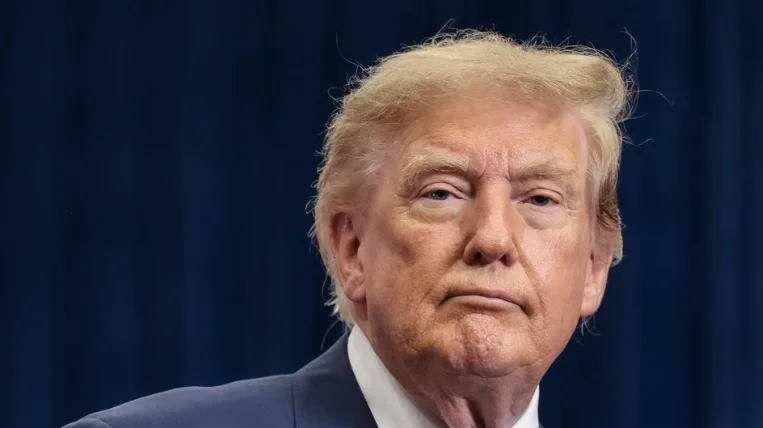
US President Donald Trump has threatened a strong response against Iran after Tehran launched retaliatory strikes against American targets in the Middle East.
Speaking to Fox News, Trump said the United States would respond to the Iranian attacks and warned that Washington would “hit Iran hard”. The remarks came after Iran retaliated following an American strike on Larak Island in the Strait of Hormuz.
Trump Calls Iran a Failed Nation
In a post on Truth Social, Trump described Iran as a “failed nation” and claimed that the country was effectively “dead”.
He alleged that Iran no longer had a functioning navy or air force and claimed that the country lacked a stable currency and was unable to pay its soldiers and police. Trump also claimed that Iran’s inflation had reached 300 per cent.
Warning of Strong Military Response
Trump’s comments followed Iranian attacks on US forces after the American strike on Larak Island.
The US President made it clear that Washington would not ignore attacks on its forces and that Iran should expect a strong response.
The escalation has raised concerns that the confrontation could expand further across the Middle East, particularly as Iranian strikes and US military operations continue to affect strategic locations in the Gulf region.
Two Killed in Larak Island Attack
Iranian officials said two people were killed and several others injured in the US attack on Larak Island on Sunday night.
The island is located in the strategically important Strait of Hormuz. Iran subsequently launched missile attacks targeting American bases in Jordan, according to the Associated Press report cited by Hindustan Times.
UAE Intercepts Iranian Drone
The confrontation has also affected other Gulf countries.
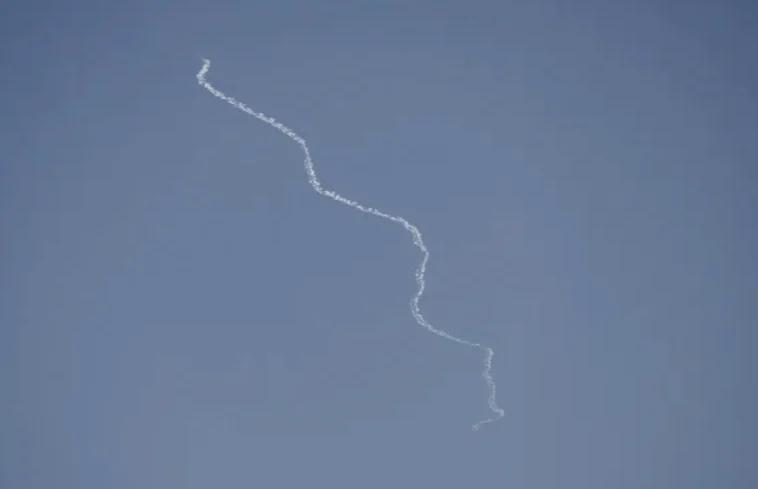
The United Arab Emirates said it had intercepted an Iranian drone over its waters on Monday. The development came amid an exchange of fire between Iran and the United States after a period of relative calm.
The widening military activity has increased concerns about the security of the Gulf region and critical transport routes.
Ceasefire Framework Collapsed
Washington and Tehran had agreed to a ceasefire framework in June that included a 60-day period for negotiations.
However, the arrangement quickly unravelled. Major disagreements remained over the Strait of Hormuz and Iran’s nuclear programme.
The collapse of the ceasefire has since been followed by renewed military action between the two sides.
Strait of Hormuz at Centre of Crisis
The Strait of Hormuz has emerged as one of the most important flashpoints in the conflict.
Before the war, roughly one-fifth of the world’s traded oil passed through the strategic waterway. Any prolonged disruption or military confrontation around the strait could therefore have significant consequences for global energy markets.
The continuing tensions have already raised concerns about the wider economic impact of the conflict.
Trump Attacks Iranian Leadership
Trump also criticised Iran’s leadership, alleging that it was in disarray and incapable of properly representing the country.
He further accused the Iranian authorities of using force against protesters and made unverified claims about the number of people killed during the unrest.
US Denies Iranian Oil Tanker Claim
The United States also rejected an Iranian claim that an oil tanker had struck mines near the Strait of Hormuz.
The conflicting claims come as both countries continue to trade accusations amid heightened military activity in and around the strategic waterway.
Conclusion
The latest escalation between the United States and Iran has raised the prospect of further military confrontation in the Middle East. Donald Trump has threatened a strong response to attacks on US forces and described Iran as a failed nation.
The escalation followed an American strike on Larak Island and subsequent Iranian missile attacks on US targets. With the Strait of Hormuz at the centre of the crisis and carrying a major share of global oil shipments, any further deterioration could have consequences well beyond the region.