


Tipping has never been completely unfamiliar in Britain. Leaving something extra after a good restaurant meal has long been accepted, but the custom is now appearing in places where Britons traditionally would not expect to tip.
Pubs, coffee shops and even self-service payment points are increasingly presenting customers with requests for gratuities, creating a new layer of uncertainty around everyday spending.
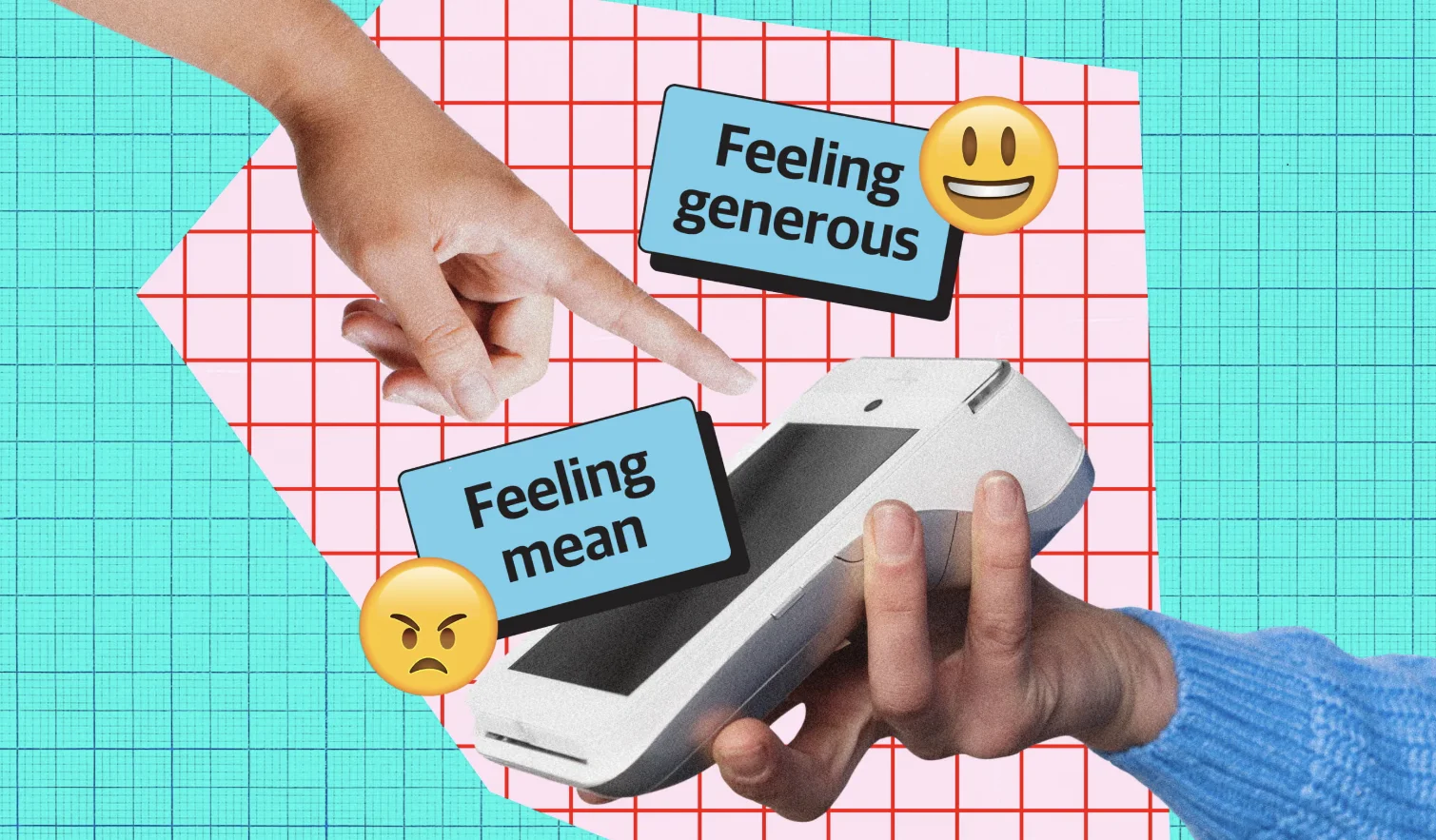
For many customers, the change becomes obvious the moment they are handed a card machine. Instead of simply paying for a drink or coffee, they may first be asked to choose whether to leave a tip.
In some cases, the request comes before the service has even been completed. A customer buying a coffee at a counter can be presented with a tipping screen despite having received no table service.
That has changed the psychology of tipping. Rather than being a voluntary reward for particularly good service, the request can feel like an expectation built into the payment process.
Digital payment technology is one of the biggest forces behind the shift. As Britain moves further away from cash, card terminals and mobile payment systems have made it easier for businesses to ask customers for tips.
The screens often provide several preset percentages. When one of the options is particularly high, customers can feel uncomfortable choosing the lowest amount or selecting zero.
Instead of calculating an appropriate tip themselves, they are effectively choosing from a set of numbers designed into the payment system.
Professor John Vines of the University of Edinburgh argues that these systems are marketed as a way of making tipping more convenient, but they can also encourage people to spend more. He says technology platforms imported from the United States can bring American social norms with them.
The issue is not entirely about technology.
Britain's hospitality industry has been dealing with rising wage and employment costs. Since October 2024, service charges and tips in Great Britain have been required to go to staff, strengthening their role as a source of income for hospitality workers.
That change has also created a debate over whether customers are increasingly being asked to fill the gap between workers' wages and the costs faced by businesses.
An optional service charge may appear harmless on a menu or payment screen. But when a customer is standing directly in front of the person serving them, pressing “no” can feel socially uncomfortable.
That pressure is particularly noticeable in pubs.
Some pub workers say they find it awkward to ask customers for tips when they are simply pouring a drink. In traditional British tipping etiquette, a customer might leave something extra when receiving table service, but buying a pint at the bar has generally not carried the same expectation.
The same distinction applies to coffee shops.
If someone receives table service or spends a long time working in a café, they may choose to leave a tip. But there has traditionally been little expectation of tipping simply because someone prepares a coffee and hands it over at the counter.
The influence of American culture has nevertheless been growing.
The US has had a much stronger tipping tradition for decades, particularly in restaurants. Tipping around 20% has become increasingly common in American restaurants, while customers are now asked for gratuities across a wider range of services.
The Covid-19 pandemic accelerated some of that change. Consumers began tipping workers they would not traditionally have tipped, partly because of concerns about workers' financial difficulties and exposure to health risks. Businesses subsequently saw that customers were willing to pay more.
But the US is experiencing its own backlash.
Researchers have found growing “tip fatigue” as customers face requests for gratuities in more situations and are presented with increasingly high suggested percentages.
The result is frustration among consumers who feel that tipping has moved beyond rewarding exceptional service and has become an additional cost attached to everyday transactions.
The amount people leave is also influenced by social factors.
Research into tipping behaviour suggests that the interaction between customer and server can affect the final amount. A server's friendliness, appearance, gender and the perceived relationship with the customer can all play a role.
Such influences can introduce bias. Some research has found differences in tipping based on race and appearance, although other studies have not produced identical results.
For Britons trying to navigate the changing environment, etiquette experts say the simplest approach is to distinguish between situations where tipping has traditionally been expected and those where it has not.
In restaurants, customers can continue to tip for good service. But if a service charge has already been included in the bill, there is generally no need to tip again.
Etiquette advice suggests that restaurant service charges around 12% can generally be treated as covering the gratuity.
At a pub where a customer simply buys a drink at the bar, or at a coffee shop without table service, tipping is not generally necessary.
If a payment terminal asks for a tip in such a situation, customers can simply select “no tip”. There is no need to apologise or make the decision into an awkward conversation.
The wider debate is about more than a few extra pounds on a coffee.
Britain has traditionally had a more restrained attitude towards money, class and tipping. The spread of digital payment systems is gradually changing those social expectations.
Because much of the technology behind modern payment terminals comes from the US, American assumptions about tipping can become embedded in the software itself.
That means a cultural change can happen without a government regulation or formal decision. A new payment screen can subtly change what customers believe is normal.
The result is a growing debate over whether tipping should remain an optional expression of appreciation or become an expected part of everyday spending.
For British consumers, the challenge is increasingly clear: knowing when to tip, how much to give and when it is perfectly acceptable to press “no”.