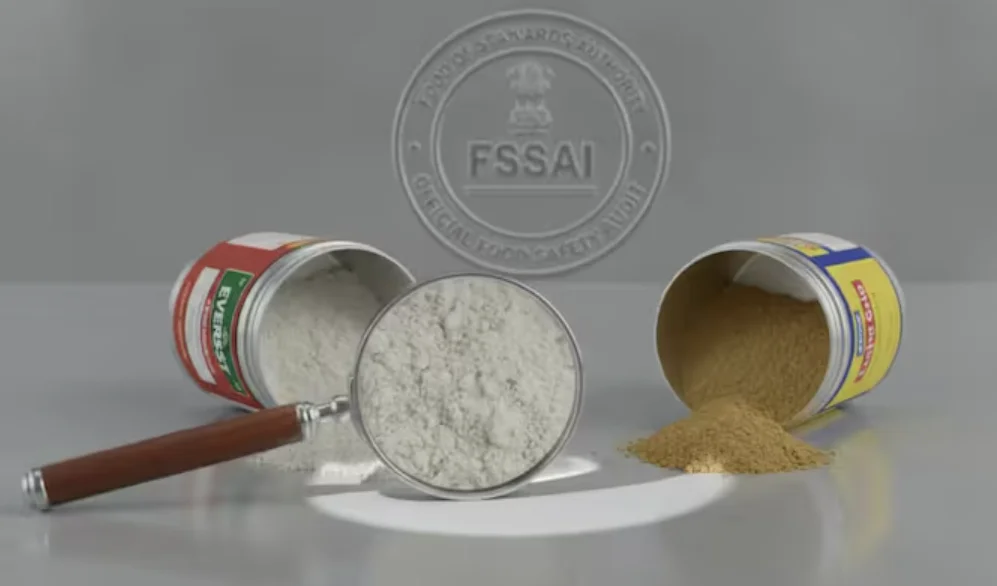
The Food Safety and Standards Authority of India (FSSAI) has taken regulatory action against Everest Food Products and Laljee Godhoo after hing powder associated with the companies was found to have failed prescribed quality standards.
The action highlights the food regulator's continuing focus on the quality and safety of packaged food products sold in the Indian market.
Hing, also known as asafoetida, is widely used in Indian cooking. Although it is generally consumed in small quantities, the quality and purity of the product remain important because it is directly incorporated into food.
Action Over Substandard Hing
According to the report, FSSAI found the affected hing powder to be below the required standards during its regulatory process.
Food products are required to comply with prescribed requirements relating to quality, safety, composition and labelling.
When a product fails those requirements, regulators can take measures to restrict its sale or distribution.
The latest action involving hing powder is therefore part of the broader regulatory framework designed to protect consumers from food products that do not meet established standards.
Impact on Everest Products
Everest is one of India's best-known spice brands, with its products widely available across the country.
Regulatory action involving a specific product from a major food brand underlines the importance of maintaining quality controls throughout the manufacturing process.
However, action against a particular product should not automatically be interpreted as a finding against every product manufactured by the company.
The regulatory concern relates to the specific product or batch identified by the authorities.
Laljee Godhoo Also Faces Action
The FSSAI action also involves Laljee Godhoo, whose hing powder was similarly found to have failed the prescribed requirements, according to the report.
The development reinforces the principle that food safety standards apply to manufacturers irrespective of their size or market reputation.
Companies must ensure that every batch released into the market meets the required standards.
Why Hing Quality Matters
Hing is used in a wide variety of Indian foods, including dals, vegetables, snacks and other preparations.
Because only small quantities are typically used, consumers may not always pay close attention to the product's composition or quality.
However, spices and seasonings can be subject to issues involving adulteration, impurities or incorrect composition.
Maintaining proper standards is therefore important both for consumer safety and for ensuring that the product performs as intended.
Role of FSSAI
FSSAI is responsible for establishing and enforcing food safety standards in India.
Its regulatory framework covers various stages of the food supply chain, including raw materials, manufacturing, processing, packaging, storage and labelling.
Food manufacturers are expected to maintain appropriate quality-control systems and ensure that products released into the market comply with the applicable standards.
Regulatory action can follow when products are found to be non-compliant.
What Consumers Should Check
The development also serves as a reminder for consumers to pay attention to information provided on packaged food products.
Consumers can check details such as the FSSAI licence information, manufacturing date, batch number, expiry or best-before date and ingredient list when purchasing packaged spices.
Proper labelling allows consumers to identify the product and its manufacturer and provides information that can be useful if a quality issue is later reported.
Growing Focus on Food Safety
India's packaged-food market has expanded significantly, increasing the importance of effective food safety regulation.
Spices and seasoning products form a large part of the packaged-food sector, while ready-to-eat products, snacks and beverages are also increasingly subject to consumer scrutiny.
Regular testing and enforcement can help identify products that fail to meet prescribed standards before they become more widely distributed.
Responsibility of Food Manufacturers
The action also highlights the responsibility of food companies to maintain quality controls throughout the production cycle.
This includes testing raw materials, monitoring manufacturing processes, ensuring appropriate storage conditions and conducting quality checks on finished products.
For large brands, maintaining consistent quality across millions of packaged units can be a significant operational challenge.
But regulatory compliance remains essential regardless of the scale of production.
Consumer Trust at Stake
Food quality issues can affect more than just a particular product. They can also influence consumer confidence in packaged food brands.
For manufacturers, maintaining transparent quality-control systems and responding quickly to regulatory findings can therefore be important for protecting consumer trust.
For regulators, enforcement actions provide a mechanism to ensure that companies remain accountable for the products they place on the market.
What Happens Next
Following the FSSAI action, the affected companies are likely to review their quality-control and compliance processes.
The episode could also encourage consumers to pay closer attention to food labels and regulatory information rather than relying solely on brand recognition when purchasing packaged products.
The action against Everest Food Products and Laljee Godhoo over substandard hing powder underlines the importance of strict food-quality controls and effective regulatory oversight in India's growing packaged-food market.