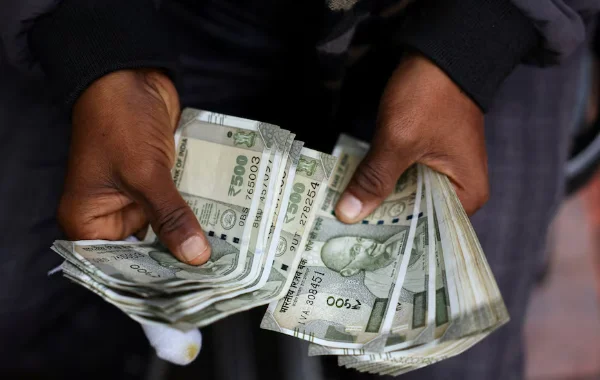
The Indian rupee ended August on a stronger note, rising to its highest level in nearly four weeks against the US dollar as equity-related inflows and continued intervention by the Reserve Bank of India helped support the currency.
The rupee closed at ₹95.1625 per US dollar on Monday, strengthening 0.2% from its previous close of ₹95.3775. This was the currency's strongest level since August 5. For the month, the rupee gained 0.2%, reversing part of its 0.8% decline recorded in July.
MSCI inflows provide support
A major source of support for the rupee came from foreign bank dollar selling linked to MSCI index-related equity inflows.
Traders expect approximately $1 billion in net inflows from the MSCI rebalancing that takes effect from September 1. These expected flows have increased demand for the Indian currency and helped offset some pressure from global factors.
RBI intervention cushions the currency
The RBI's intervention in the foreign exchange market also played a key role in supporting the rupee.
The currency came under pressure during the session but recovered around midday after the central bank stepped in. Traders said the RBI's sustained presence has helped protect the rupee from some adverse external developments.
The central bank has recently been active in the currency market as it seeks to limit excessive volatility while managing the impact of global oil prices and dollar movements.
Oil prices and Fed rate expectations remain risks
Despite the monthly gain, the rupee continues to face external headwinds.
The currency opened weaker on Monday after oil prices climbed amid renewed geopolitical tensions, while hawkish comments from US Federal Reserve Chair Kevin Warsh increased market expectations of a possible September interest-rate hike in the United States. A stronger dollar and higher crude prices can put pressure on the rupee because India is heavily dependent on imported oil.
Analysts, however, said any potential US rate hike could be influenced by weaker jobs and manufacturing data, limiting the longer-term impact on the currency.
Rupee outlook
The combination of foreign equity inflows and RBI support has provided some stability to the rupee despite a challenging global environment.
The currency's performance in September will depend on the strength of capital inflows, movements in crude oil prices, the US dollar's trajectory and expectations surrounding Federal Reserve policy.
For now, the rupee's August gain marks a modest recovery after its July decline, while continued RBI intervention and foreign investment flows remain important factors for the currency.