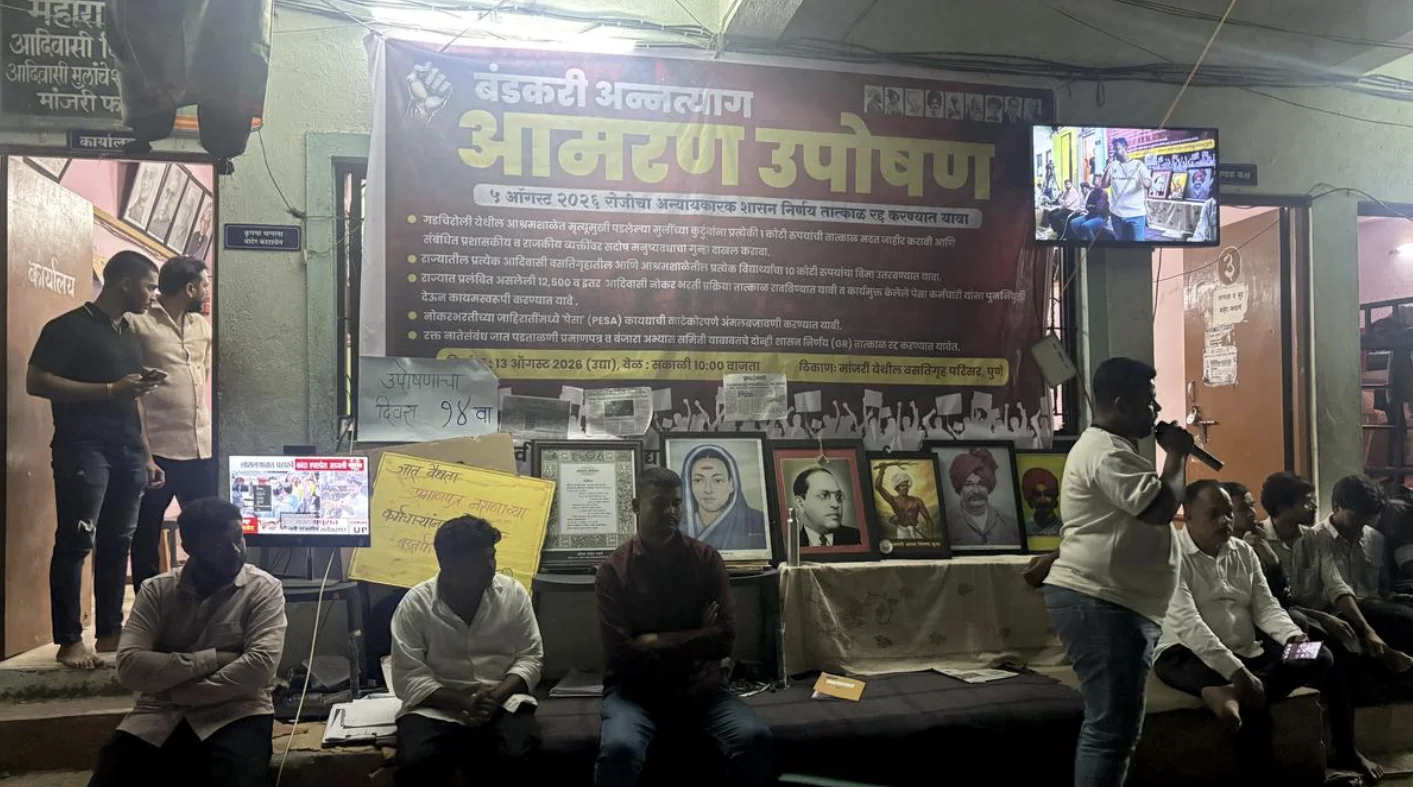
The Maharashtra government has stepped in to address the concerns of tribal students who have been staging a hunger strike, with officials saying that several of their demands have been accepted.
The students had been pressing the government to address issues related to education, scholarships, accommodation and other welfare measures. Following discussions with their representatives, the government assured them that the concerns raised would be taken up with the relevant departments.
Officials appealed to the students to withdraw their hunger strike following the government's response and assurances.
Several Demands Accepted
The government said it had agreed to several of the demands put forward by the protesting students.
The concerns relate broadly to the delivery of educational and welfare support available to tribal students. Officials said the relevant departments would coordinate to resolve the issues and take necessary administrative steps.
The government has also indicated that measures would be taken to improve the implementation of welfare schemes so that eligible students receive the assistance intended for them.
Appeal to End Hunger Strike
With the government agreeing to address the students' concerns, officials appealed to them to end their hunger strike.
The government expressed concern about the possible impact of a prolonged hunger strike on the health of the students. Officials said that since the administration had responded positively to their demands, the remaining issues could be addressed through continued discussions.
The appeal is aimed at bringing the protest to an end while allowing the government and student representatives to continue working on the implementation of the agreed measures.
Issues Faced by Tribal Students
Tribal students in Maharashtra have repeatedly raised concerns about difficulties in accessing educational and welfare support.
Students from economically disadvantaged families often depend on scholarships and government assistance to continue higher education. Accommodation is also an important issue for students who travel from remote tribal areas to cities for college and university education.
Delays in scholarships, shortages or difficulties related to hostels and problems in accessing government schemes can create additional financial pressure on students and their families.
Importance of Timely Scholarships and Support
For many tribal students, government assistance is not simply an additional benefit but an important part of their ability to continue their education.
When scholarships or other financial support are delayed, students can face difficulties in paying tuition fees, accommodation expenses, transportation costs and other educational expenses.
Ensuring that such assistance reaches students on time is therefore important for preventing interruptions to their studies.
Implementation Will Be Crucial
While accepting the demands is an important step, student representatives are expected to closely monitor the implementation of the government's assurances.
The students have sought concrete action rather than only administrative commitments. Ensuring that decisions taken during the discussions translate into benefits on the ground will therefore be critical.
Regular coordination between the Tribal Development Department, educational institutions and other relevant agencies could help prevent similar problems from recurring.
Need for Better Grievance Mechanisms
The episode has also highlighted the need for a more effective mechanism through which students can raise problems related to scholarships, hostels and other government schemes.
If complaints are addressed at an early stage, students may not need to resort to prolonged protests or hunger strikes.
A dedicated grievance system could also help authorities identify recurring administrative problems and address them across institutions rather than dealing with individual cases separately.
Education and Social Mobility
Improving access to higher education for tribal communities is an important part of expanding social and economic opportunities.
Scholarships, hostels and other support programmes can help students from disadvantaged backgrounds remain in education and improve their prospects for employment.
For students from remote areas, these services can make the difference between continuing higher education and dropping out because of financial or logistical difficulties.
Government Faces Next Test
The Maharashtra government's decision to accept several demands has created an opportunity to resolve the dispute through dialogue.
The next challenge will be ensuring that the commitments are implemented within a reasonable timeframe and that students can see tangible improvements.
The government will also need to maintain communication with student representatives to ensure that any unresolved issues are addressed without further escalation.
Way Forward
The decision to accept the tribal students' demands marks a step towards ending the ongoing confrontation.
However, the effectiveness of the settlement will depend on how quickly the promised measures are implemented.
The government's appeal to call off the hunger strike is likely to gain greater significance if the assurances made to the students are followed by concrete action on scholarships, accommodation and other educational welfare measures.
For the protesting students, the immediate priority will now be to ensure that the commitments made by the government translate into actual improvements in their educational conditions.