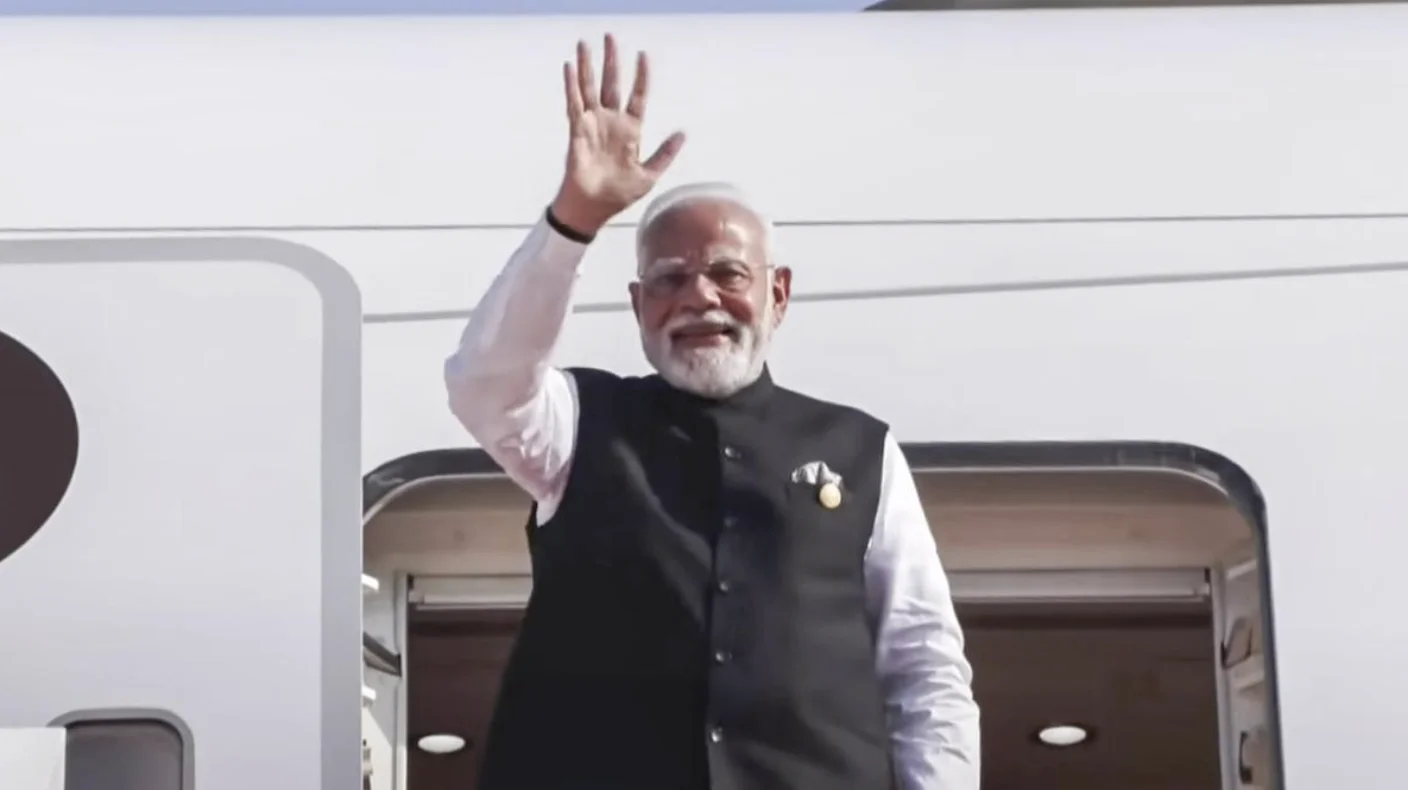
Prime Minister Narendra Modi’s upcoming visit for the Shanghai Cooperation Organisation (SCO) summit is attracting considerable attention in diplomatic circles, with several important issues expected to feature prominently.
The visit comes at a time when global geopolitical equations are undergoing significant changes. Competition among major powers, growing tensions in different regions and the increasing influence of emerging economies have made multilateral forums such as the SCO and BRICS increasingly important for India.
For New Delhi, the SCO engagement is therefore expected to go beyond participation in a regional summit. It offers an opportunity to discuss India's broader diplomatic priorities, including the future of BRICS and reform of the United Nations Security Council.
India’s Role in the SCO
India is an important member of the SCO, a grouping that focuses on regional security, counterterrorism, economic cooperation and connectivity.
New Delhi has used the organisation to promote cooperation on regional stability and terrorism while also pushing for greater economic engagement among member countries.
However, the SCO's relevance is increasingly extending beyond traditional regional security issues.
Economic cooperation, global governance, energy security and the changing international order are becoming important parts of the broader conversation.
BRICS Is a Key Priority
One of the major issues surrounding Modi’s engagement is likely to be the future direction of BRICS.
The grouping has expanded significantly, bringing more emerging economies into its framework and increasing its importance in discussions on global economic governance.
India has generally supported the expansion of BRICS while emphasising that the group should remain focused on cooperation among emerging economies and the interests of the Global South.
Issues such as trade, investment, financial cooperation and greater economic coordination could therefore remain important.
India is also expected to emphasise that BRICS should not simply be viewed as a counterweight to Western institutions but as a platform through which developing countries can have a stronger voice in global affairs.
UNSC Reform Remains Important
Another major diplomatic priority for India is reform of the United Nations Security Council.
India has long argued that the current structure of the Security Council does not adequately reflect today's geopolitical and economic realities.
New Delhi has sought permanent membership in the Council and has repeatedly called for comprehensive reforms to make the institution more representative.
India's position has received support from several countries, but achieving reform requires a broad international consensus.
Multilateral platforms such as the SCO and BRICS provide India with additional opportunities to build diplomatic support for its position on global governance reform.
Bilateral Meetings Could Be Significant
The summit is also expected to provide opportunities for bilateral discussions with leaders of other participating countries.
India has important interests in areas such as trade, investment, energy, defence, technology and connectivity.
As global alliances become more fluid, maintaining strong relationships with multiple partners has become an increasingly important part of India's foreign policy.
Meetings on the sidelines of the summit could therefore be as significant as the formal multilateral discussions.
Russia and China in Focus
The presence of major powers such as Russia and China gives the SCO summit particular significance for India.
India continues to maintain long-standing defence and energy ties with Russia while simultaneously expanding strategic partnerships with the United States, Europe, Japan and other countries.
At the same time, India continues to manage its complex relationship with China, including the unresolved border issue and significant economic ties.
Participation in the SCO provides another setting in which India can engage with both countries while maintaining its broader policy of strategic autonomy.
India’s Global South Agenda
India has also increasingly positioned itself as a voice for the Global South.
Issues such as development finance, technology access, climate change, food security and energy security remain important priorities for developing economies.
BRICS and SCO offer India platforms to raise these concerns and seek greater representation for emerging and developing countries in international institutions.
Navigating a Multipolar World
The global system is becoming increasingly multipolar.
US-China competition, tensions between Russia and Western countries and conflicts in different regions are creating a complicated diplomatic environment.
India has sought to avoid being locked into any single geopolitical bloc.
Its participation in platforms such as the SCO, BRICS, G20 and QUAD reflects an approach based on engaging different groups according to India's strategic interests.
Why the Visit Matters
The significance of Modi's SCO engagement comes from the number of important diplomatic issues converging at the same time.
BRICS is expanding and redefining its role, discussions over global governance reform are continuing and India's relationships with major powers are evolving.
The summit therefore provides an opportunity for New Delhi to reinforce its positions while also building relationships that could support India's economic and strategic interests.
Diplomatic Challenges
The opportunities also come with challenges.
SCO and BRICS members have different political and economic priorities, making consensus difficult on some major international issues.
India must also balance its relationships with Russia and China with its growing partnerships with Western countries and other Indo-Pacific powers.
On UNSC reform, India continues to need wider international support if it is to achieve meaningful progress towards permanent membership.
The Road Ahead
Modi's SCO engagement comes at a significant moment for India's foreign policy.
The summit could provide New Delhi with an opportunity to strengthen its position within BRICS, build support for UNSC reforms and deepen bilateral relations with important partners.
As global power equations continue to shift, India's strategy of maintaining strategic autonomy while engaging multiple international groupings is likely to remain central to its diplomacy. The SCO summit could become another important platform for advancing that approach.