



Government Orders Review of NTA Examination System
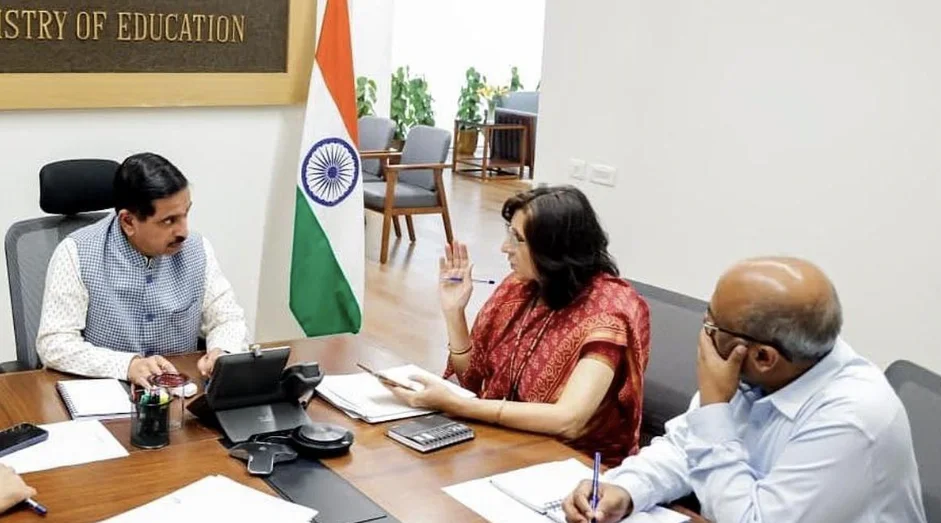
The Centre has stepped up its efforts to strengthen India's national examination system, with Union Education Minister Pralhad Joshi directing the National Testing Agency to audit its examination processes.
The review is expected to examine the systems and procedures followed by the agency and identify areas where security, administration or technology can be improved.
Corrective Action Report Sought
The ministry has asked the NTA to go beyond identifying weaknesses and submit a corrective action report outlining measures to address them.
Such a report is expected to provide a clearer roadmap for fixing gaps in the examination process and preventing similar problems in future examinations.
Why Is the NTA Under Scrutiny?
The NTA has faced increased scrutiny following controversies surrounding major national examinations, including allegations related to paper leaks, irregularities and examination management.
These controversies have raised concerns among students, parents and education stakeholders about the reliability of India's high-stakes examination system.
After taking charge as Education Minister, Joshi held review meetings with senior ministry officials and NTA representatives as the government began focusing on examination reforms.
Strengthening Examination Security
Question-paper security is one of the most important components of any large-scale examination system.
Security measures are required at every stage, from question-paper preparation and printing to storage, transportation and distribution at examination centres.
Technology-based safeguards, candidate verification, CCTV monitoring and secure data systems can also play an important role in reducing the risk of malpractice.
Focus on Transparency
Restoring confidence in national examinations requires transparency throughout the examination cycle.
This includes the management of candidate data, examination centres, question papers, evaluation procedures and the publication of results.
The government has already been considering tighter supervision, stronger technological safeguards and changes to outsourcing arrangements as part of the broader effort to reform the NTA.
Tougher Action Against Exam Malpractice
The audit comes alongside wider efforts to strengthen the legal framework against examination fraud.
The government has pushed amendments to the public examinations law that provide for tougher penalties and stronger investigative mechanisms against paper leaks and organised examination malpractice.
The proposed framework also seeks to bring agencies and service providers involved in examination management within a stricter accountability structure.
NTA Reforms Already Underway
The government has been working on several institutional changes within the NTA and the wider examination system.
These include stronger oversight, tighter controls over outsourcing, improved technological safeguards and steps towards making examinations more resistant to paper leaks and other forms of malpractice.
The latest audit directive adds another layer of review to these ongoing reforms.
Restoring Students' Confidence
National-level examinations can determine the educational and professional future of millions of students.
Even a single major failure in examination security can result in cancelled tests, delays and significant stress for candidates.
A systematic audit could help identify vulnerabilities before they lead to larger disruptions and ensure that corrective measures are implemented across the examination system.
Challenges Before the NTA
The agency faces the difficult task of conducting large-scale examinations across thousands of centres and for millions of candidates.
Ensuring consistent security standards across different locations requires coordination involving examination centres, technology providers, logistics agencies and trained personnel.
The corrective measures therefore need to address not only individual incidents but also structural weaknesses in the examination ecosystem.
What Happens Next?
The NTA's corrective action report will be closely watched for details on the weaknesses identified and the measures proposed to address them.
The effectiveness of the exercise will ultimately depend on whether the recommendations are implemented within clear timelines and monitored consistently.
For India's examination system, the broader objective is clear: stronger security, greater transparency, tighter accountability and a more reliable examination process for students.