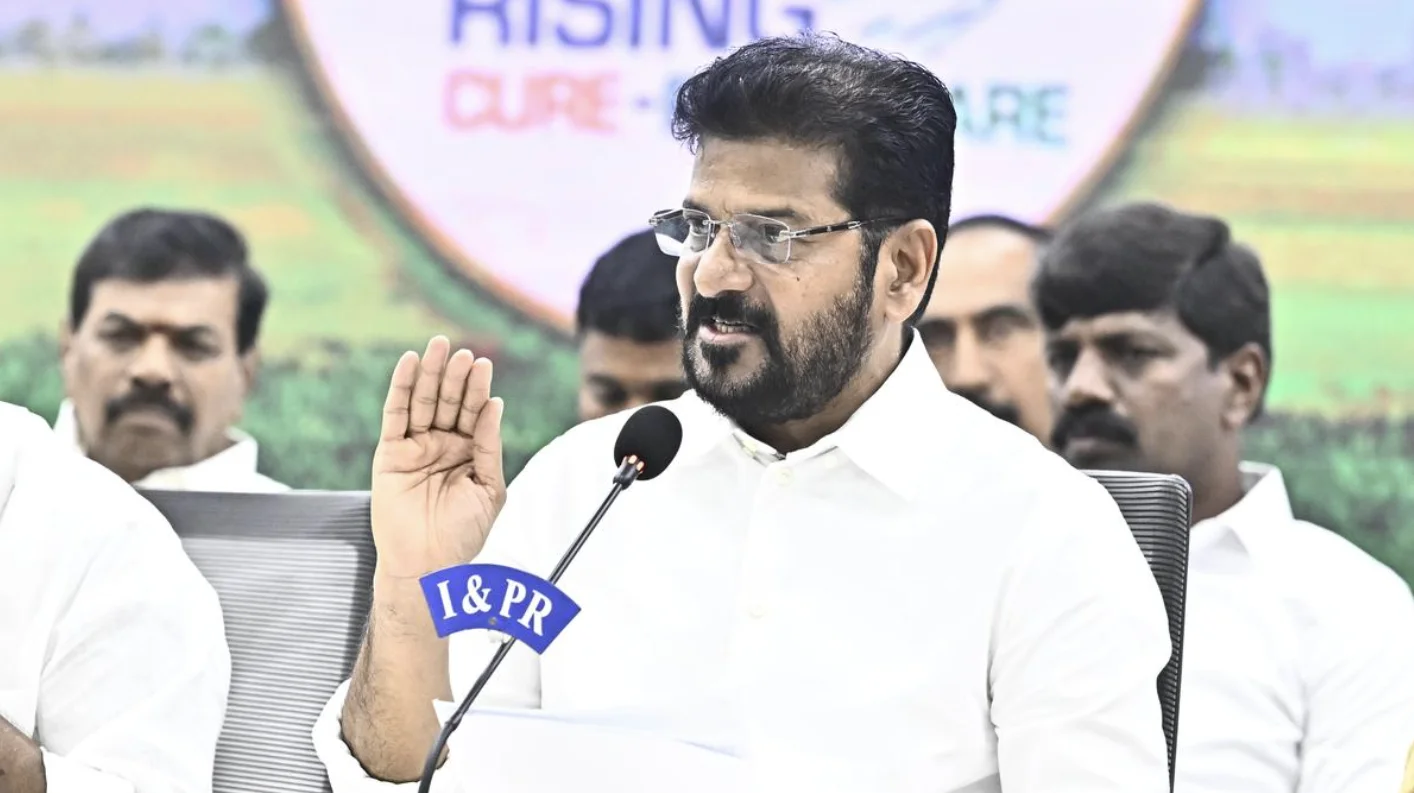
Telangana Chief Minister A. Revanth Reddy has sought a four-week extension to the claims and objections period under the ongoing Special Intensive Revision (SIR) of electoral rolls in the State.
In a letter to Chief Election Commissioner Gyanesh Kumar, Reddy said the scale of the verification exercise required more time for voters to check their status, submit supporting documents and file claims where necessary. The current claims and objections period runs from August 17 to September 16, 2026.
The Chief Minister said the SIR process had reached a stage where the number of entries requiring attention was itself a matter of concern. According to his letter, Telangana had 3.38 crore electors as of June 10, of whom 73.39 lakh entries, or about 21.7%, had been placed under the Absent, Shifted, Dead and Duplicate (ASDD) categories.
92.86 lakh entries flagged for verification
Reddy also highlighted another large group of electors whose records require further scrutiny.
Of the 2.65 crore enumeration forms digitised so far, 60.50 lakh entries have been flagged for anomalies, while another 32.36 lakh could not be linked to the earlier electoral roll.
The Chief Minister said these were two distinct categories and together accounted for 92.86 lakh electors who would need to establish their eligibility through the verification process. With such a large number of voters potentially required to respond, he argued that the existing timeframe was insufficient.
Concern over permanently shifted voters
Reddy has raised particular concerns about voters classified as permanently shifted.
Of the 73.39 lakh ASDD entries, 45.19 lakh were classified as permanently shifted, according to his letter.
He said the verification process should distinguish between temporary absence and permanent relocation. People may be away from their registered homes because of employment, marriage, travel or other reasons, and such absence should not automatically result in the loss of their electoral status.
For voters who have genuinely moved, Reddy said the authorities should help them enrol at their new addresses rather than simply removing their names from the previous electoral roll.
Hyderabad region faces a major burden
The Chief Minister also pointed to the scale of the verification exercise in Hyderabad, Medchal-Malkajgiri and Rangareddy districts.
Although the three districts together account for around one-third of Telangana's electorate, they account for 58.6% of ASDD entries and 41.9% of verification notices, according to Reddy's letter.
Frequent changes in residence, migration for employment and changes in ward and district boundaries make voter verification particularly complicated in urban areas, he said.
The concentration of cases in these districts also means election officials could face a significant workload during the claims and objections process.
Three to four weeks for voters to respond
Reddy has asked the Election Commission to provide voters with three to four weeks to respond to verification notices.
He said a short response period could disadvantage daily-wage workers, migrant workers and elderly citizens, particularly when supporting documents need to be obtained from another district or State.
Giving voters more time would allow them to understand the notice, collect documents and approach the relevant authorities without facing the risk of losing their electoral rights simply because they could not complete the process quickly.
Public reading of draft electoral rolls
The Chief Minister has also called for greater public participation in the verification process.
He suggested that draft electoral rolls be read out publicly at Gram Sabha meetings in villages and Ward Committee meetings in urban areas.
Reddy proposed that such meetings be conducted at least twice in every village and municipal ward, with advance publicity so that residents have an opportunity to check their names and raise objections.
The proposal is intended to make the process more accessible, particularly for voters who may not regularly check electoral information online.
Helpdesks and additional manpower
Reddy has sought the establishment of booth-level helpdesks, particularly in urban districts.
These helpdesks could assist voters in understanding verification notices, identifying acceptable documents and obtaining supporting records from the appropriate government authorities.
He has also called for additional Electoral Registration Officers (EROs) to handle the large volume of notices and hearings expected during the process.
For Hyderabad, Medchal-Malkajgiri and Rangareddy, the Chief Minister has proposed decentralising hearings below the ERO level and using staggered dates and timings to make the process more manageable.
Wider list of acceptable documents
Another request concerns the documents that voters can use for verification.
Reddy has asked the Election Commission to notify a wider and clearly defined list of admissible documents, including documents that can be obtained locally or at the mandal level at short notice.
He argued that voters should not be excluded because they do not possess a particular document or cannot obtain it within a limited timeframe.
Clearer documentation rules would also help Electoral Registration Officers apply a more consistent standard while processing claims.
Protecting eligible voters
Reddy said the central objective of the revision should be to ensure that no eligible elector is left out and no ineligible voter is included in the final electoral roll.
He has stressed that voters should have adequate time and a genuine opportunity to establish their eligibility before any final decision is taken.
The Telangana government has also offered to assist the Election Commission by supporting helpdesks, awareness campaigns and Gram Sabha and Ward Committee meetings.
ECI decision now awaited
The Election Commission's response to the request for a four-week extension will now be closely watched.
If the extension is granted, voters whose names are missing from the draft roll or who have received verification notices will have additional time to submit claims and supporting documents.
The issue is particularly important in urban districts, where the high volume of ASDD entries and verification notices has placed considerable pressure on the electoral roll revision process.
The final electoral roll is scheduled to be published after the claims and objections and subsequent verification processes are completed.
Revanth Reddy's request is aimed at ensuring that the large-scale electoral roll revision does not inadvertently exclude genuine voters because of limited time, documentation difficulties or lack of access to assistance.
The Election Commission's decision on the extension and other safeguards proposed by the Chief Minister will therefore be important in determining how the final revision process unfolds across Telangana.