


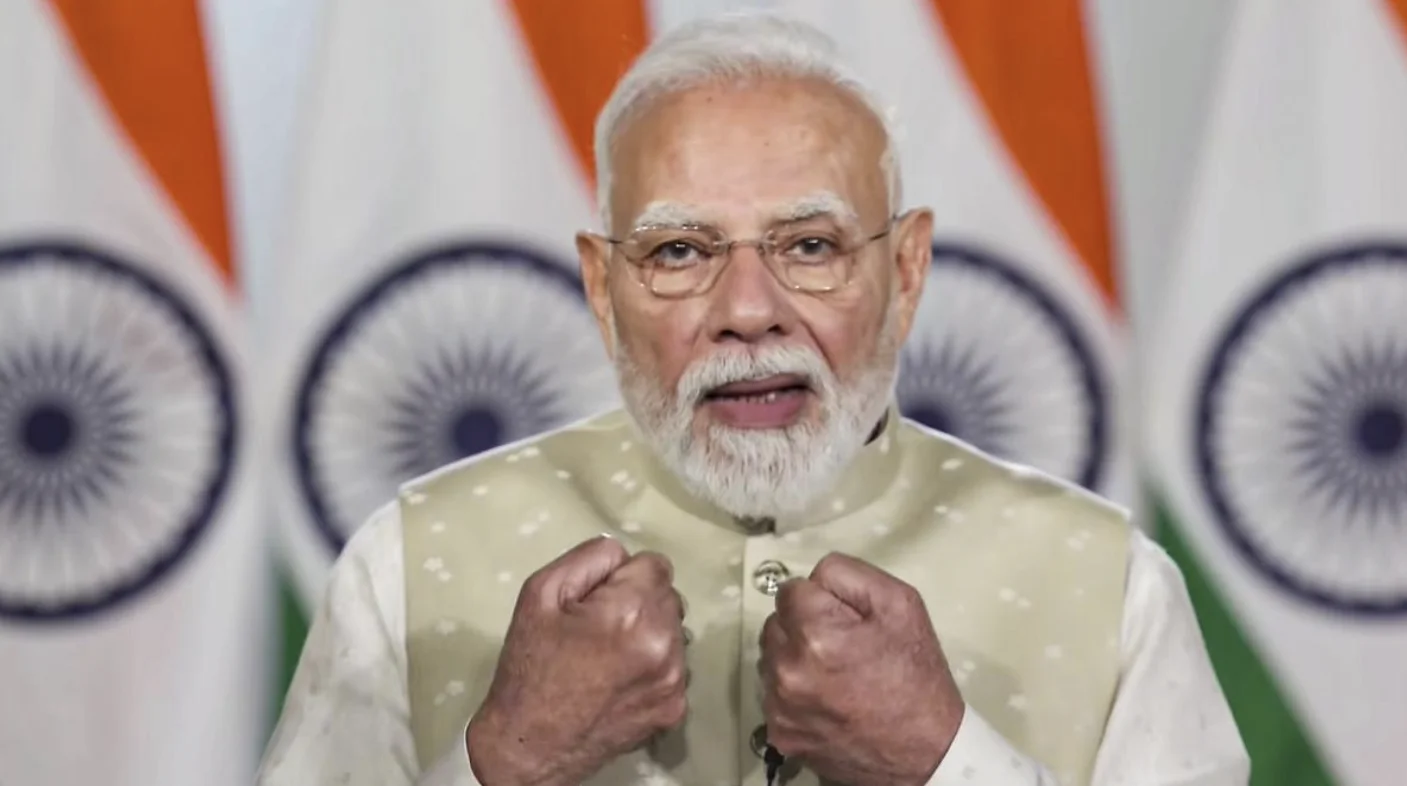
Prime Minister Narendra Modi has called for India to expand its presence across the Olympic programme, saying the country will struggle to significantly increase its medal tally if it continues to remain absent from a large number of sporting disciplines.
Speaking virtually to athletes, students and volunteers during the Khelo India Dialogue on Thursday, Modi said India's sporting ambitions should go beyond winning medals and should also contribute to the development of the country's youth.
Modi pointed to India's limited participation as one of the biggest challenges facing the country's Olympic campaign.
He noted that India does not even compete in half of the sports contested at the Olympics. As a result, the country misses out on opportunities to compete for a significant share of the available medals.
The numbers from the 2024 Paris Olympics illustrate the gap.
India competed in 16 of the 32 sports that formed part of the Games programme. While Indian athletes produced notable performances in several disciplines, the country had no representation in many other sports.
Modi said the problem has existed for decades.
He recalled that India competed in only 13 sports at the 2012 Olympics, leaving the country absent from more than 20 disciplines. He argued that other countries continue to win medals in sports where India has little or no participation.
The message from the Prime Minister was that India needs to broaden its sporting base rather than concentrating only on disciplines where it already has established strength.
Increasing participation, however, would require more than simply sending athletes to international competitions.
It would involve identifying talent at a young age, creating specialised coaching programmes, improving sporting infrastructure and giving athletes opportunities to compete internationally before they reach the Olympic stage.
Modi specifically highlighted surfing and sport climbing as two disciplines where India could potentially develop a stronger presence.
Both sports are included in the programme for the 2028 Los Angeles Olympics, but India has not yet established a significant Olympic presence in either discipline.
The Prime Minister argued that India has favourable geographical conditions for developing athletes in these areas.
The country has a long coastline that could support the growth of water sports, while its extensive mountainous and hilly regions could provide opportunities for sports such as climbing.
The challenge is to turn those natural advantages into organised sporting programmes.
That could mean developing training centres in coastal areas for surfing and other water sports, while creating dedicated facilities and coaching networks in regions suited to climbing and other mountain disciplines.
A regional approach could help identify athletes who might otherwise never enter the formal sporting system.
It could also make training more accessible by allowing young athletes to develop their skills closer to home.
The broader objective is to build a deeper sporting ecosystem.
India has traditionally produced strong athletes in a relatively limited number of Olympic sports. Shooting, wrestling, badminton, athletics, boxing and hockey have been among the disciplines where the country has developed significant international experience.
Expanding into additional sports could increase the number of medal opportunities available to Indian athletes.
But the process is likely to take years.
Sports such as surfing and sport climbing require specialised coaching, equipment, competition exposure and technical expertise. Building that ecosystem cannot happen immediately.
The government has already signalled that it wants to identify talent earlier.
In his Independence Day address on August 15, Modi announced a nationwide talent hunt for children between the ages of 5 and 15 as part of an effort to improve India's Olympic participation.
The idea is to identify sporting potential before young athletes become locked into traditional sporting pathways.
Early identification can be particularly important in sports where technical skills and physical development need to be built over many years.
Modi also stressed that India's sports policy should not be measured solely by medal counts.
He has repeatedly described sport as part of a broader effort to connect India's youth with nation-building. During the Khelo India Dialogue, he again emphasised that sporting development should be viewed as part of the country's wider development journey.
That approach places equal importance on participation, fitness and the development of sporting culture.
A larger sporting base could also help create opportunities for young people outside the traditional professional sports structure.
Coaches, sports scientists, trainers, physiotherapists, administrators and other professionals are needed to support a modern sporting ecosystem.
The expansion of sports participation could therefore create careers beyond athletes themselves.
The timing of Modi's remarks is also significant.
The Khelo India Dialogue was held ahead of National Sports Day on August 29, while preparations for the 2028 Los Angeles Olympics are already shaping discussions about India's next generation of athletes.
The focus on new Olympic disciplines suggests that India wants to use the next two years to widen its competitive base.
The country's large youth population provides a significant potential advantage.
The challenge is identifying which young people have the right combination of ability, interest and physical characteristics for different sports, and then giving them the resources needed to progress.
India's geography also provides opportunities that have not always been fully used.
Coastal states can potentially become centres for water sports, while mountainous regions can support climbing and winter sports.
Modi argued that these geographical advantages should be converted into sporting opportunities rather than remaining unused potential.
However, geographical potential alone does not guarantee international success.
Athletes need access to qualified coaches, modern facilities, equipment, nutrition, sports science and regular high-level competition.
National federations and state sporting bodies will therefore have an important role in turning the government's broader vision into results.
India's Olympic performance has improved in some areas over the years, but the country remains far from competing across the full range of disciplines available at the Games.
That is the gap Modi wants the sporting system to address.
A wider presence could also make India's medal performance less dependent on a small number of sports.
If Indian athletes become competitive in additional disciplines, the country would have more opportunities to win medals at each edition of the Olympics.
But the process will require patience.
Building a world-class athlete in a new sport can take a decade or more, particularly when the country lacks an established coaching and competition structure.
The current focus on young athletes is therefore intended to create a pipeline for future Olympic teams rather than produce immediate results.
The message from the Prime Minister is ultimately about expanding India's sporting ambition.
India needs to participate in more sports, identify talent earlier and develop specialised systems around disciplines where it currently has little presence.
Winning more medals will remain an important objective, but a stronger sporting culture would also bring benefits beyond the Olympic medal table.
More young people participating in sport can contribute to better health, discipline and confidence, while a stronger sports industry can create new professional opportunities.
For India, the next challenge is turning that ambition into a practical system that reaches schools, local clubs, state-level academies and national training centres.
If that happens, sports that currently have little Indian representation could gradually become part of the country's Olympic programme.
For now, Modi's message is clear: India cannot expect a major increase in its Olympic medal haul while competing in only a limited portion of the Games.
Expanding participation, developing new sports and making better use of India's geographical and demographic strengths will be central to the country's long-term Olympic ambitions.