



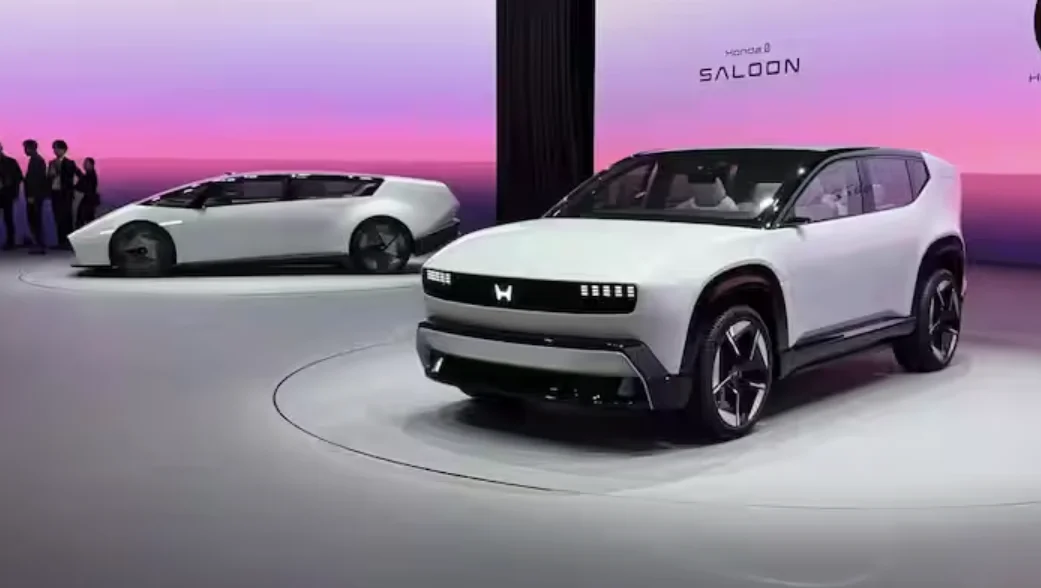
Japanese automakers Honda and Nissan are deepening their technology partnership by jointly developing the core electronic and software architecture for their next-generation vehicles.
The companies have agreed to standardise key electronic control units and software systems that will form the foundation of their future software-defined vehicles.
Joint Technology From Fiscal 2029
Honda and Nissan plan to introduce the jointly developed electrical and electronic architecture in their next-generation vehicles from fiscal 2029 onward.
Japan's fiscal 2029 begins on April 1, 2029. The architecture is expected to be used across future software-defined vehicles developed by both automakers.
Standardised Electronic Control Units
The agreement covers multiple core electronic control units that manage different functions within a vehicle.
These include high-performance main control units as well as zone control units responsible for different areas of the vehicle. Software running on these systems will also be developed under the partnership.
Shared Vehicle Operating System
The collaboration extends beyond electronic hardware.
Honda and Nissan will also establish common specifications for the in-vehicle operating system, key parts of the middleware and vehicle-control software.
Standardising these foundational technologies could make it easier for both companies to develop, deploy and update software-based vehicle functions.
Cutting Development Costs
Modern vehicles increasingly depend on software for autonomous-driving functions, connectivity, driver assistance, entertainment and over-the-air updates.
The growing complexity of these systems has increased development costs across the global automotive industry.
By sharing development resources and engineering expertise, Honda and Nissan aim to improve efficiency, reduce costs and shorten development cycles.
Competing in a Software-Driven Market
Software has become a major competitive area in the global automotive industry.
Chinese automakers such as BYD have been expanding rapidly in international markets with electric and hybrid vehicles equipped with increasingly sophisticated software features.
Honda and Nissan are seeking to strengthen their competitiveness by combining resources in an area where technological development is moving rapidly.
Cooperation After Failed Merger Talks
The agreement comes more than a year after Honda and Nissan abandoned discussions over a potential merger.
Although the merger talks collapsed in 2025, the two companies continued exploring ways to cooperate in specific technology and automotive areas.
The new software agreement represents a more targeted form of cooperation rather than a corporate merger.
Mitsubishi May Join
Mitsubishi Motors, Nissan's alliance partner, is also considering joining the collaboration.
The company said it remains in discussions with Honda and Nissan about possible areas of participation.
Software Becomes Central to Future Cars
Modern vehicles are increasingly becoming software-driven platforms.
Software can control everything from vehicle functions and safety systems to connected services and driver-assistance features. Over-the-air updates can also allow manufacturers to add or improve functions after a vehicle has been sold.
This shift is forcing traditional automakers to invest heavily in operating systems, computing architecture and software development.
Scope for Wider Cooperation
Honda and Nissan have indicated that they will continue exploring additional areas of cooperation.
Their broader strategic partnership includes goals related to carbon neutrality and reducing traffic fatalities, alongside efforts to improve development efficiency and technological competitiveness.
Conclusion
Honda and Nissan have agreed to jointly develop and standardise core electronic control units, an in-vehicle operating system, key middleware and vehicle-control software for next-generation software-defined vehicles.
The jointly developed architecture is planned for use in both companies' vehicles from fiscal 2029 onward.
The partnership is designed to reduce development costs, improve investment efficiency and accelerate the rollout of new vehicle technologies. It also demonstrates that cooperation between Honda and Nissan is continuing despite the collapse of their earlier merger discussions.