


Nvidia's dominance in artificial intelligence has traditionally been associated with one product above all others: the GPU.
For years, Nvidia's graphics processors have provided much of the computing power behind the rapid expansion of generative AI. But as AI workloads become larger and more demanding, the company's competitive advantage is increasingly moving beyond the processor itself.
The emerging challenge is no longer simply about building the fastest GPU. At the scale of modern AI data centers, companies need to ensure that GPUs receive data at the right time, storage systems can keep up, networking remains efficient and CPUs can coordinate increasingly complex workloads.
That broader systems problem could become an important new source of strength for Nvidia.
AI Data Centers Are Becoming More Complex
AI computing is moving towards extremely large deployments that can consume power at the gigawatt scale.
At this level, operating a data center efficiently becomes a major engineering challenge.
A powerful GPU cannot operate at maximum efficiency if data cannot reach it quickly enough. Storage, memory, networking and CPU resources all need to work together to keep the GPU supplied with the information required for each workload.
As companies try to increase the number of AI tokens produced per watt of electricity, these supporting systems are becoming increasingly important.
Nvidia Is Building More Than GPUs
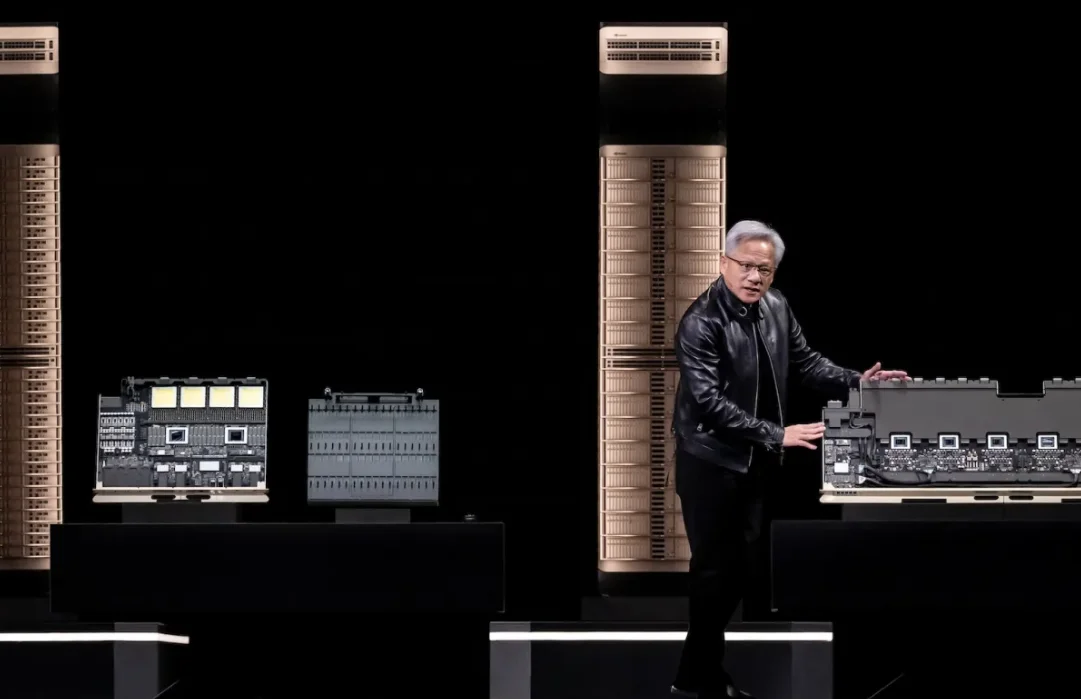
Nvidia's Vera Rubin architecture illustrates this broader strategy.
The company is combining the Rubin GPU with other components, including the Vera CPU, Groq 3 LPX inference accelerators and specialized systems for storage and networking.
Instead of selling a standalone processor, Nvidia is increasingly offering an integrated collection of hardware designed to operate together inside large AI data centers.
The GPU remains the main engine of the system, but the supporting components determine how efficiently that engine can operate.
Why the Vera CPU Matters
One of the biggest challenges in large AI systems is moving data between storage and computing resources.
There is a limit to how much memory can be placed inside a single server or computing platform. As workloads grow, more data has to be moved between different components.
Nvidia's Vera CPU is designed to help manage that flow of data.
The company says that some operations can see up to three times better performance with Vera CPU acceleration, allowing flash storage resources to be used more effectively without creating bottlenecks.
Data Movement Is Becoming a Major AI Challenge
The AI industry has spent years focusing on processor performance and memory capacity.
But as models and workloads grow, another issue is becoming increasingly important: how efficiently data can move through the system.
A GPU may be capable of processing enormous amounts of information, but that capability is wasted if the required data arrives too slowly.
This makes data orchestration, storage and networking important parts of AI infrastructure rather than secondary components.
OpenAI Is Tackling the Same Problem
Nvidia is not the only company working on this challenge.
OpenAI's Jalapeño chip also focuses heavily on reducing data movement and communication delays.
The company has described an architecture designed to keep workloads within a connected system, reducing the amount of data that needs to move between different components.
The approaches are different, but the underlying goal is similar: improve overall system efficiency rather than simply adding more processor cycles.
Competition Is Moving Up the Stack
Nvidia is already facing competition from major technology companies.
Amazon and Google have developed their own AI chips, challenging Nvidia's dominance at the accelerator level.
But the broader systems approach changes the competitive equation.
A company attempting to compete with Nvidia may need to match not only its GPU performance but also the CPUs, networking, storage, memory architecture and software infrastructure that allow the complete system to operate efficiently.
That makes the competitive challenge significantly more complicated.
The GPU Is Only One Part of the System
The evolution of AI infrastructure means that a data center can no longer be viewed simply as a collection of powerful GPUs.
Modern AI systems require GPUs, CPUs, memory, storage, networking and software to operate as a coordinated unit.
The efficiency of the complete system can determine how much useful AI computation a company gets from its expensive hardware and electricity supply.
That is creating a new layer of competition in the AI infrastructure market.
Nvidia Still Has a Strong Lead
Nvidia's expansion beyond GPUs does not eliminate competition.
Other chipmakers and hyperscalers are also developing technologies designed to improve system-level efficiency.
Companies may pursue different strategies, including custom accelerators, tightly integrated chips or specialized networking and storage systems.
However, Nvidia already has a substantial advantage because it has been developing many of these components as part of its broader data-center platform.
Efficiency Is Becoming the New Battleground
As AI deployments become larger, companies are increasingly focused on efficiency.
The goal is not simply to achieve more computing power but to deliver more useful AI output for every unit of electricity, memory and infrastructure investment.
This is especially important as AI data centers require enormous amounts of power and increasingly sophisticated cooling and networking infrastructure.
The companies that can coordinate all these components effectively could gain a significant advantage.
What It Means for Nvidia
Nvidia's strength in AI has been built around a combination of GPUs, software, networking and a large ecosystem of customers and developers.
The company's latest strategy suggests that it is trying to make that advantage even broader.
If Nvidia can make its entire infrastructure stack work more efficiently together, customers may have fewer reasons to look elsewhere even when competing GPUs become available.
The Next Phase of AI Infrastructure
The AI chip market is therefore entering a more complicated phase.
The first stage of the AI boom was largely defined by the race to build faster and more capable accelerators.
The next stage could be defined by the ability to operate entire AI systems efficiently at massive scale.
That could make components that once seemed secondary — such as CPUs, storage controllers, networking systems and data orchestration — increasingly important.
Nvidia's AI advantage is no longer just about owning the fastest GPU. As AI data centers grow more complex, the company's ability to coordinate the entire system around the GPU could become one of its most important competitive advantages.