



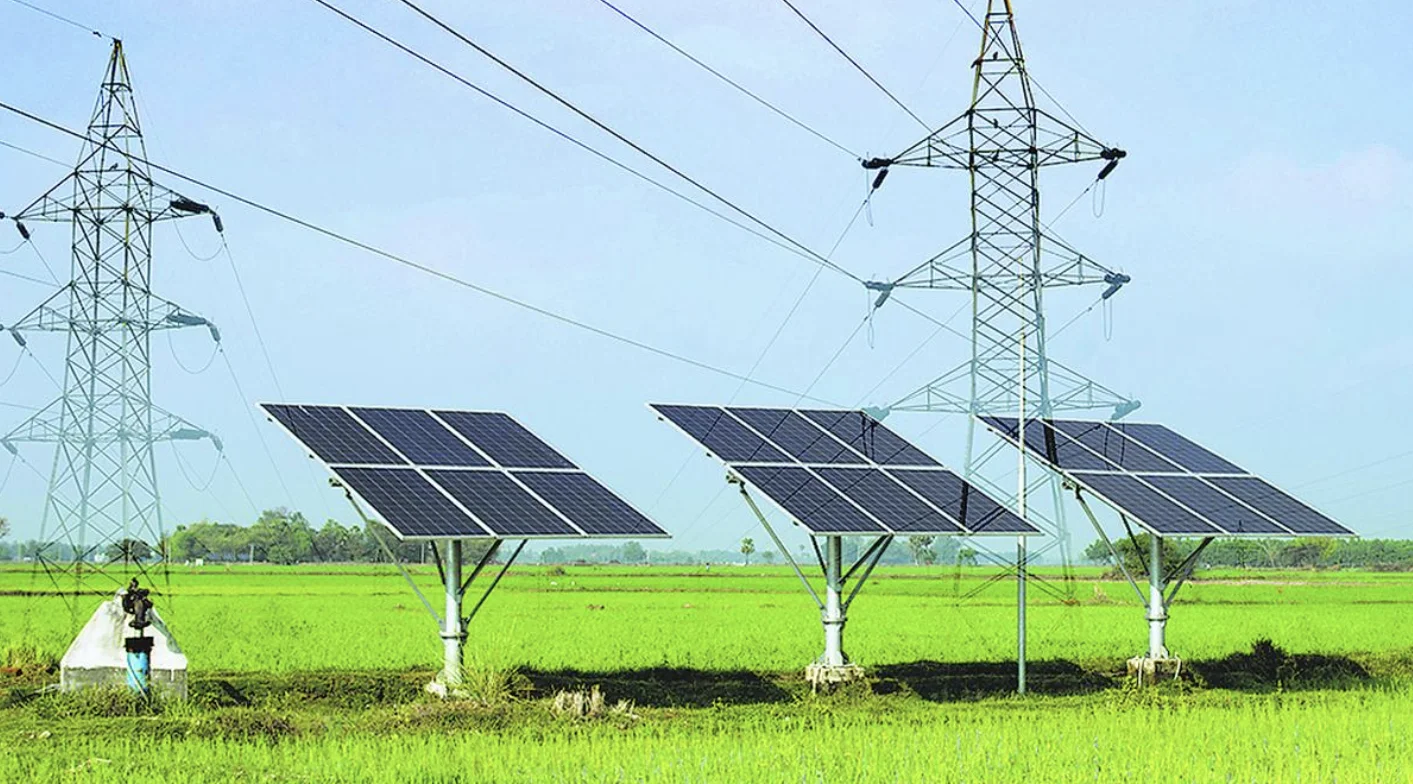
Solar Pumps Bring a New Question for Agriculture
Solar-powered irrigation pumps are becoming an important part of efforts to shift agriculture towards cleaner energy.
They can reduce farmers' dependence on grid electricity and diesel and provide reliable pumping during daylight hours.
But the expansion of solar irrigation raises another important question: What happens when cheaper energy encourages farmers to pump more groundwater than their farms actually need?
In regions where groundwater is already under stress, excessive extraction can undermine the long-term benefits of solar irrigation.
The Problem Is Not Solar Power Itself
Solar energy is not inherently responsible for groundwater depletion.
The larger issue is how water use is managed once pumping becomes cheaper and easier.
If solar irrigation is combined with groundwater monitoring, efficient irrigation systems, appropriate crop choices and incentives for conserving water, it can become part of a more sustainable agricultural model.
The Risk of Unlimited Pumping
With conventional agricultural electricity systems, power availability and supply restrictions can sometimes limit pumping.
Solar pumps operate differently. Farmers can use available solar power during the day to pump water without facing the same marginal electricity costs.
That can create an unintended incentive to pump more water, even when additional irrigation is not necessary.
If groundwater extraction consistently exceeds natural recharge, water tables can decline.
Rewarding Farmers for Saving Electricity
One possible solution is to allow farmers to sell surplus solar electricity to the grid.
Instead of creating an incentive to pump as much water as possible, such a system can reward farmers for using less electricity and conserving water.
This changes the economic equation from “pump more to get more value from the solar pump” to “save electricity and earn additional income.”
Linking Solar Energy With Water Conservation
Solar irrigation can deliver greater benefits when it is combined with water-saving measures.
Farmers can reduce water consumption through drip irrigation, sprinkler systems and better scheduling of irrigation.
Efficient irrigation ensures that the additional pumping capacity provided by solar energy does not automatically translate into excessive water extraction.
Crop Choices Matter
The choice of crops is another important part of groundwater management.
Water-intensive crops can place substantial pressure on aquifers when they are grown in areas with limited groundwater availability.
Encouraging crops suited to local rainfall, soil conditions and groundwater availability can reduce the pressure on water resources.
Groundwater Monitoring Is Essential
Groundwater conditions vary significantly from one region to another.
Some aquifers recharge relatively quickly, while others may already be experiencing severe depletion.
Policies promoting solar pumps therefore need to consider local groundwater conditions rather than treating every agricultural region in the same way.
Monitoring groundwater levels can help authorities identify areas where pumping needs to be regulated.
Community-Level Water Management
Groundwater is often treated as an individual resource because farmers operate their own wells and pumps.
In reality, multiple wells can draw from the same aquifer.
This makes community-level water management important. Local water budgets, groundwater monitoring, crop planning and recharge measures can help farmers understand the limits of the resource they share.
Rainwater Recharge Can Strengthen the System
Reducing groundwater extraction is only one part of the solution.
The other is increasing groundwater recharge.
Rainwater harvesting, restoration of ponds and tanks, recharge wells and other water-conservation measures can help replenish aquifers.
Combining these measures with solar irrigation can create a more balanced agricultural water system.
Micro-Irrigation Can Reduce Pressure
Drip and sprinkler systems can significantly improve the efficiency of irrigation by delivering water closer to where crops need it.
When combined with solar pumps, these technologies can help farmers use the additional pumping capacity more efficiently rather than simply increasing total water consumption.
Rethinking Agricultural Energy Policy
The transition to solar irrigation demonstrates that energy and water policies cannot be designed independently.
Replacing diesel or grid electricity with solar power is only the first step.
A sustainable approach needs to connect energy policy, agricultural policy and groundwater management.
Farmers should have incentives not only to generate renewable energy but also to conserve water.
The Way Forward
Future solar irrigation programmes could combine several measures:
Groundwater monitoring at local and regional levels
Incentives for efficient irrigation
Support for drip and sprinkler systems
Crop diversification in water-stressed areas
Solar power sales to the grid
Rainwater harvesting and groundwater recharge
Community-based water management
Such an approach would allow farmers to benefit from renewable energy without creating a new incentive for uncontrolled groundwater extraction.
Conclusion
Solar irrigation can help agriculture reduce energy costs and move towards cleaner power, but its success should not be measured only by the number of solar pumps installed.
The more important question is whether the technology helps farmers save energy while using groundwater sustainably.
When solar power is combined with efficient irrigation, groundwater monitoring, suitable crop choices, recharge measures and incentives for conserving electricity, it can become a powerful tool for both agricultural development and water security.