



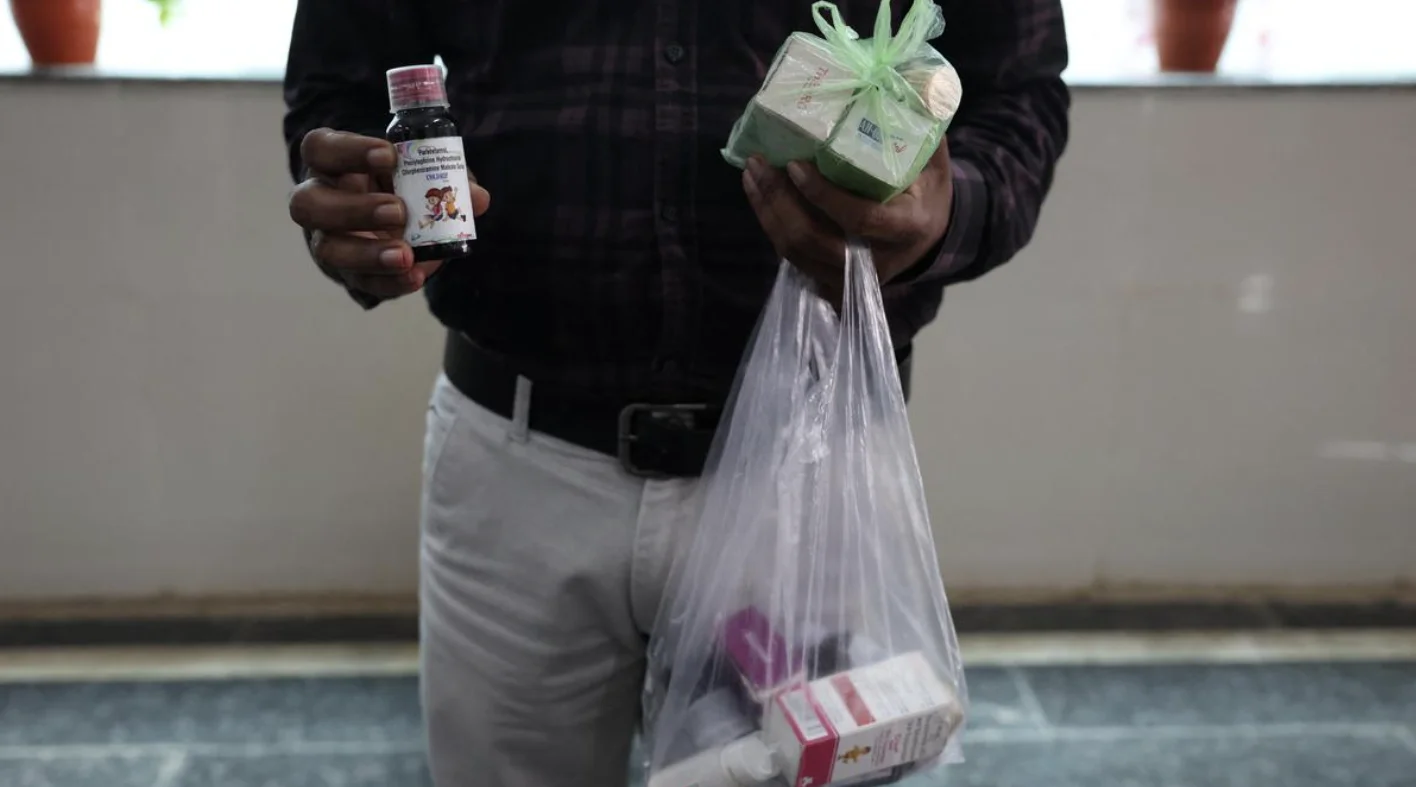
Government Tightens Drug Safety Rules for Young Children
The Centre has introduced new restrictions on certain fixed-dose combination medicines in an effort to strengthen drug safety for young children.
The restrictions apply to all fixed-dose combinations containing Chlorpheniramine Maleate and Phenylephrine Hydrochloride for use in children below four years of age.
The move is aimed at protecting young children and promoting safer and more rational use of medicines.
Not to Be Used in Children Below Four
Under the latest rules, fixed-dose combinations containing the two ingredients should not be used in children below four years of age.
Manufacturers have been instructed to clearly display the age-specific warning on product labels, package inserts and promotional material.
The requirement is intended to ensure that parents, doctors and pharmacists have clear information about the restriction.
The Two Chemical Compounds
The restriction concerns combinations containing Chlorpheniramine Maleate and Phenylephrine Hydrochloride.
Such combinations are commonly associated with medicines used to manage symptoms related to colds and allergies.
The government has now strengthened age-specific restrictions following concerns about their use in young children.
Expert Review Behind the Decision
The decision follows a review by an expert committee appointed by the Central Government.
The Drugs Technical Advisory Board also examined the fixed-dose combinations and made recommendations.
The government has said that these combinations may pose risks to children below four and that safer alternatives are available.
Similar Restrictions Were Introduced Earlier
The government had already introduced an age-specific warning for certain formulations containing the two ingredients.
A notification issued on April 15, 2025, restricted the manufacture, sale and distribution of the relevant formulations subject to a warning that they should not be used in children below four years of age.
The latest measure extends the requirement to all formulations containing the two ingredients.
Clear Responsibility for Manufacturers
Manufacturers will have to ensure that the age restriction is prominently communicated.
The warning must appear on the medicine's label as well as the package insert and promotional literature.
This is intended to reduce the possibility of inappropriate use among young children.
Public Health Considerations
The latest notification has been issued under Section 26A of the Drugs and Cosmetics Act, 1940.
The provision allows the Central Government to regulate the manufacture, sale and distribution of medicines in the public interest.
The notification takes effect from the date of its publication in the Official Gazette.
Greater Caution Needed With Children's Medicines
Medicine use in young children requires particular care because dosage and safety can depend on age, body weight and other health factors.
Parents and caregivers should therefore follow appropriate medical advice when giving medicines to young children.
The latest government measure is intended to reinforce that caution and improve awareness around age-specific medicine safety.
Broader Action on Fixed-Dose Combinations
The government has taken several measures in recent years to regulate fixed-dose combinations.
In June 2026, the Ministry of Health and Family Welfare prohibited the manufacture, sale and distribution of 16 FDCs following scientific review and recommendations from the relevant expert bodies.
The measures are part of a broader effort to ensure that medicines available in the country are scientifically justified and do not pose unnecessary risks.
Conclusion
The Centre has tightened restrictions on fixed-dose combinations containing Chlorpheniramine Maleate and Phenylephrine Hydrochloride for children below four years of age.
Manufacturers must clearly warn on labels, package inserts and promotional material that these combinations should not be used in this age group.
The decision, based on expert and DTAB recommendations, is aimed at strengthening medicine safety and protecting young children from potential risks.