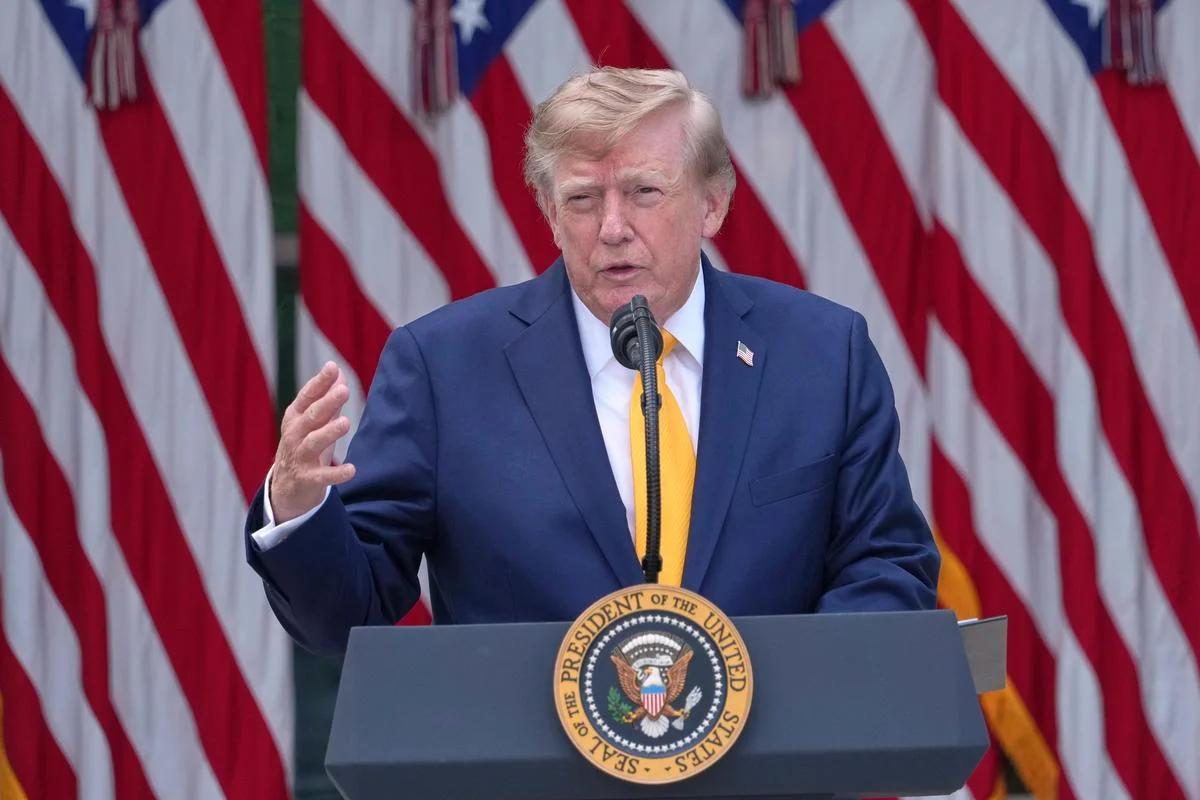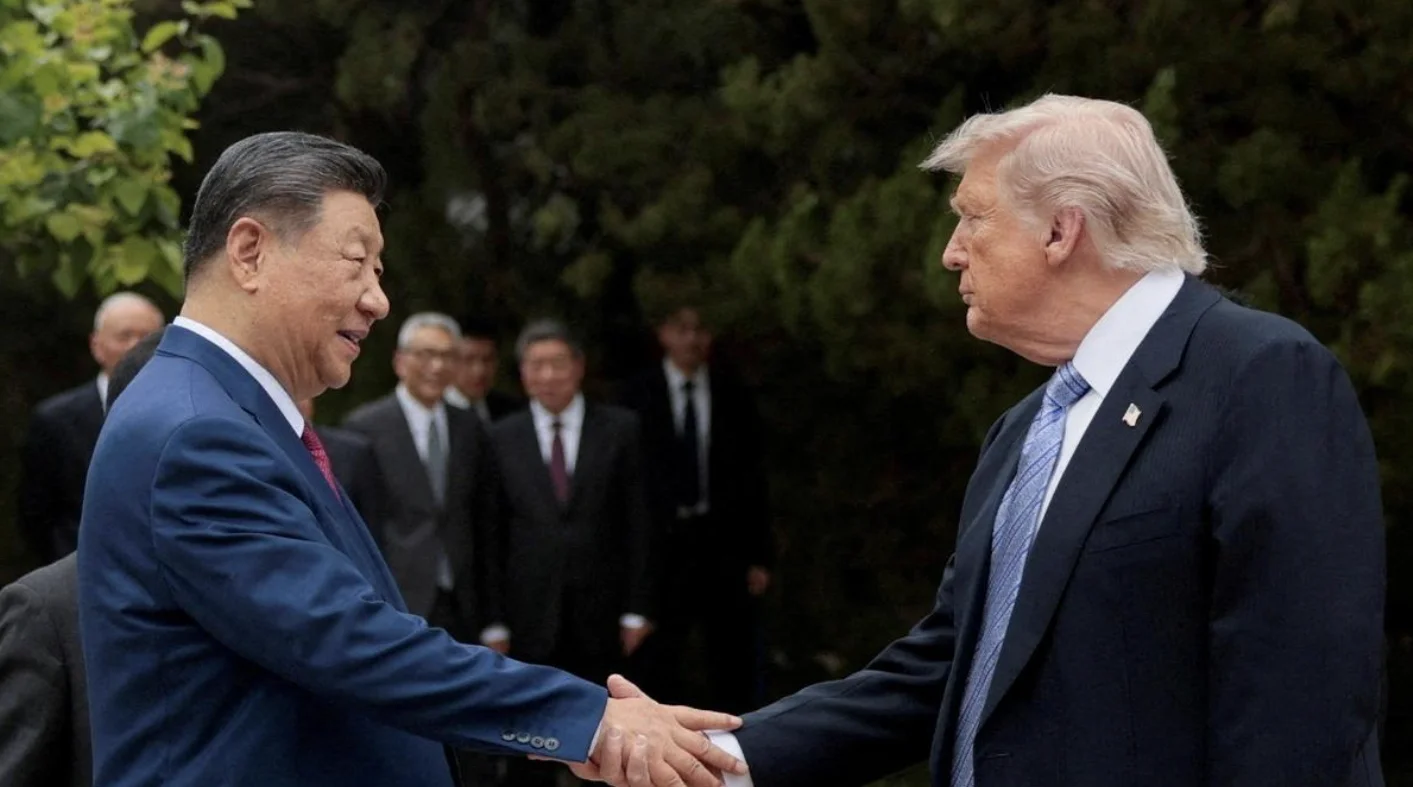
China has called on the United States to overcome obstacles in their relationship and work towards greater stability ahead of a planned meeting between US President Donald Trump and Chinese President Xi Jinping.
Chinese Foreign Minister Wang Yi made the comments as attention turns to the upcoming summit between the leaders of the world's two largest economies.
Relations between Washington and Beijing have remained complicated by disagreements over trade, tariffs, technology, national security and strategic influence.
Against that backdrop, Wang's call for both sides to overcome their differences signals China's interest in keeping the relationship from deteriorating further.
The US and China have maintained extensive economic ties despite their growing strategic rivalry.
American companies depend on Chinese manufacturing and supply chains for a wide range of products, while China remains an important market for US businesses.
At the same time, Washington has become increasingly concerned about China's industrial policies, technology ambitions and security policies.
Beijing, meanwhile, has repeatedly criticised US tariffs and restrictions on Chinese companies and technology exports.
These disputes have created a relationship in which cooperation and competition exist side by side.
The upcoming Trump-Xi meeting is therefore being closely watched for signs of whether the two governments can reduce tensions or establish clearer rules for managing their disagreements.
Wang said the two countries should deal with their differences through dialogue and seek areas where cooperation remains possible.
The emphasis on communication is particularly important because the relationship extends far beyond bilateral trade.
US-China ties influence global supply chains, investment flows, technology markets, financial markets and international economic growth.
Any major escalation between the two countries could therefore have consequences well beyond Washington and Beijing.
Trade is expected to remain one of the most important issues.
The United States has imposed tariffs and other trade measures targeting Chinese goods, while China has responded with measures of its own.
Businesses in both countries have been forced to reassess supply chains and investment plans as uncertainty over trade policy has increased.
Higher tariffs can also affect consumers and manufacturers in other countries because global production networks are closely connected.
A stable US-China trade relationship could therefore provide greater certainty for companies operating internationally.
Technology is another major source of tension.
Washington has introduced restrictions affecting China's access to advanced semiconductors and other sensitive technologies, citing national security concerns.
China has responded by investing heavily in domestic technology development and seeking to reduce its dependence on foreign suppliers.
The competition has become particularly intense in areas such as artificial intelligence, advanced computing and semiconductor manufacturing.
There are growing concerns that continued rivalry could eventually divide global technology markets into competing ecosystems.
Such a development could raise costs for companies and make international cooperation more difficult.
The two countries also have significant differences over security and regional affairs.
Issues involving Taiwan and the South China Sea remain particularly sensitive.
Although these matters may not be resolved through a single summit, direct communication between the two governments can help prevent misunderstandings from escalating.
That is one reason diplomatic engagement remains important even when the two sides disagree strongly.
Wang's latest remarks suggest that Beijing wants to keep diplomatic channels open while defending what it considers its core national interests.
China is unlikely to abandon its position on issues it considers fundamental.
Similarly, the United States is expected to continue protecting its economic and national security interests.
The challenge for both governments is therefore to manage competition without allowing it to turn into an uncontrolled confrontation.
The Trump-Xi summit could provide an opportunity to establish that balance.
Even if the leaders cannot resolve all major disagreements, an agreement to keep talks going and prevent further escalation could be considered meaningful progress.
The economic relationship gives both sides an incentive to avoid a prolonged confrontation.
American companies have significant commercial interests in China, while Chinese manufacturers and exporters remain closely connected to the US market.
Both economies would face costs if tariffs and restrictions expanded dramatically.
Global markets could also react to any major deterioration in relations.
For that reason, maintaining a predictable relationship has become increasingly important.
Climate change and global economic stability are among the areas where the US and China could potentially cooperate despite their strategic rivalry.
International security is another area where communication between the two governments can be valuable.
The alternative — a relationship with little direct communication — could make it easier for isolated incidents to develop into larger crises.
The upcoming summit is therefore significant even if expectations for a major breakthrough remain limited.
The meeting could provide an opportunity for Trump and Xi to clarify their respective positions and identify areas where limited cooperation is possible.
The two leaders could also discuss ways to manage their economic competition and avoid additional disruptions to global trade.
For China, the priority appears to be maintaining stability while protecting its economic and strategic interests.
For the United States, the challenge is to compete with China while preventing that competition from turning into a broader conflict.
That balance will shape the future of one of the world's most consequential bilateral relationships.
Wang's appeal to overcome obstacles is therefore more than a routine diplomatic statement.
It reflects the recognition that neither Washington nor Beijing can easily separate itself from the other, despite their growing strategic rivalry.
The global economy remains deeply connected to both countries, making a stable relationship important for businesses, investors and governments around the world.
The Trump-Xi meeting could offer a chance to reduce some of the uncertainty.
However, major differences over trade, technology and security are unlikely to disappear overnight.
The more realistic objective may be to establish mechanisms that allow the two countries to compete while keeping communication open.
Such an approach could help prevent disagreements from escalating into wider economic or political crises.
For now, attention remains focused on what Trump and Xi will discuss when they meet.
Whether they can make progress on tariffs, technology, trade and security will determine how much momentum the relationship gains from the summit.
The immediate message from Beijing is clear: the United States and China should find ways to overcome their differences and keep bilateral relations on a stable path.