


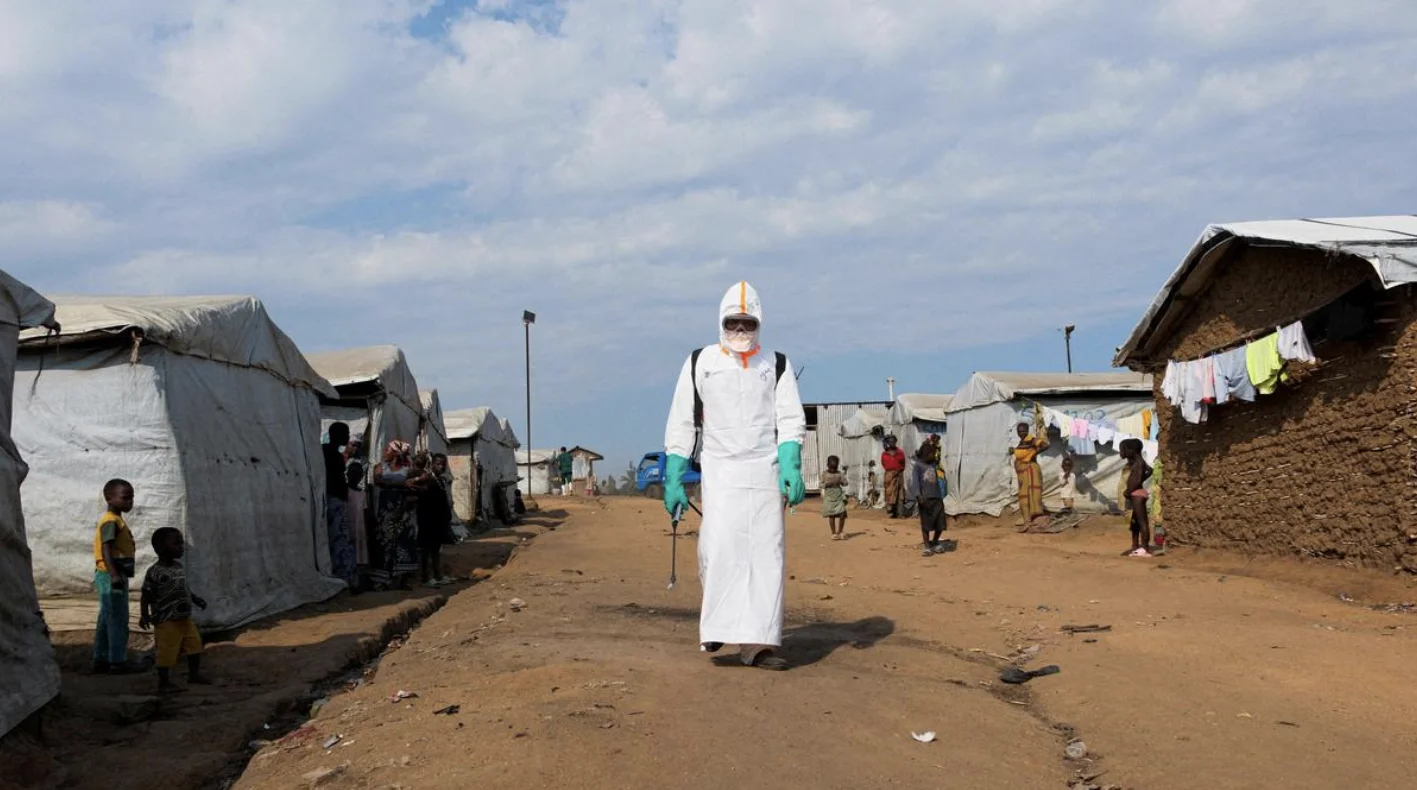
The Ebola outbreak in eastern Congo has taken another worrying turn, with the virus spreading to two additional health zones and bringing the total number of affected areas to 60.
The newly affected areas are Biena and Manguredjipa, both in North Kivu province, according to the latest figures released by Congo's government. Officials said the case fatality rate in those areas is considerably higher than the overall rate of 48%, partly because response efforts were delayed.
Congo's Ministry of Health has reported 5,794 confirmed cases and 2,786 deaths so far.
The outbreak is spreading at a speed that is making it increasingly difficult for health authorities to identify cases, trace contacts and contain transmission.
The World Health Organization has described the outbreak as remaining out of control.
If the current pace continues, it could surpass the 2014-2016 West Africa Ebola epidemic, which remains the deadliest Ebola outbreak on record and killed more than 11,000 people, mainly in Guinea, Liberia and Sierra Leone.
The crisis is unfolding under exceptionally difficult conditions.
Insecurity, displacement, a health workers' strike and intense population movement are all making the response more complicated.
Eastern Congo has long faced armed conflict, particularly in parts of Ituri and North Kivu, and insecurity can make it difficult for medical teams to safely reach communities affected by the virus.
The outbreak was officially declared in mid-May.
However, health officials believe the virus may have been spreading since February.
What began in just three health zones has now expanded to nearly 60, illustrating how quickly transmission has accelerated.
Another major concern is that many infections are occurring outside the network of known and monitored contacts.
That makes conventional contact tracing much harder and increases the possibility that transmission chains remain hidden within communities.
Authorities have introduced a series of measures aimed at slowing transmission.
These include restrictions on some public gatherings, social-distancing measures, health and sanitation facilities at selected locations and restrictions involving airports and travel.
The measures have disrupted daily life across the six affected provinces, particularly in Ituri, where rebel violence has already caused major humanitarian problems.
Vaccination has also begun.
On Thursday, Congo started administering the Ervebo vaccine to healthcare workers and other frontline personnel.
The vaccine has been effective against previous Ebola outbreaks caused by the more common Zaire virus.
However, the current outbreak is being caused by a different and much rarer strain: the Bundibugyo virus.
There are currently no approved vaccines or treatments specifically available for this virus, although clinical trials are underway to develop a licensed vaccine.
That creates an additional challenge for health authorities.
While vaccination can still play an important role in protecting frontline personnel where appropriate, the absence of an approved vaccine specifically targeting the current virus strain leaves containment efforts heavily dependent on surveillance, isolation, infection prevention and community cooperation.
Community trust has therefore become a major part of the response.
Public-health measures are much more effective when people are willing to report symptoms, accept testing and treatment and cooperate with contact-tracing teams.
Advocacy groups have argued that more needs to be done to build trust within affected communities.
The security situation makes that task even more difficult.
Health workers need safe access to communities, while displaced populations may move frequently in search of security, shelter or food.
Such movement can make it harder to identify people who have been exposed to the virus.
The outbreak is also raising concerns beyond Congo's borders.
The World Health Organization has identified South Sudan and the Central African Republic among the countries facing elevated risks of cross-border transmission because of population movement and their proximity to affected areas.
That makes rapid detection and surveillance particularly important in neighbouring regions.
The objective is not necessarily to stop all movement, but to ensure that people who may have been exposed can be identified and supported quickly.
The scale of the current outbreak is putting significant pressure on Congo's healthcare system.
Thousands of confirmed infections and deaths require medical resources, protective equipment, trained personnel and facilities capable of treating patients while preventing further transmission.
The health workers' strike has added another layer of difficulty to an already stretched system.
The situation in Ituri is particularly challenging.
The province has been affected by rebel violence, displacement and limited access to healthcare.
Those conditions can allow infectious diseases to spread more easily because people may be unable to reach hospitals or may move between communities without being tracked.
The government's response includes installing health and sanitation equipment at selected locations.
However, authorities and aid groups face the larger challenge of ensuring that these measures reach communities where the need is greatest.
Public communication is another important part of the response.
During an Ebola outbreak, fear and misinformation can make containment more difficult.
People may avoid health facilities or distrust medical teams if they do not understand the purpose of testing, isolation or vaccination.
Building relationships with local leaders and communities can therefore be as important as deploying medical equipment.
The speed of the current spread makes time particularly important.
The virus has expanded from three health zones to nearly 60 in a matter of months, while thousands of cases have already been recorded.
The latest expansion into Biena and Manguredjipa is another indication that transmission remains active.
Officials will need to identify new cases quickly, isolate infected patients, trace contacts and protect healthcare workers.
At the same time, they must work around insecurity and population displacement.
The response will also depend on international support.
Large outbreaks require substantial resources, including medical supplies, laboratory capacity, protective equipment, transport and trained personnel.
Funding shortages can slow the response at precisely the moment when rapid action is most important.
The current outbreak is therefore not simply a medical emergency.
It is also a humanitarian and logistical crisis.
People displaced by violence may have limited access to healthcare, while health workers themselves face difficult and sometimes dangerous working conditions.
The combination of disease, insecurity and displacement creates a cycle that makes containment harder.
The World Health Organization's warning about the outbreak potentially surpassing the historic West Africa epidemic underscores the seriousness of the situation.
However, health officials still have several tools available.
Rapid surveillance, laboratory testing, isolation, contact tracing, infection-prevention measures and vaccination of eligible frontline groups can all help slow transmission.
The effectiveness of these measures will depend heavily on how quickly they can be deployed and whether affected communities cooperate.
The immediate priority remains stopping further transmission.
That means finding cases before they infect additional people, protecting medical workers and ensuring patients receive appropriate care.
The expansion to 60 health zones shows how urgent that task has become.
The outbreak has already produced 5,794 confirmed cases and 2,786 deaths, according to the latest government figures.
The coming weeks will be critical.
If health teams can improve surveillance and gain greater access to affected communities, they may be able to slow the spread.
If insecurity and population movement continue to interfere with containment, however, additional areas could become affected.
The risk is not limited to the number of cases already recorded.
Every newly affected health zone creates additional challenges for contact tracing, medical care and disease surveillance.
For neighbouring countries, the priority will be detecting potential imported cases quickly and maintaining strong cross-border health surveillance.
For Congo, the immediate challenge is bringing the outbreak back under control while dealing with a complex security and humanitarian environment.
The current outbreak is also a reminder that Ebola remains a serious threat even after previous epidemics have been brought under control.
Different Ebola virus species and strains can present different challenges, and the absence of an approved vaccine or treatment specifically for the Bundibugyo virus adds to the difficulty of the current response.
For now, the latest figures paint a stark picture.
Sixty health zones are affected, nearly 5,800 confirmed cases have been recorded and more than 2,700 people have died.
The response has begun to intensify, including vaccination of frontline health workers, but the outbreak is still expanding.
The success of the next phase will depend on rapid case detection, effective infection control, adequate medical resources, community trust and improved access to areas affected by conflict.
The situation remains fluid, and further changes in the number of cases and affected areas are expected as health authorities continue their surveillance.