Relations between Russia and Germany have entered another difficult phase, with both countries taking retaliatory steps against each other’s diplomatic and cultural institutions.
Germany on Tuesday accused Russia of being behind an attempted attack at Leipzig/Halle Airport on August 4. German authorities said a drone carrying explosives was discovered near a Ukrainian cargo aircraft and was subsequently defused, preventing a potentially serious incident.
Germany Announces Measures Against Russia
German officials said their conclusion was based on police investigations, intelligence findings and similarities with previous Russian hybrid operations.
Interior Minister Alexander Dobrindt said the evidence collectively pointed to Russian responsibility for the attempted attack. Foreign Minister Johann Wadephul subsequently announced a series of measures against Moscow.
Germany decided to close Russia’s Consulate General in Bonn and terminate the arrangement governing the Russian House cultural centre in Berlin. Berlin also announced tighter entry controls for Russian citizens and said it would push for additional EU sanctions linked to hybrid attacks.
Moscow Announces Retaliation
Russia has now responded with a matching move.
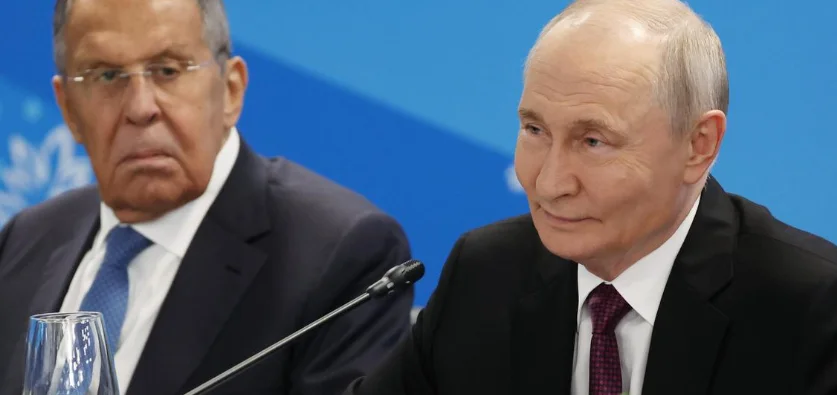
Foreign Minister Sergey Lavrov said the country would shut Germany’s Goethe-Institut centres in Moscow, St. Petersburg and Yekaterinburg. The announcement was made at the Eastern Economic Forum in Vladivostok on Thursday.
Lavrov argued that Germany should have understood that shutting the Russian House in Berlin would have consequences for Germany’s own cultural presence in Russia.
End of German Cultural Presence?
The Goethe-Institut has operated in Russia since 1992, when its first centre opened in Moscow. Despite the deterioration in relations following Russia’s invasion of Ukraine, the institute’s centres continued to operate.
Lavrov’s latest remarks suggest Moscow views Germany’s decision to close the Russian cultural centre in Berlin as effectively ending Germany’s formal cultural presence in Russia.
Russia Rejects Germany’s Accusations
Moscow has strongly denied involvement in the Leipzig/Halle incident. President Vladimir Putin dismissed Germany’s claims and accused Berlin of manufacturing evidence to support its allegations.
Russian officials have described Germany’s actions as politically motivated and warned that Moscow would respond to what it considers anti-Russian measures.
Tensions Spread Across Europe
The latest dispute comes amid growing concerns among European governments about alleged Russian sabotage, espionage and other hybrid activities.
EU and NATO officials have expressed support for Germany following the Leipzig incident, while European governments continue to discuss additional sanctions and security measures against Moscow. The tit-for-tat closure of cultural institutions now adds another layer to the already strained relationship between Russia and Germany.