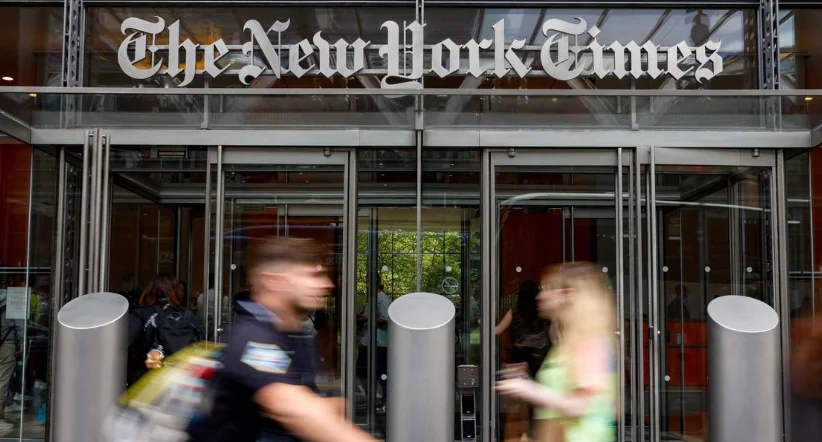
The long-running copyright dispute between OpenAI and The New York Times has taken a significant turn after the Trump administration formally backed the AI company’s position.
The U.S. Department of Justice filed a 20-page statement of interest in Manhattan federal court on September 1, arguing that the use of copyrighted material to train large language models can fall within the “fair use” exception under U.S. copyright law.
Government Calls AI Training ‘Transformative’
A central part of the government’s argument is that AI training should be viewed as a transformative use of copyrighted material.
The Justice Department said AI systems process enormous quantities of material to develop models capable of performing different functions, rather than simply reproducing the original articles or books. It argued that restricting such training could slow creative and scientific development and weaken America’s economic competitiveness.
National Security Also Cited
The administration also connected AI leadership with national security.
Justice Department officials argued that limiting the development of large language models could place the United States at a disadvantage compared with foreign competitors. Associate Attorney General Stanley Woodward said maintaining American leadership in AI was important for national security, prosperity and economic mobility.
Commerce Secretary Howard Lutnick has separately encouraged countries to recognize fair-use principles for AI development while also finding ways to protect artists and creators.
New York Times Pushes Back
The New York Times strongly criticized the administration’s position, arguing that it favors major technology companies at the expense of journalists, authors and other creators.
The newspaper maintains that AI companies should obtain permission or provide fair compensation when using copyrighted material that forms the foundation of their commercial products.
Lawsuit Dates Back to 2023
The New York Times sued OpenAI and Microsoft in 2023, accusing them of using millions of Times articles without authorization to train AI systems.
The dispute is part of a much broader legal battle involving authors, publishers, music companies and media organizations. Similar copyright cases have been filed against AI companies including OpenAI, Anthropic and Meta.
What Happens Next?
The Justice Department’s filing does not decide the case. It is an advisory submission to the court rather than a judgment.
The central legal question remains whether AI companies’ use of copyrighted works during model training qualifies as transformative fair use under U.S. copyright law. The eventual ruling could have major consequences for the future relationship between AI developers, publishers, authors and other copyright holders.