


US President Donald Trump says he believes Iran's Supreme Leader Ayatollah Mojtaba Khamenei is still alive, although he believes the Iranian leader suffered very serious injuries.
Trump made the comments during an interview with conservative radio host Glenn Beck, amid renewed speculation over Khamenei's health and whereabouts.
According to Trump, Khamenei suffered severe injuries to the left side of his body, including his arm and leg. Despite the seriousness of those injuries, Trump said he did not believe the Iranian leader had died.
Khamenei's prolonged absence from public view has become a major source of speculation.
He became Iran's supreme leader in March after his father, Ayatollah Ali Khamenei, was killed during US-Israeli strikes in February.
Since taking the country's top religious and political position, Mojtaba Khamenei has made very few public appearances and has not been seen in independently verified contemporary footage or photographs.
That absence has generated competing reports about his condition.
Some reports have suggested that he suffered serious injuries during the strikes and required extensive medical treatment. Other reports have raised the possibility that he may have died from those injuries.
There has, however, been no independently verified evidence establishing that he is dead.
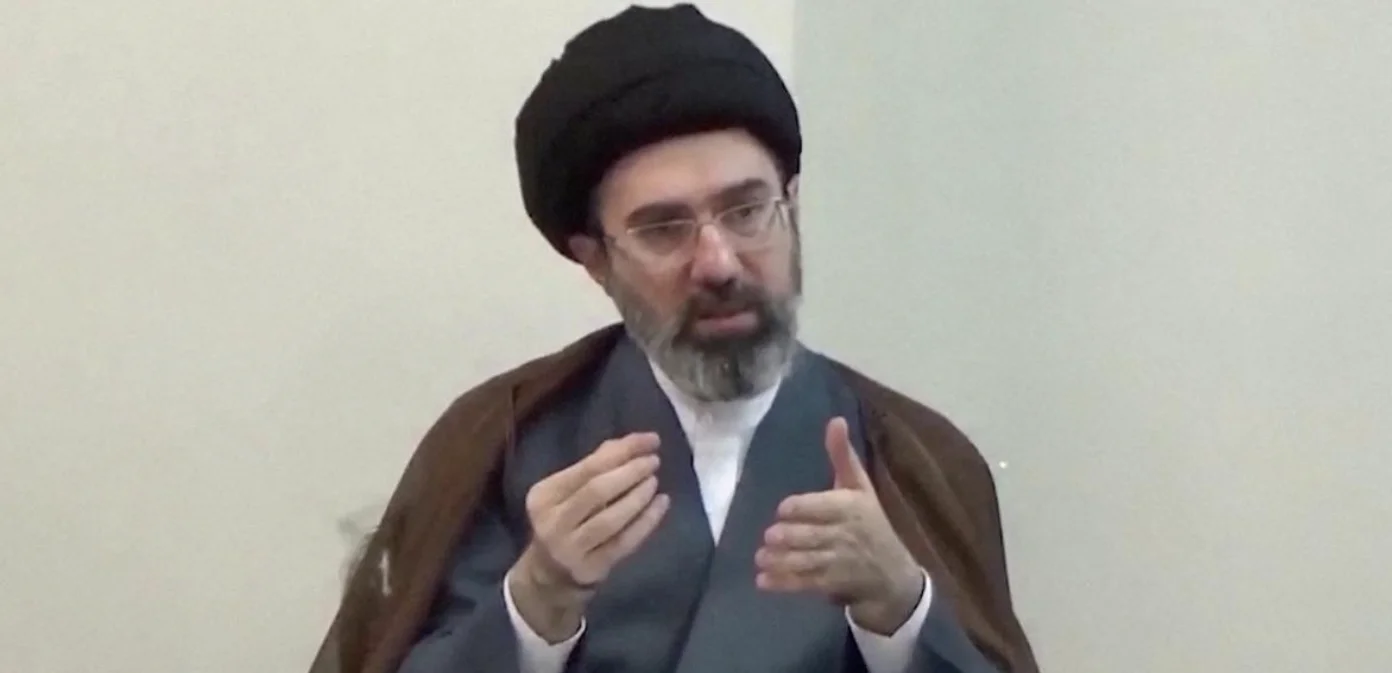
Iranian media have released footage purportedly showing Khamenei, but the timing and authenticity of some of the material have not been independently established.
Iran's Fars news agency recently released rare footage showing Khamenei attending a religious academic session. Because the footage was undated, however, it did not provide clear evidence of his current condition.
Earlier reports also suggested that Khamenei suffered severe injuries to his arms and legs and may have sustained serious burns to his face.
US officials have previously spoken about the possibility that he was badly injured. But Tehran has not publicly confirmed the full details of those reports.
The uncertainty has also raised questions about how Iran's government is functioning.
If Khamenei remains seriously incapacitated, the country's political and security institutions would have to manage major decisions while maintaining the appearance of continuity in the supreme leadership.
Iranian President Masoud Pezeshkian has previously indicated that communication with Khamenei had become extremely difficult, adding to questions about how directly the supreme leader is involved in day-to-day decision-making.
Trump said his belief that Khamenei is alive is partly based on the behaviour of Iranian negotiators.
He argued that Iranian officials continue to refer to consulting the supreme leader when making important decisions. Trump suggested that if Khamenei were actually dead, Iranian authorities would be maintaining a highly convincing effort to conceal it.
Those comments, however, represent Trump's assessment rather than independently verified confirmation of Khamenei's condition.
The Iranian government has not provided enough publicly verifiable information to conclusively establish whether the supreme leader is healthy, seriously incapacitated or dead.
The uncertainty comes as the United States continues to apply military and economic pressure on Iran.
Trump again claimed that American pressure was producing significant results and predicted a major victory in the conflict.
He also repeated his position that Iran must not be allowed to obtain nuclear weapons, describing the issue as the central concern behind US policy towards Tehran.
The Strait of Hormuz was another major subject in Trump's remarks.
The US president said the strategic waterway was effectively open and claimed that American naval forces were helping ships move through it.
However, other reports indicate that the waterway has not returned to unrestricted normal commercial traffic and that Iranian forces continue to exercise control over routes and shipping.
The disagreement over the status of the strait illustrates the broader information battle surrounding the conflict.
Both Washington and Tehran have sought to present their military and political positions as strong, while independent information from inside Iran remains limited.
The uncertainty surrounding Khamenei's condition is particularly important because of the role held by the supreme leader in Iran's political system.
The position carries significant authority over national security and major strategic decisions.
If Khamenei is alive but seriously injured, questions will remain over how much authority he can personally exercise.
If he is unable to govern directly, other senior officials and security institutions may have taken on a greater operational role.
That possibility has increased international interest in the activities of Iran's Revolutionary Guard and other powerful institutions.
The question of who is actually making strategic decisions could also become important in any future negotiations between Tehran and Washington.
For the United States, knowing who has the authority to approve an agreement is critical.
For Iran, maintaining uncertainty over its leadership may be viewed as a security measure during an ongoing conflict.
The Iranian government has released occasional material apparently intended to demonstrate that Khamenei remains alive.
However, because some of the footage has been undated, outside observers have been unable to establish exactly when it was recorded.
That has allowed speculation to continue.
Trump's latest statement is therefore unlikely to end the debate.
Instead, it adds another assessment to an already confusing picture: the US president believes Khamenei survived the attacks but suffered major injuries, while other reports continue to question the Iranian leader's condition.
The situation also demonstrates how difficult it can be to independently verify information during wartime.
Official statements from governments involved in the conflict may be influenced by political and military considerations, while reports from unnamed sources can be difficult to confirm.
For that reason, claims about Khamenei's health need to be treated cautiously until reliable evidence becomes available.
For now, the most concrete information is that Trump believes Mojtaba Khamenei remains alive but was very seriously wounded.
Khamenei has remained largely absent from public view since becoming supreme leader, and his current health and degree of control over Iran's government remain unclear.
The issue is likely to remain closely watched as the US-Iran conflict develops.
Any confirmed appearance by Khamenei, official medical information or verified communication from the Iranian leader could significantly change the picture.
Until then, questions surrounding his condition will remain one of the most closely followed aspects of Iran's wartime leadership.