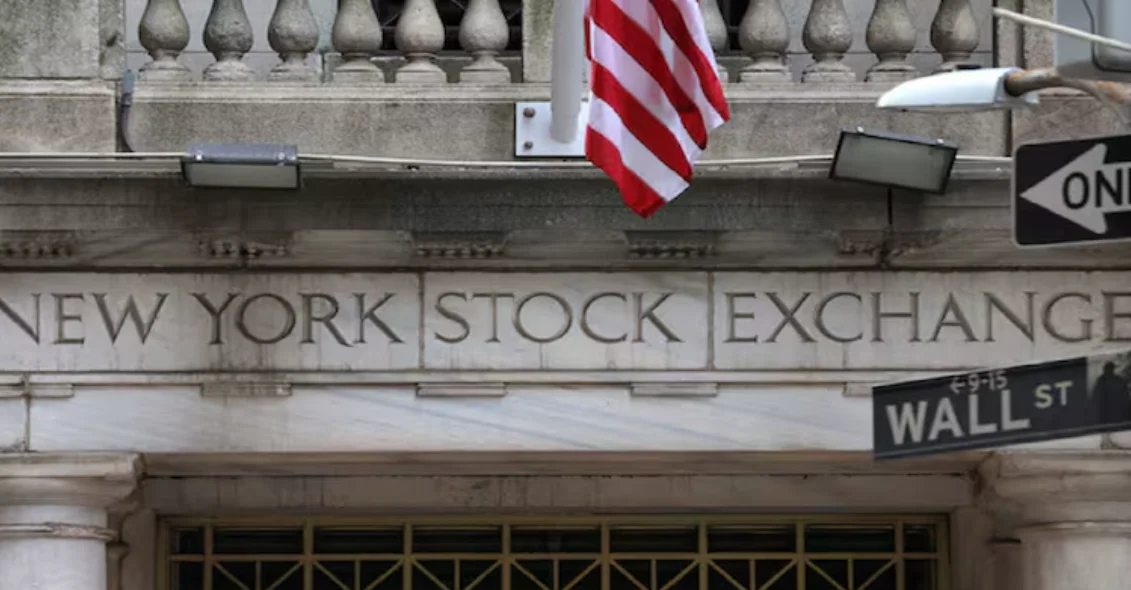
Wall Street appeared headed for a cautious start on Wednesday as a sharp rise in oil prices added fresh pressure to US equities.
Brent crude climbed above $100 a barrel, crossing the psychologically important level for the first time since July. The rise came amid escalating tensions involving the United States and Iran, raising fears that the conflict could further disrupt oil supplies from the Middle East.
The jump in crude prices weighed on US stock futures. Nasdaq 100 futures were down around 0.5%, while S&P 500 futures slipped roughly 0.3% and Dow futures fell about 0.4% in early trading.
The weakness follows a difficult session on Tuesday, when the Dow Jones Industrial Average dropped 1.2%, the S&P 500 declined 0.6% and the Nasdaq Composite lost 0.3%.
Oil Price Surge Raises Inflation Concerns
The biggest concern for investors is the potential impact of expensive crude on inflation.
Higher oil prices can increase transportation, manufacturing and energy costs, potentially pushing consumer prices higher. That could make it harder for the Federal Reserve to ease monetary policy.
Markets are now increasingly pricing in the possibility of a 25-basis-point Fed rate hike at next week's meeting. Reuters reported that the probability had risen to around 62.4% according to CME FedWatch data.
Investors are also waiting for the latest US inflation figures, with Producer Price Index data due Thursday and Consumer Price Index data expected Friday. Those numbers could influence expectations for the Federal Reserve's next policy decision.
Middle East Conflict Remains Key Risk
The oil rally has been closely linked to the worsening US-Iran conflict and concerns about the security of energy shipments through the region.
Brent crude was recently around $100.85, while US West Texas Intermediate crude moved near $95.58.
Analysts have warned that a prolonged period of elevated oil prices combined with higher interest rates could become a major headwind for equities. Morgan Stanley analysts described higher oil and interest rates as key near-term risks for stocks.
Despite the broader weakness, some technology and AI-related stocks remained relatively resilient. Meta shares, for example, gained more than 5% in premarket trading after the company unveiled its new AI assistant, Muse.
Markets will now closely watch oil prices, developments in the Middle East and this week's US inflation data for clues about the direction of Wall Street.