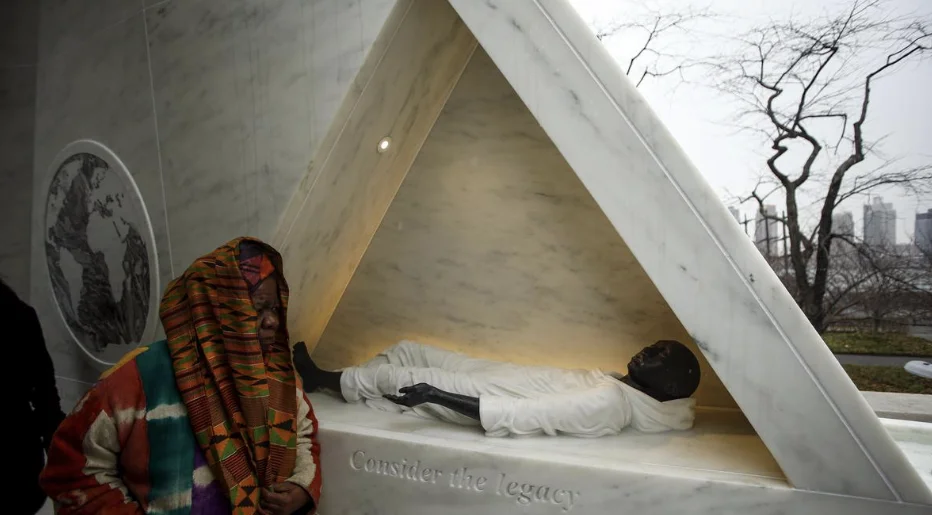
Countries should seriously consider reparations for the historical injustices associated with the slave trade and slavery, a United Nations expert committee has said.
The committee argues that slavery should not be treated simply as a historical system that ended with abolition. Its social and economic consequences have continued across generations, particularly for people of African descent.
Countries Urged to Consider Reparations
The committee has called on countries and institutions that benefited from the slave trade to examine their historical role and consider appropriate forms of redress.
It argues that the wealth generated through the forced labour of enslaved people helped build economic systems whose benefits have persisted, while communities affected by slavery continued to face long-term disadvantages.
Effects of Slavery Continue Today
Millions of Africans were forcibly transported through the transatlantic slave trade and subjected to exploitation.
Even after slavery was abolished, affected communities faced persistent disadvantages involving poverty, access to education, land ownership, employment and social equality.
The committee says these historical patterns remain relevant when examining contemporary racial and economic inequalities.
Reparations Go Beyond Financial Payments
Reparations do not necessarily mean direct financial compensation alone.
The committee points to a broader range of possible measures, including investment in affected communities, improved access to education and healthcare, historical recognition, memorialisation and other forms of restorative justice.
The objective would be to address both material disadvantages and the continuing social consequences of historical discrimination.
Debate Over Historical Responsibility
One of the most contentious questions is whether present-day governments and populations should bear responsibility for actions committed by previous generations.
Critics of reparations argue that current generations should not be held financially responsible for historical crimes.
Supporters, however, argue that wealth and institutional advantages created during slavery can continue across generations, making the consequences a contemporary issue rather than purely a historical one.
Link With Racial Discrimination
The committee connects the history of slavery with continuing racial discrimination.
People of African descent continue to experience discrimination and unequal access to opportunities in several countries.
According to the committee’s approach, addressing these inequalities requires acknowledging the historical structures that contributed to them.
Different Positions Among Countries
There is no international consensus on reparations for slavery.
Some countries have acknowledged aspects of their historical involvement and introduced initiatives involving education, memorialisation, development or community support.
Others have rejected direct financial reparations, arguing that current governments should not be held responsible for historical actions.
The issue therefore remains politically sensitive.
Focus on Africa and the Caribbean
Countries and organisations across Africa and the Caribbean have been among the strongest advocates of reparations.
They argue that the slave trade caused enormous demographic, economic and social damage and contributed to long-term development disadvantages.
Supporters say international cooperation, investment and social development programmes should form part of efforts to address these historical consequences.
A Broader Approach to Historical Justice
The reparations debate is increasingly being framed not simply as an attempt to compensate for past suffering but also as a way to address inequalities that remain today.
Measures could include formally recognising historical injustices, incorporating the history of slavery into education and strengthening policies designed to combat discrimination.
Challenges Ahead
Significant questions remain over who should pay reparations, who should receive them, how eligibility should be determined and whether compensation should be financial or take other forms.
Reaching international agreement will be difficult, particularly because countries have very different historical experiences and political positions.
Nevertheless, the committee’s recommendations could encourage governments to examine the relationship between historical exploitation and present-day inequality more closely.
Conclusion
The United Nations committee’s call for countries to consider reparations for the slave trade adds fresh international weight to the long-running debate over historical justice.
The committee’s approach goes beyond the idea of direct financial compensation, highlighting education, healthcare, social investment, historical recognition and other forms of restorative action.
Whether countries adopt such measures will depend on political negotiations and how governments interpret their historical responsibilities. But the recommendation reinforces the argument that the legacy of slavery remains a contemporary issue rather than one confined to the past.