



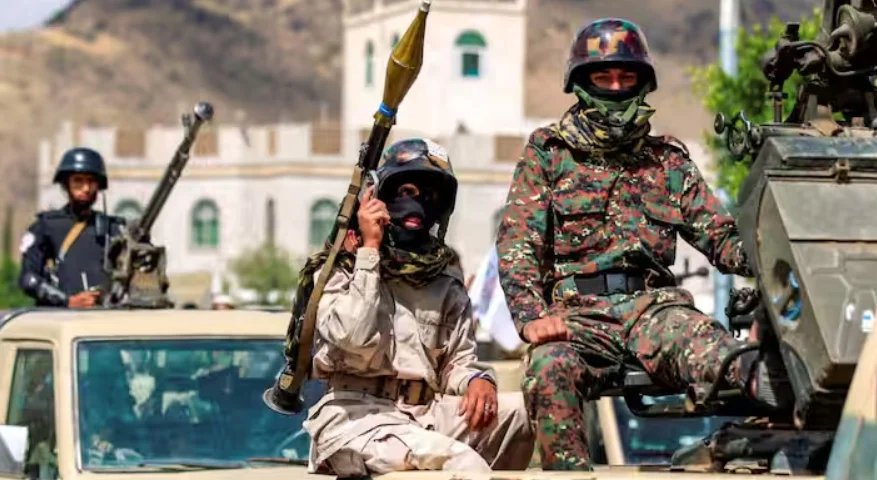
Fierce Fighting Erupts in Western Yemen
Yemen has witnessed a major escalation in fighting after Houthi forces launched a ground offensive accompanied by rocket and drone attacks near the Red Sea coast and around Taiz.
The fighting began on Thursday across several fronts west of Taiz province. The offensive has raised concerns that Yemen's fragile truce could be further undermined and that the conflict could once again move toward broader confrontation.
Military officials said the Houthis were attempting to advance toward the coastal areas and disrupt government-held positions and supply routes.
81 Combatants Reportedly Killed
Military and medical sources put the combined death toll at 81 fighters.
A military official on the Red Sea coast reported that 24 government troops were killed, while another official in the Taiz area said another 15 government personnel died in the fighting.
Medical sources in Houthi-controlled territory reported that at least 42 Houthi fighters were killed.
The figures come from sources on both sides of the conflict and have not been independently verified.
Houthis Target Route to Strategic Port
According to Yemeni military sources, the Houthi offensive is aimed in part at cutting the road connecting Taiz with the port city of Mokha (Mocha).
Control of the route would give the Houthis greater access to the western coastline and could isolate government positions around Taiz from the coast.
The Houthis have reportedly captured several elevated positions overlooking government-held areas. Such locations are strategically important because of their proximity to the Red Sea and major transport routes.
Bab al-Mandab Strait at the Centre of the Conflict
The fighting has raised particular concern because of the Houthis' reported push toward territory near Bab al-Mandab, one of the world's most important maritime chokepoints.
The narrow waterway sits at the southern entrance to the Red Sea and connects the Red Sea to the Gulf of Aden and the wider Indian Ocean. Through the Red Sea and the Suez Canal, it also provides a major route between Asia, Europe and the Mediterranean.
Any sustained disruption in the area could therefore have consequences well beyond Yemen, particularly for international shipping and energy markets.
Government Sends Reinforcements
Yemeni government forces have reportedly deployed additional troops toward Taiz as the Houthi offensive intensifies.
The government, which is based in Aden after losing control of the capital Sanaa to the Houthis in 2014, is attempting to prevent further Houthi advances toward the coast.
The latest fighting has involved ground assaults as well as missile and drone attacks, according to military sources.
Houthis Claim Gains, Government Forces Resist
The two sides have offered competing accounts of the fighting.
Yemen's Army Media Centre said government forces had repelled Houthi infiltration attempts and reported that more than 18 Houthi fighters were killed in one area.
Separately, field reports indicated that Houthi forces managed to seize some positions temporarily before government troops launched counterattacks and regained control of certain locations.
Why Bab al-Mandab Matters
Bab al-Mandab is vital to global trade because it forms part of the maritime route connecting the Indian Ocean with the Red Sea and the Suez Canal.
The Houthis have previously targeted commercial and energy-related shipping in the Red Sea. Their reported push toward areas overlooking the strait has therefore heightened concerns about the security of one of the world's busiest shipping corridors.
Yemen Conflict Enters Another Dangerous Phase
Yemen has been caught in a prolonged civil conflict since the Houthis seized Sanaa in 2014. A Saudi-led military intervention followed in 2015, while a fragile truce reached in 2022 significantly reduced large-scale fighting.
However, efforts to reach a lasting political settlement have stalled, while wider regional tensions have added new pressure to the conflict.
The latest offensive represents one of the most significant escalations along the western front in recent years and could further complicate attempts to revive peace negotiations.