Rescue teams are racing against time in Nepal as several people remain trapped inside tunnels at hydropower project sites following devastating flash floods.
The worst-affected areas include parts of Rasuwa and Nuwakot districts, where multiple hydropower projects have tunnels used by workers and project personnel.
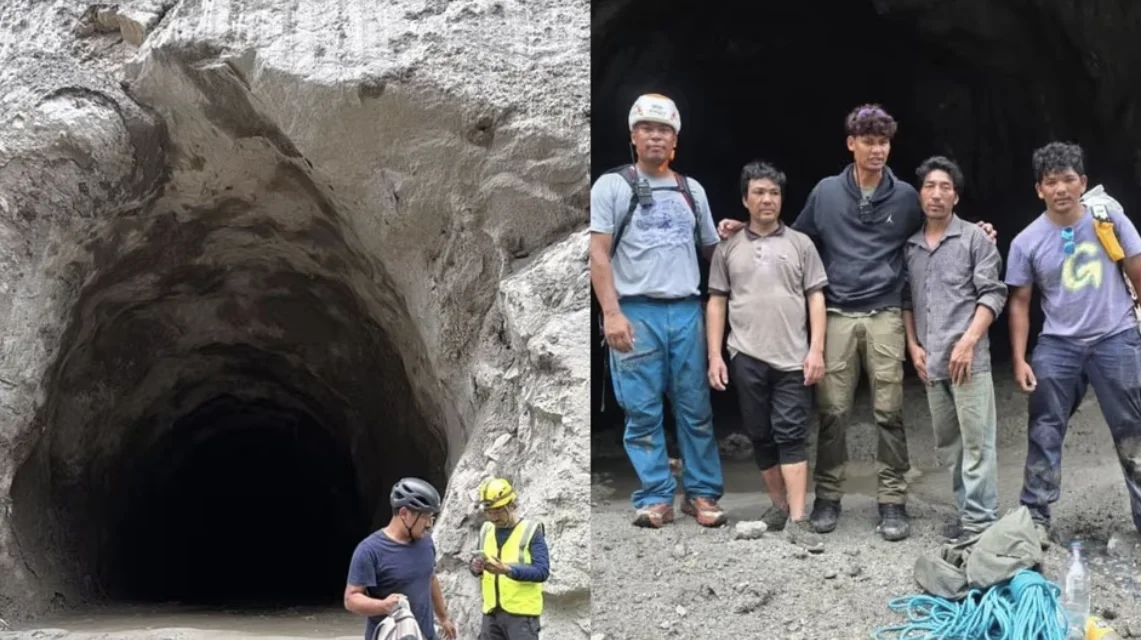
Fresh visuals from inside one of the tunnels in Rasuwa show rescuers moving through a dark, water-filled passage as they attempt to reach people trapped deeper inside.
First Visuals From Inside the Tunnel
The newly emerged footage provides a glimpse of the difficult conditions facing rescuers.
In one tunnel, water can be seen leaking continuously from the walls, creating what appears to be a rain-like effect inside the passage.
Rescuers are using torchlights to navigate through the tunnel while trying to move deeper into the affected area.
The tunnel is around 250 metres long, and at the time of the report, rescuers had managed to reach approximately 130 metres into it. At least six people were believed to remain trapped inside.
Multiple Hydropower Sites Affected
The situation is not limited to a single tunnel.
There are 11 hydropower sites across Rasuwa and Nuwakot, five of which are still under construction.
Each hydropower site can have multiple tunnels, making it difficult for authorities to establish the exact number of people who may still be stranded.
Survivors told Hindustan Times that people from Nepal, India, China, South Korea and Germany were among those present in the affected areas.
Hundreds Reported Missing
The tunnel emergency is unfolding amid a much wider disaster.
At the time of the report, at least 934 people were known to be missing in the affected region, while at least 361 had been rescued.
Across Nepal, the disaster had claimed at least 626 lives, while 2,426 people remained unaccounted for, according to the National Disaster Risk Reduction and Management Authority. The missing included foreign nationals from several countries, including India, Malaysia, Australia and the United States.
India Sends Tunnelling Experts
India has stepped up its support for Nepal's rescue operations by sending a team of tunnelling experts.
External Affairs Minister S. Jaishankar said the decision was taken because of the possibility that people could be trapped inside tunnels at hydropower facilities.
India is also providing other forms of emergency assistance.
Jaishankar said India was sending bridges that could be quickly assembled and was prepared to deploy medical teams if required. NDRF personnel could also be sent if Nepal requested them.
Indian Nationals Among Those Affected
The disaster has also affected Indian nationals in Nepal.
Jaishankar said 85 Indians had been rescued on Friday, while 315 Indians were still out of contact.
The figures underline the importance of continuing rescue and communication efforts in areas where roads and infrastructure have been severely damaged by the floods.
Why Tunnel Rescues Are So Difficult
Rescuing people from flooded tunnels presents challenges that are different from ordinary flood rescue operations.
Water can accumulate rapidly inside confined spaces, while blocked passages, mud and poor visibility can slow down rescue teams.
There may also be uncertainty over the exact location of trapped people.
Rescuers must therefore move carefully while assessing the structural condition of the tunnel and ensuring that the route remains safe enough for further operations.
Construction Sites Face Additional Risks
Five of the 11 hydropower sites in Rasuwa and Nuwakot are still under construction.
Construction sites can have workers operating inside tunnels, along with engineers and other personnel.
A sudden flash flood can leave people with very little time to evacuate, particularly when access roads and surrounding infrastructure are also damaged.
The presence of multiple tunnels at each site adds another layer of complexity for emergency teams.
A Race Against Time
The condition of those trapped inside the tunnels makes time a critical factor.
Rescuers need to identify their exact locations, establish safe access routes and prevent further water from entering the affected areas.
The longer the rescue takes, the more difficult the operation can become, particularly if weather conditions deteriorate again.
Nepal’s Wider Disaster
The tunnel emergency is part of a much larger disaster affecting Nepal.
Flash floods have damaged infrastructure and disrupted access to several areas.
The scale of the destruction has forced authorities and rescue teams to operate under difficult conditions, while international partners are offering assistance.
The government is also facing the challenge of locating thousands of people whose whereabouts remain unknown.
International Support
India's decision to deploy tunnelling specialists adds a technical dimension to the international assistance being provided to Nepal.
Specialist knowledge can be particularly valuable when conventional rescue equipment is insufficient to deal with flooded or obstructed tunnels.
India has also provided relief supplies and other emergency support as Nepal continues to assess assistance offers from abroad.
What Happens Next?
The immediate priority remains reaching the people trapped inside the tunnels and determining how many others may still be stranded at other hydropower sites.
Rescue teams are expected to continue searching the tunnels while authorities work to establish a clearer picture of the missing.
The arrival of India's tunnelling experts could help improve the technical capacity of the rescue operation in some of the most difficult locations.
Conclusion
Nepal's flash-flood disaster has created a major rescue challenge at hydropower project sites in Rasuwa and Nuwakot.
First visuals from inside the tunnels show rescuers working through water-filled passages as they try to reach trapped workers. With multiple hydropower sites affected and hundreds of people still unaccounted for, the rescue operation remains a race against time. India's deployment of tunnelling experts is expected to provide additional technical support as the search continues.