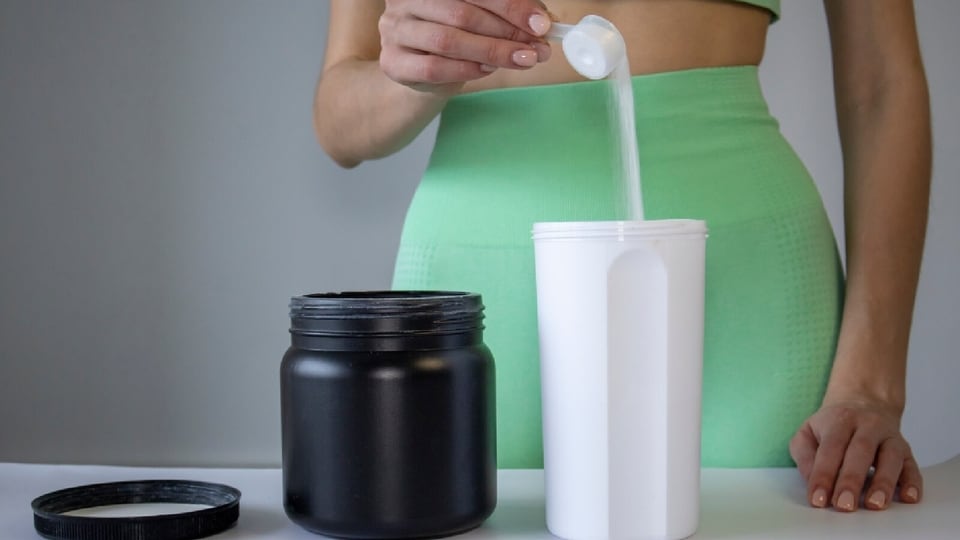
Whey protein has become increasingly popular among women who go to the gym, play sports or are trying to improve their body composition. But a common question remains: Do women actually need whey protein?
The simple answer is no—not necessarily.
Whey is a source of high-quality protein, but there is nothing specifically female about the need to consume it. A woman who gets enough protein from eggs, dairy, fish, meat, soy, pulses or other foods does not need a protein shake simply because she exercises.
However, for women who struggle to reach their daily protein target through food, whey can be a practical and convenient option.
Protein needs are not determined by gender alone
Protein requirements are influenced by factors such as body weight, physical activity, training intensity and health goals.
Sports-nutrition guidance indicates that active women can require considerably more protein than the basic population recommendation. The International Society of Sports Nutrition's position on female athletes recommends roughly 1.4–2.2 grams of protein per kilogram of body weight per day, with intake spread across the day.
Recent reviews of female strength and conditioning nutrition similarly suggest that women doing resistance exercise may benefit from around 1.5–1.8 g/kg/day, with higher amounts sometimes appropriate during demanding training or calorie restriction.
For example, a 60-kg woman who regularly strength trains could potentially need around 90 grams or more of protein per day, depending on her training and goals.
Does whey make women bulky?
One of the most common misconceptions is that taking protein powder will automatically make women look bulky.
Protein itself does not create a muscular physique overnight. Muscle growth requires resistance training, sufficient energy and consistent protein intake over time.
In other words, simply adding a scoop of whey to a diet does not automatically lead to a bodybuilder-like physique. Protein supports muscle repair and growth, while the overall training and calorie balance determine how body composition changes.
Whey is a supplement, not a necessity
Whey can be particularly useful for people who find it difficult to obtain enough protein from regular meals.
A shake can be convenient after exercise, during a busy workday or when appetite is low. But whole foods remain important because they also provide vitamins, minerals, fibre and other nutrients.
For women who already meet their protein requirements through normal meals, adding whey may provide little additional benefit.
Research on whey specifically in women also suggests that its effects are closely connected to exercise. A systematic review of postmenopausal women found that whey supplementation combined with resistance training improved some measures of strength and lean mass, while whey without resistance training did not show the same benefits for muscle strength or lean mass.
What about the '30-minute protein window'?
Another popular fitness belief is that women must drink a protein shake immediately after finishing a workout.
The evidence is more nuanced. Total daily protein intake is generally more important than obsessing over a strict 30-minute window. Protein consumed around training can support muscle protein synthesis, but the opportunity to benefit from protein is not limited to a few minutes immediately after exercise.
For athletes training frequently or intensely, consuming protein around workouts can still be a useful strategy for recovery.
What should women eat if they don't want whey?
Women can meet their protein requirements through foods such as:
Eggs
Milk and yoghurt
Paneer and other dairy products
Chicken and fish
Soy and tofu
Lentils and beans
Chickpeas
Nuts and seeds
The most practical approach is to distribute protein across meals rather than trying to consume most of it in one sitting.
So, should women take whey?
There is no universal yes or no.
Whey may be useful if:
You struggle to meet your protein target through food.
You regularly perform strength or endurance training.
You need a convenient protein source.
Your diet has limited high-protein options.
Whey may not be necessary if:
You already consume enough protein from food.
You do little physical activity and have modest protein requirements.
You simply want to take it because it is marketed as a fitness essential.
Ultimately, women need adequate protein—not necessarily whey protein. A balanced diet, appropriate training, sufficient calories and recovery remain the foundation of fitness and muscle health.