A major fire broke out at a temporary labour shelter on Avinashi Road in Coimbatore on Saturday afternoon, destroying dozens of makeshift sheds and triggering multiple LPG cylinder explosions.
The incident occurred near the Nava India bus stop, where a private construction company had provided temporary accommodation for more than 400 migrant workers, many of them from Bihar, Jharkhand and Madhya Pradesh. According to preliminary information, around 70 sheds were destroyed in the fire.
Fire started while workers were preparing tea
Preliminary reports indicate that the fire began when three workers were preparing tea inside one of the shelters.
An LPG cylinder reportedly exploded unexpectedly, forcing the workers to flee. The flames then spread rapidly to nearby sheds, where other cooking-gas cylinders were stored.
As the fire intensified, several of those cylinders also exploded, creating a series of secondary blasts and making it difficult for emergency personnel to approach the affected area.
More than 25 cylinders exploded
District Fire Officer Ganeshan said that between 25 and 30 LPG cylinders exploded during the incident.
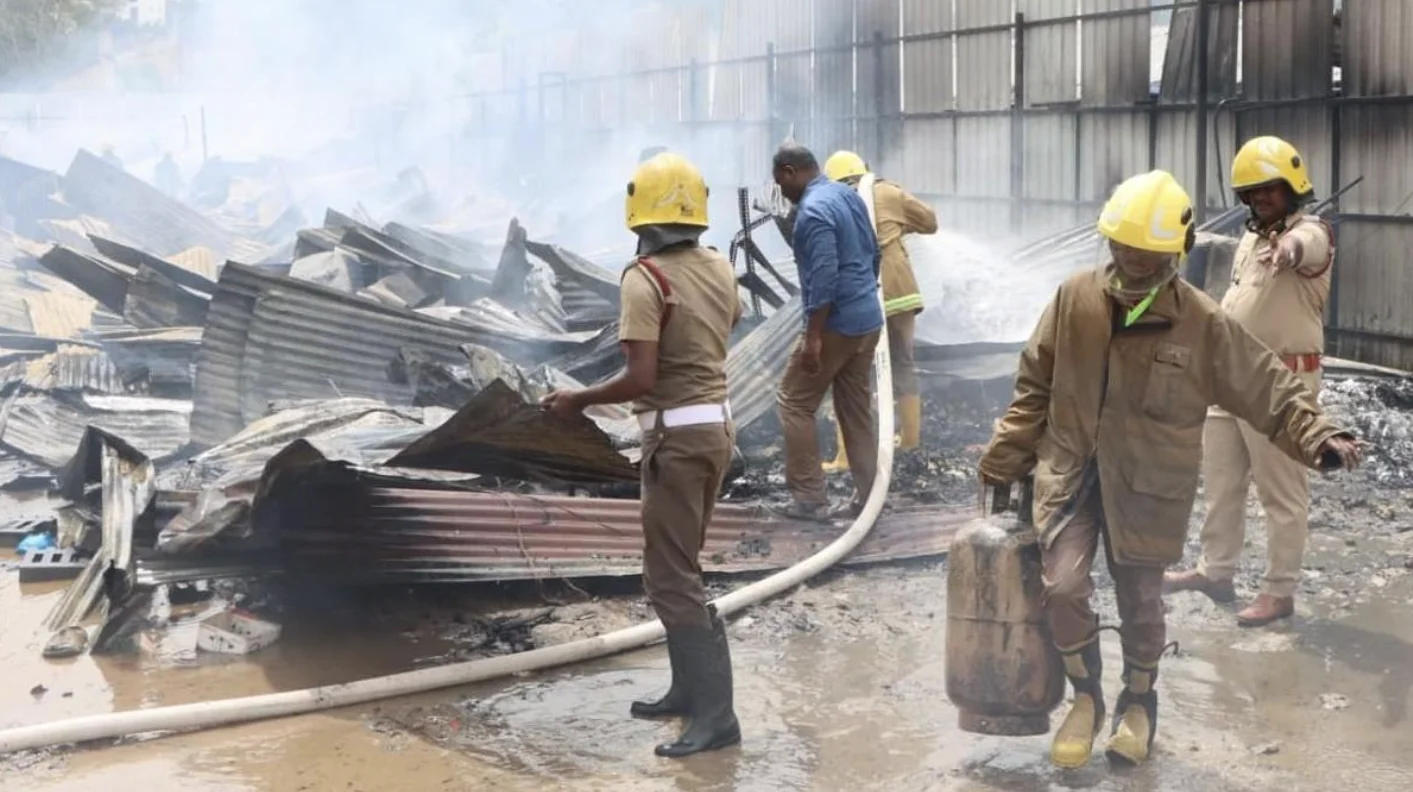
Some cylinders reportedly cracked or became severely damaged because of the intense heat. Firefighters were able to retrieve more than 30 cylinders that had become badly swollen and were at risk of exploding.
Removing those cylinders helped prevent further explosions and allowed emergency teams to bring the situation under control.
Firefighters battle the blaze
After receiving information about the fire, local residents alerted the Fire and Rescue Services.
Firefighters and fire tenders from the South, North, Peelamedu and Ganapathy stations were deployed to the site.
More than 40 firefighters reportedly worked to contain the blaze and prevent it from spreading further. The presence of multiple LPG cylinders made the operation particularly challenging, as firefighters had to deal with the risk of additional explosions.
No casualties reported
Despite the scale of the fire, no deaths or injuries were reported.
Most of the workers were reportedly away from their accommodation when the fire broke out, helping prevent what could otherwise have been a major loss of life.
However, the fire destroyed workers' personal belongings and other materials stored inside the temporary shelters. Food items and household possessions were reportedly scattered across the site after the blaze.
Police begin investigation
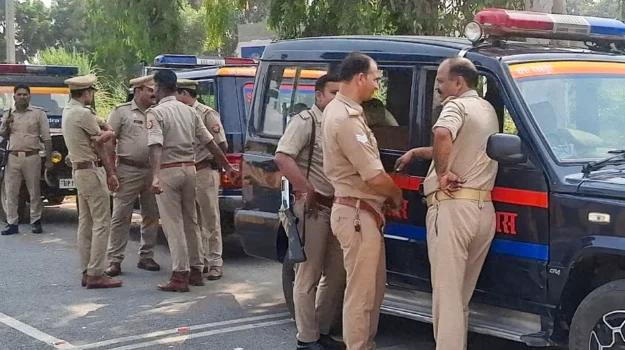
Peelamedu Police have registered a case and begun an investigation into the incident.
The immediate priority is to determine what caused the first cylinder to explode and how the fire spread so quickly through the temporary accommodation.
Authorities are also expected to examine whether appropriate safety measures were in place at the labour shelter, including the storage and handling of LPG cylinders.
Safety concerns at temporary labour shelters
The incident has also raised questions about safety arrangements at temporary accommodation provided for migrant and construction workers.
Such shelters can contain large numbers of people in relatively small spaces, while cooking facilities and LPG cylinders may be located close to one another.
A fire that begins in one shelter can therefore spread rapidly to neighbouring structures, particularly when the accommodation consists of closely packed temporary sheds made from combustible materials.
Risk from LPG cylinders
LPG cylinders do not normally explode simply because they are present during a fire. However, exposure to intense heat can cause pressure inside a cylinder to rise significantly, creating a serious hazard.
This is why firefighters faced an additional challenge during the Coimbatore incident. Besides extinguishing the flames, they had to identify and remove cylinders that had been exposed to extreme heat.
The successful removal of more than 30 damaged cylinders helped reduce the possibility of further explosions.
Large-scale property damage
The fire caused extensive damage to the labour quarters.
Around 70 temporary sheds were reportedly destroyed, leaving many workers without accommodation and belongings.
The incident has therefore created an immediate rehabilitation challenge for the construction company and local authorities, particularly because hundreds of workers were living at the site.
Investigation into the initial blast
While preliminary information points to an LPG cylinder explosion as the starting point, authorities are yet to establish the exact cause.
Investigators will need to determine whether the incident resulted from a cylinder malfunction, a gas leak, improper handling, cooking equipment or another factor.
The condition and placement of the cylinders, as well as the safety arrangements at the site, are also likely to form part of the investigation.
Why the incident matters
The Coimbatore fire highlights the risks associated with densely packed temporary accommodation where cooking facilities and LPG cylinders are used.
The absence of casualties is a major relief, but the destruction of dozens of shelters shows how quickly a fire can escalate when multiple gas cylinders are present in a confined area.
The incident also underlines the importance of ensuring that temporary labour camps meet basic fire-safety requirements, including adequate spacing between shelters, safe LPG storage, emergency exits and access for fire vehicles.
What happens next
Authorities are expected to continue investigating the cause of the first explosion and assess whether safety regulations were followed at the site.
The affected workers will also need temporary accommodation and assistance to recover from the loss of their belongings.
The Coimbatore fire serves as a major reminder of the importance of LPG safety and fire preparedness at temporary labour settlements. While no casualties were reported, the destruction of around 70 shelters and the explosion of more than 25 cylinders demonstrate the scale of danger that can develop when a fire spreads through a densely packed accommodation area.