



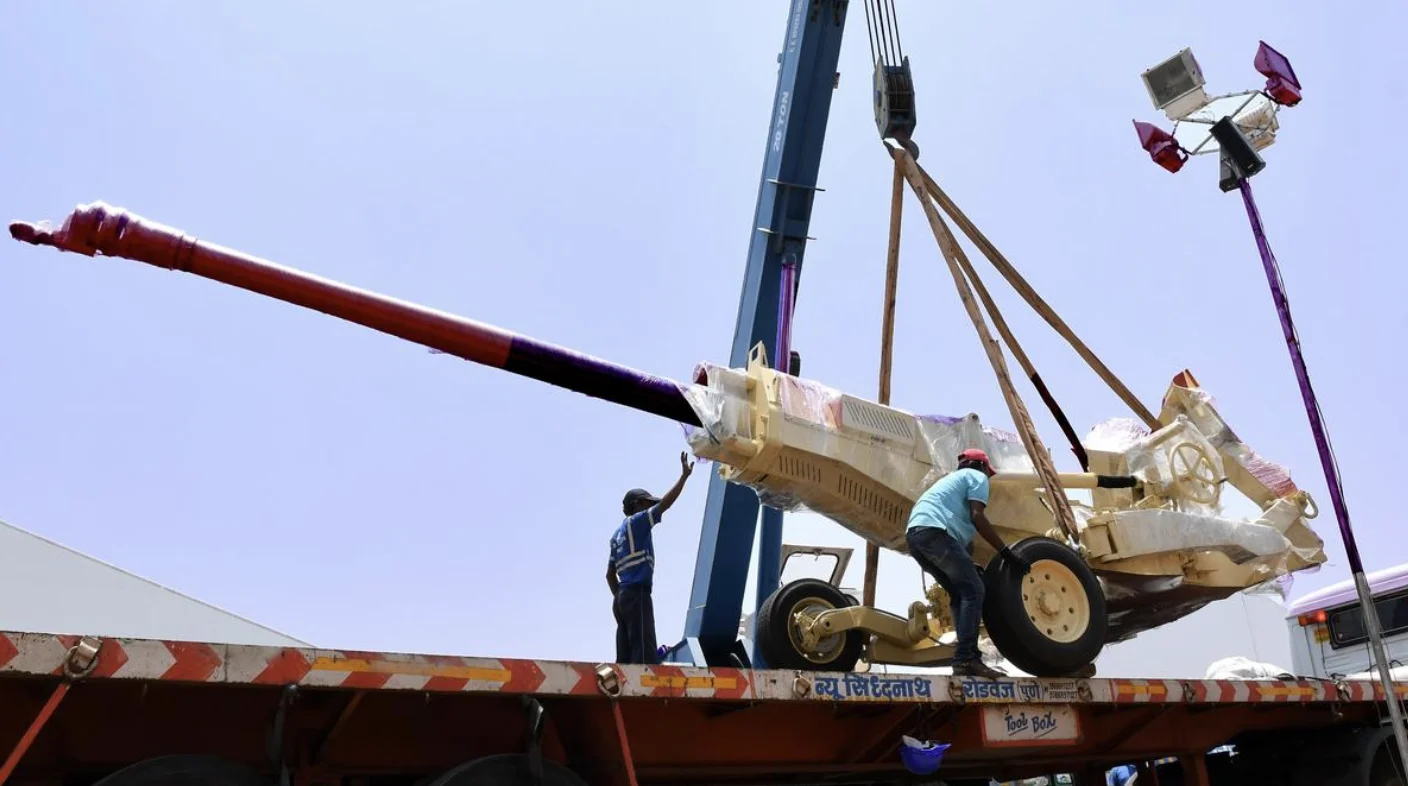
India has taken another step towards strengthening its defence manufacturing and export ecosystem by easing norms governing licences for defence exports.
The Ministry of Defence's move is aimed at making the export approval process simpler and more efficient for domestic defence manufacturers seeking to sell their products in international markets.
The change comes as India increasingly focuses on moving from a largely import-dependent defence market towards a stronger domestic manufacturing and export-oriented industry.
Simplifying Defence Export Approvals
Defence equipment cannot generally be exported under the same rules that apply to ordinary commercial goods.
Weapons, military systems, specialised components and defence technologies are subject to government controls because of their strategic and security implications.
Exporters may need to provide information about the product, end user, destination and intended use before receiving approval.
If the process takes too long, companies can face delays in fulfilling contracts with overseas customers.
The easing of licensing norms is intended to reduce such administrative hurdles and make approvals more efficient.
Boost for Domestic Manufacturers
India's defence industry has expanded significantly in recent years.
Alongside public-sector defence companies, private manufacturers and technology firms are increasingly involved in producing military equipment and components.
Indian companies are developing products across areas such as missile systems, drones, radar, electronic warfare, communications, armoured vehicles and aerospace equipment.
Access to international markets can help these companies increase production, generate additional revenue and invest more in research and development.
Simplifying export approvals could therefore support the broader growth of the domestic defence industry.
Supporting Make in India
The government's effort to promote defence exports is closely linked to its Make in India strategy.
Building a sustainable defence manufacturing industry requires companies to have access to both domestic and international markets.
Exports can provide manufacturers with larger order volumes.
Higher production volumes can improve manufacturing efficiency and potentially reduce per-unit costs.
International customers can also push Indian companies to improve product quality and meet global standards.
Opportunities for MSMEs
Small and medium-sized companies are an important part of India's defence supply chain.
Many MSMEs manufacture specialised components, electronics, sensors, communication equipment, precision-machined parts and other products used by larger defence manufacturers.
For these companies, complex export procedures can represent a significant administrative burden.
Simplified licensing could make it easier for smaller firms to participate directly in international supply chains.
That could help broaden India's defence industrial base.
Competing in the Global Defence Market
Indian defence products are increasingly being marketed overseas.
India is seeking opportunities for exports in areas including missiles, naval equipment, defence electronics, radar systems, protective equipment and aerospace components.
However, the international defence market is highly competitive.
Indian companies face established suppliers from countries such as the United States, Russia, France, Israel, South Korea and Turkey.
Price is only one factor.
International buyers also consider technology, quality, delivery schedules, reliability, maintenance support and the availability of spare parts.
Faster government approvals could give Indian companies an advantage when competing for time-sensitive contracts.
India's Export Ambitions
India has set ambitious targets for expanding defence production and exports.
The government wants the country to become a more important global hub for defence manufacturing.
Increasing exports can help India earn foreign exchange while strengthening the domestic industrial ecosystem.
Easing licensing requirements is one part of that broader strategy.
Security Controls Remain Important
Simplifying export procedures does not mean removing strategic controls.
Defence products can have significant military and security implications.
The government still needs to assess who is purchasing a product, where it is going and how it is likely to be used.
End-user verification and other safeguards remain important, particularly for sensitive technologies and military systems.
The challenge is therefore to create a system that is both faster for legitimate exporters and robust enough to protect national-security interests.
Why Speed Matters
International defence contracts often operate according to strict delivery schedules.
If an Indian manufacturer has to wait too long for an export licence, an overseas buyer may turn to a competitor from another country.
Delays can also increase costs and create uncertainty for smaller companies.
A streamlined approval process can give manufacturers greater confidence when negotiating international contracts.
Encouraging Private Sector Participation
The private sector has become increasingly important to India's defence manufacturing strategy.
Government policies have encouraged private investment, joint ventures, technology partnerships and domestic research and development.
A more efficient export system could encourage additional companies to enter the defence sector.
It could also make existing manufacturers more willing to invest in products designed specifically for overseas customers.
Long-Term Impact on Defence Manufacturing
The benefits of higher defence exports extend beyond export revenues.
Companies that sell to foreign militaries are exposed to international quality standards and demanding customer requirements.
That experience can help improve product design, manufacturing processes and reliability.
The resulting improvements can also benefit India's domestic defence requirements.
Exports and Strategic Partnerships
Defence exports can also strengthen India's strategic relationships with other countries.
Supplying military equipment can create long-term links involving training, maintenance, technical cooperation and upgrades.
For India, defence exports are therefore increasingly becoming part of a broader foreign-policy and strategic-engagement framework.
Greater export capability can provide additional options for building defence partnerships with friendly countries.
Challenges Remain
Relaxing licensing rules alone will not guarantee a major increase in defence exports.
Indian manufacturers still need to compete on technology, price, quality and delivery.
Research and development investment will remain critical.
Companies also need strong after-sales support, maintenance networks and spare-parts availability if they want to compete with established international suppliers.
Building global trust will take time.
A Broader Industrial Strategy
The licensing changes should therefore be seen as part of a larger effort to strengthen India's defence-industrial ecosystem.
The government is seeking to increase domestic production, encourage private-sector participation, reduce dependence on imports and expand exports.
Making the approval process more efficient can remove one of the barriers faced by manufacturers.
Potential Impact on Startups
India's growing defence startup ecosystem could also benefit.
New companies are developing technologies in areas such as drones, artificial intelligence, sensors, robotics and defence electronics.
International markets can provide an important source of growth for these firms.
Simplified export procedures could make it easier for startups to move from prototype development to commercial contracts with foreign customers.
The Need for Global Standards
For India's defence exports to expand sustainably, companies will also need to meet international certification and quality requirements.
Export licensing is only one part of the process.
Manufacturers must also demonstrate product reliability, cybersecurity where relevant, safety and compliance with the requirements of overseas customers.
Government support can help, but companies will ultimately need to build their own international capabilities.
The Road Ahead
The Ministry of Defence's decision to ease export licence norms comes at a time when India is attempting to transform its defence sector.
The objective is not simply to manufacture more equipment domestically.
It is to create an industry capable of designing, producing and exporting sophisticated defence systems to international customers.
A faster licensing process can help companies respond more quickly to overseas demand.
It can also make India a more attractive location for defence manufacturing partnerships and supply-chain investments.
A Step Towards a Global Defence Manufacturing Hub
India's defence sector has been undergoing a gradual transformation from an import-focused model towards greater self-reliance and export orientation.
The latest licensing changes could help accelerate that shift.
If combined with stronger research and development, private-sector investment, skilled manpower and competitive products, easier export approvals could contribute to India's emergence as a more significant global defence supplier.
The easing of defence export licensing norms is therefore more than an administrative change. It is part of India's wider effort to build a competitive defence manufacturing ecosystem, expand exports and establish a stronger presence in international defence markets.