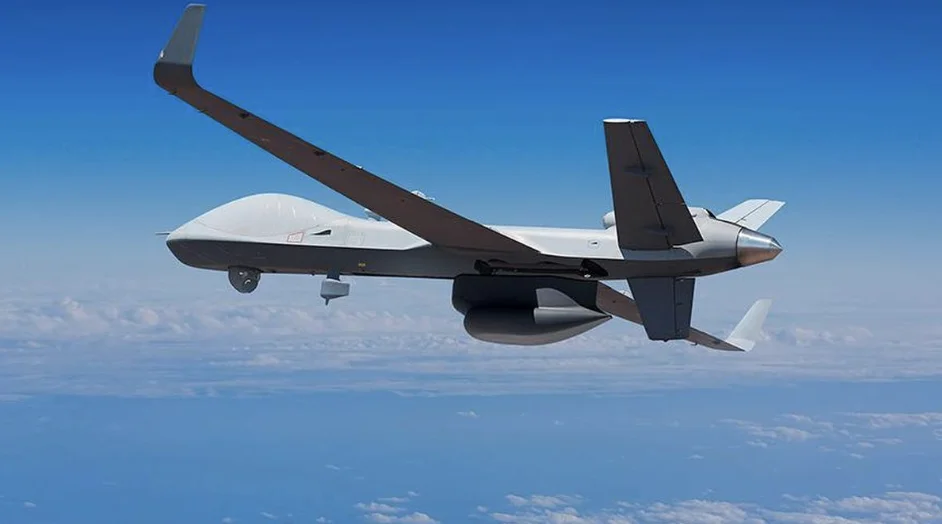
India Strengthens Navy Surveillance With Sea Guardian Lease
India has signed a new contract with US-based General Atomics Aeronautical Systems to lease two MQ-9B Sea Guardian drones for the Indian Navy.
The agreement, valued at approximately ₹1,943 crore, will run for 30 months and is aimed at strengthening India's maritime surveillance and reconnaissance capabilities.
Built for Long-Endurance Maritime Surveillance
The MQ-9B Sea Guardian is a high-altitude, long-endurance remotely piloted aircraft system designed for extended surveillance missions.
Its ability to remain airborne for long periods allows it to monitor large areas of ocean and provide information on maritime activity, vessels and potential security threats.
This makes the platform particularly suited to India's requirements across the Indian Ocean Region.
Boost for Indian Ocean Surveillance
The Indian Ocean is strategically important to India because of its major commercial shipping routes, energy corridors and growing geopolitical competition.
The increasing presence of Chinese naval assets in the region has also made maritime domain awareness a key priority for the Indian Navy.
The new Sea Guardians will add to the Navy's ability to monitor large stretches of ocean and improve its access to real-time intelligence, surveillance and reconnaissance data.
30-Month Lease Agreement
Under the new arrangement, the Navy will operate the two MQ-9B systems for 30 months.
Leasing allows the military to acquire access to advanced capabilities without waiting for a lengthy procurement and delivery cycle. It can also reduce the need for large upfront expenditure when an immediate operational requirement exists.
India has previously used the leasing route to rapidly expand its surveillance capabilities.
Navy Already Has Experience With Sea Guardians
The Indian Navy has been operating MQ-9B Sea Guardians since 2020.
The Navy initially leased two aircraft from General Atomics following the heightened security situation after the Galwan Valley clashes. The systems were deployed from INS Rajali in Tamil Nadu for surveillance missions across the Indian Ocean Region. The lease was subsequently extended.
This existing experience gives the Navy familiarity with the platform and its operational requirements.
Long-Endurance Capability
One of the major advantages of the MQ-9B platform is its ability to conduct long-duration missions.
The aircraft can remain airborne for extended periods, allowing surveillance of wide areas without the need for frequent replacement by another aircraft.
MQ-9B systems are reported to have an endurance of around 40 hours, making them particularly useful for persistent maritime surveillance.
Previous Drone Was Lost in 2024
The Navy's experience with the platform has also included a significant incident.
In September 2024, one of the leased MQ-9B Sea Guardians encountered a technical problem during a routine surveillance mission and carried out a controlled ditching in the Bay of Bengal off Chennai.
The Navy sought a detailed report from General Atomics. The US company later replaced the aircraft under the existing lease arrangement.
India Also Plans a Larger MQ-9B Fleet
The latest lease is separate from India's longer-term plan to acquire a much larger MQ-9B fleet.
In 2023, India's Defence Acquisition Council approved the acquisition of 31 MQ-9B systems through the Foreign Military Sales route. The proposed fleet includes Sea Guardian and Sky Guardian variants for the country's armed forces.
The current lease provides the Navy with immediate access to the capability while the broader procurement programme progresses.
Strengthening Maritime Domain Awareness
Modern naval operations increasingly depend on having a continuous picture of activity across large maritime areas.
Sea Guardian drones can help the Navy track vessels, observe maritime movements and identify unusual activity over areas that are difficult to monitor continuously using conventional aircraft alone.
This can improve India's maritime domain awareness and support faster decision-making.
Strategic Importance Amid China's Naval Presence
India's focus on maritime surveillance comes as Chinese naval activity in the Indian Ocean Region continues to receive close attention.
Maintaining awareness of shipping routes, strategic waterways and foreign naval movements is important for India's maritime security.
Long-endurance unmanned aircraft can provide an additional layer of surveillance without putting pilots at risk during extended missions.
What the New Lease Means for the Navy
Although the agreement covers only two aircraft, it has wider significance for India's naval surveillance strategy.
The drones will provide additional immediate capability while also giving the Navy further operational experience with a platform that India plans to acquire in larger numbers.
The latest lease therefore strengthens India's near-term maritime surveillance capability while supporting its longer-term effort to build a more extensive unmanned surveillance network.