India is expanding its domestic capacity to maintain and modernise its armoured fleet with a new ₹472-crore tank overhaul facility in Jabalpur, Madhya Pradesh.
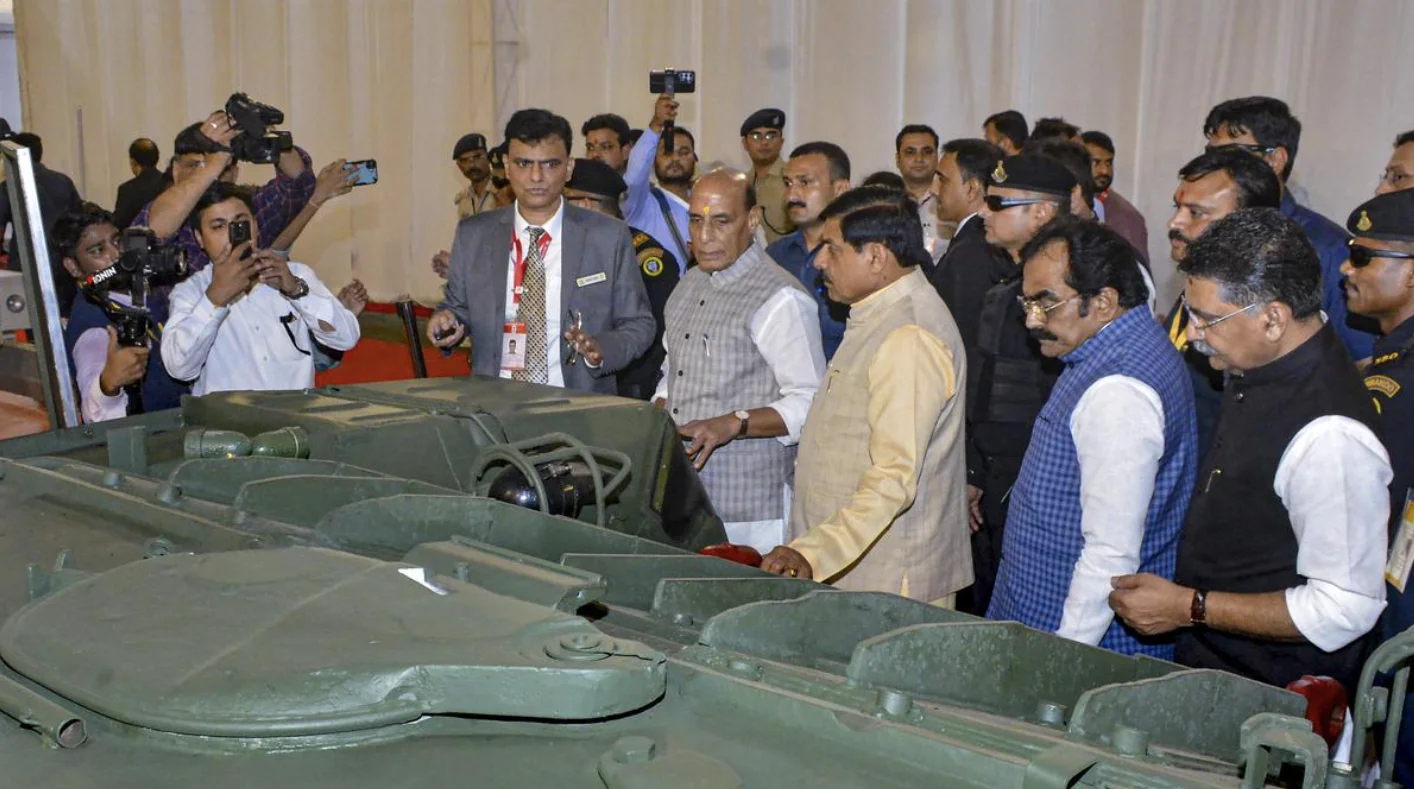
Defence Minister Rajnath Singh laid the foundation stone for the T-Series Tanks Overhaul Project at Vehicle Factory Jabalpur on Thursday. The facility will focus on the overhaul of the Indian Army's T-72 and T-90 battle tanks.
The new facility is planned to have the capacity to overhaul around 80 tanks every year.
The project is designed to address a gap in the Army's existing maintenance capacity. The Army requires approximately 230 T-72 and T-90 tanks to undergo overhaul annually, while the Heavy Vehicles Factory at Avadi in Tamil Nadu currently handles about 150 tanks each year.
The Jabalpur facility will therefore provide the additional capacity required to cover the remaining 80 tanks.
The project is being developed at Vehicle Factory Jabalpur, a unit of Armoured Vehicles Nigam Limited (AVNL) and a major defence production establishment under the Ministry of Defence.
Established in 1969, the Vehicle Factory has decades of experience in producing and supporting military vehicles.
Speaking at the foundation ceremony, Rajnath Singh stressed that tanks continue to have an important role in modern warfare despite the rapid growth of drones, missiles, satellites, artificial intelligence and cyber warfare.
He said modern battlefields require multiple capabilities to work together rather than relying on a single weapons platform. Tanks, infantry, artillery, drones, air power, surveillance and precision weapons need to operate as an integrated combat system.
Singh also highlighted the need to modernise existing tanks with better sensors and capabilities suited to changing battlefield conditions.
The government's broader approach involves combining modernised tanks with drones, missiles, artillery, electronic warfare systems and other advanced technologies.
The Jabalpur overhaul facility will support this effort by ensuring that the existing armoured fleet remains available for operational use.
Tank overhaul involves far more than routine servicing.
A vehicle that has spent years in military service needs detailed inspection, repair, replacement of worn components and technical testing before it can be returned to active duty.
The new facility will therefore play an important role in keeping the Army's existing armoured platforms operational without relying entirely on new acquisitions.
The location of the facility is also expected to provide logistical benefits.
At present, a significant portion of India's tank overhaul work is concentrated at the Heavy Vehicles Factory in Avadi. Adding another major facility in central India can reduce the distance some vehicles need to travel for maintenance and improve the availability of repaired platforms.
The project could also create opportunities for India's domestic defence supply chain.
Tank overhaul requires a wide range of mechanical, electrical, electronic and hydraulic components, assemblies and subsystems.
Small and medium-sized companies are expected to gain opportunities to participate in the supply network surrounding the new facility.
That could help create additional employment in and around Jabalpur while strengthening local manufacturing capabilities.
The project is also closely linked to India's wider push for defence self-reliance.
The government wants India not only to manufacture more military equipment domestically but also to develop the ability to repair, maintain, overhaul and upgrade existing systems within the country.
Singh said India's domestic defence production has grown dramatically over the past decade.
According to figures cited by the minister, domestic defence production increased from around ₹46,000 crore in 2014 to approximately ₹1.80 lakh crore in 2025-26.
Defence exports also rose from roughly ₹1,000 crore to nearly ₹39,000 crore during the same period. The government has set a target of taking defence exports beyond ₹50,000 crore by 2028-29.
The minister described the Jabalpur project as another step towards building a self-reliant defence industrial ecosystem.
The project also strengthens Jabalpur's existing position as a defence manufacturing and maintenance centre.
The city already has several defence establishments, and the expansion of tank overhaul capabilities could increase its importance in areas such as military vehicle maintenance, modernisation and defence technology.
The Heavy Vehicles Factory at Avadi has played a major role in India's armoured vehicle programme. Singh said the facility has supplied around 4,400 tanks to the Indian Army over four decades.
The Jabalpur project will complement that existing capability rather than replace it.
The project is particularly relevant as militaries around the world adapt to changing forms of warfare.
Drones and precision weapons have become increasingly important, while artificial intelligence, electronic warfare and cyber capabilities are transforming battlefield operations.
However, tanks continue to provide protected mobility, firepower and the ability to operate with ground forces.
The challenge for modern armies is therefore not simply whether tanks remain relevant, but how effectively they can be integrated with other systems.
That is the approach India is now pursuing.
Singh said tanks need to be equipped with improved sensors and integrated with other battlefield capabilities.
The government is also looking at drones, missiles, artillery, electronic warfare and directed-energy systems as part of a broader network of military capabilities.
The new overhaul facility will contribute to that strategy by ensuring that the Army's existing tank fleet does not lose operational availability because of maintenance backlogs.
The capacity addition is significant.
With the Army requiring around 230 tanks to be overhauled annually and Avadi currently handling about 150, the additional 80-tank capacity at Jabalpur would effectively close the existing gap.
That could improve the speed at which tanks return to frontline service and strengthen overall fleet readiness.
The project also reflects a broader shift in India's defence strategy from simply acquiring equipment to building the domestic industrial capability needed to sustain that equipment over its full service life.
Maintenance, repair, overhaul and modernisation are increasingly important components of military preparedness.
For India, developing these capabilities domestically can also reduce dependence on foreign supply chains for critical components and technical support.
The Jabalpur project is therefore both a military-readiness initiative and an industrial-development project.
It is expected to support the Army's immediate maintenance needs while creating opportunities for local manufacturers, suppliers and engineering companies.
The government hopes such projects will help build a more resilient domestic defence ecosystem.
For the Indian Army, the immediate benefit is straightforward: more tanks can be overhauled every year and returned to operational service on schedule.
For the wider defence industry, the facility provides another platform for developing domestic expertise in armoured vehicle maintenance and modernisation.
Overall, the ₹472-crore Jabalpur project is expected to add 80 tanks a year to India's overhaul capacity, bringing national capacity closer to the Army's annual requirement.
The project is consequently being positioned as an important part of India's effort to strengthen military preparedness, expand domestic defence capabilities and reduce dependence on external support.