


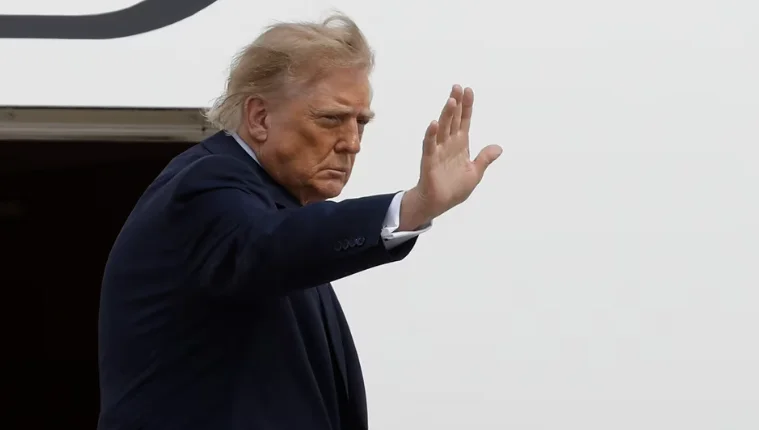
US President Donald Trump and the Republican Party appear to be losing support among Indian-Americans ahead of the November midterm elections, according to a new survey of Asian-American voters.
The AAPI Data survey found a strong preference for Democratic candidates among Indian-American voters, although the community's identification with the Democratic Party has also declined somewhat in recent years.
Democrats Hold a Strong Lead
According to the survey, 66% of Indian-Americans said they plan to vote for Democratic candidates in House of Representatives elections, compared with 22% who intend to support Republicans.
The Democratic advantage is similar in Senate elections, where 66% of Indian-Americans said they would vote for Democrats and 18% for Republicans.
The survey found that support for Democrats among Indian-Americans was among the strongest recorded across Asian-American communities.
Support for Trump Has Declined
The findings represent a decline in support for Trump compared with the 2024 presidential election.
A Carnegie Endowment survey conducted shortly before the 2024 election found that 32% of Indian-Americans planned to vote for Trump, as Democratic support had weakened at the time.
The latest survey suggests that Trump's support among the community has since fallen, although Indian-American men remain more likely than women to support him. Around 40% of the men surveyed said they planned to vote for Trump.
Cost of Living and Inflation Top Concerns
Economic issues remain central to Asian-American voters.
The survey identified the cost of living and inflation as major concerns, along with healthcare, crime and racism.
Foreign policy and wars have also become important issues. About 78% of respondents said war and foreign policy were important or extremely important to their voting decisions.
Democrats Seen as Better on Economic Issues
Asian-American voters surveyed expressed greater confidence in Democrats than Republicans on several major issues.
For example, 44% said Democrats would do a better job handling the cost of living and inflation, while only 18% believed Republicans would be more effective.
The finding suggests that economic pressures could play an important role in shaping voting decisions during the midterm elections.
Trump Remains Unpopular
Trump's overall standing among Asian-American voters remains weak.
The survey found that 70% of Asian-American respondents viewed Trump unfavourably.
A separate 2026 Carnegie Endowment report found that 71% of Indian-Americans surveyed disapproved of Trump's performance during the first year of his second presidential term.
Concerns Over Trump Policies
Indian-American voters have expressed concerns about several policies associated with the Trump administration.
Tariffs and the administration's handling of immigration have drawn particular criticism from a significant section of the community.
These issues could remain important as voters assess the performance of the administration and the Republican Party ahead of the midterms.
Racism Influences Political Preferences
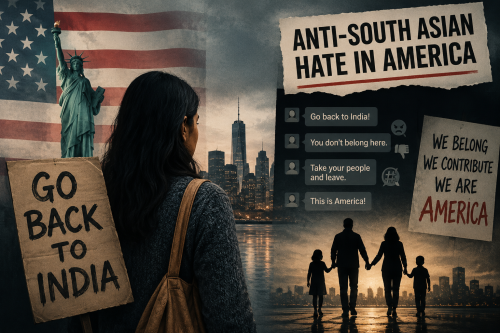
Concerns about racism are also playing a role in political preferences among Indian-Americans.
Among Indian-Americans who do not identify as Republicans, 27% said they do not support the party because they consider it intolerant of minorities.
That figure is 10 percentage points higher than the corresponding figure recorded in 2024, indicating that concerns about discrimination have become more prominent.
Democratic Identification Has Also Fallen
Despite the strong Democratic lead, identification with the party has declined.
The share of Indian-Americans identifying with the Democratic Party fell from 52% in 2020 to 46% in 2026.
However, Democratic identification remains substantially higher than Republican identification, which stood at 19% in 2026.
Potential Impact on the Midterms
Indian-Americans represent a relatively small share of the overall US electorate, but their political influence has grown in several competitive areas.
A continued shift away from Trump and Republican candidates could therefore matter in closely contested congressional races, particularly in states and districts with sizeable Indian-American populations.
Conclusion
The latest survey points to a significant Democratic advantage among Indian-American voters ahead of the November midterm elections.
Two-thirds of Indian-Americans surveyed plan to support Democratic candidates in both House and Senate elections, while Republican support remains considerably lower. At the same time, Democratic identification within the community has declined since 2020, showing that the electorate is not uniformly aligned with the party.
Economic pressures, healthcare, immigration, racism and foreign policy are among the issues shaping voter preferences. For Trump and Republicans, the survey indicates that rebuilding support among Indian-Americans could be an important challenge ahead of the midterm elections.