


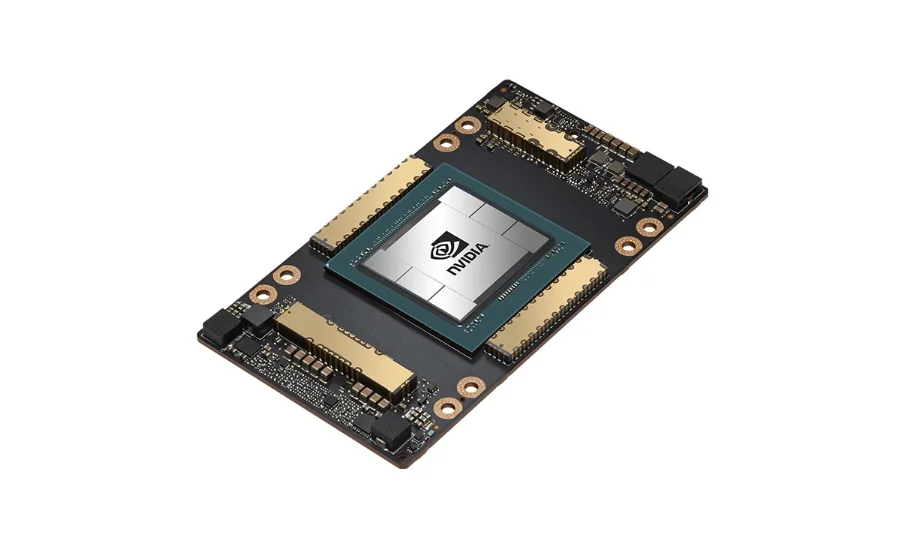
Hyderabad is set to receive a major boost to its artificial intelligence infrastructure, with AMI ordering around 9,000 Nvidia Rubin GPUs for a planned AI computing facility in the city.
The large-scale deployment is expected to provide the computing capacity required for demanding artificial intelligence workloads. These could include AI model training, inference, data processing and other applications that require substantial computing power.
Nvidia's Rubin architecture represents the company's next generation of AI computing technology. As AI models become larger and more complex, demand for high-performance GPUs and specialised data-centre infrastructure is increasing rapidly.
AMI's decision to deploy thousands of Rubin GPUs at a single facility reflects the scale of computing resources increasingly required to support advanced AI applications.
The development comes at a time when computing infrastructure has become just as important as software in the race to build and deploy AI systems.
Training large AI models requires enormous amounts of computing power. Data centres need high-performance GPUs, fast networking, large-scale storage and sophisticated cooling systems to keep those systems operating efficiently.
The planned facility could further strengthen Hyderabad's position as a major technology and data-centre hub. The city already has a strong presence in information technology, pharmaceuticals, financial technology and cloud services.
A data centre with thousands of high-end GPUs would require significant supporting infrastructure. Reliable electricity, high-speed connectivity, advanced cooling and robust security systems would all be essential to keep the facility running continuously.
Energy availability is particularly important for large AI data centres. High-performance GPUs can consume substantial amounts of electricity when operating at scale, making power infrastructure a central consideration for new computing facilities.
The project could also create new opportunities for India's wider AI ecosystem. Startups, research organisations and enterprises could potentially benefit from greater access to high-performance computing resources within the country.
Developing domestic AI infrastructure is becoming increasingly important as governments and companies seek to reduce dependence on computing capacity located outside their own markets.
India has been expanding its focus on AI infrastructure, with both the public and private sectors looking at ways to increase access to advanced computing resources. More domestic capacity could support AI research, model development and commercial applications.
The availability of Nvidia's latest-generation GPUs is itself significant. Demand for advanced AI chips has surged globally as technology companies and data-centre operators expand their AI capabilities.
Securing a large number of next-generation GPUs can therefore give infrastructure providers an important advantage as businesses compete to build AI capacity.
For Telangana, the project could have wider economic implications. A large AI computing facility can attract companies and researchers working on applications that require high-performance computing.
It could also contribute to the development of an ecosystem around AI, cloud computing and advanced digital infrastructure, potentially creating demand for specialised technical talent.
However, building such a facility involves much more than acquiring GPUs. The project will also depend on data-centre construction, power availability, networking, cooling, software infrastructure and skilled personnel.
The scale of the planned deployment illustrates how quickly the infrastructure requirements of artificial intelligence are growing.
As AI models become increasingly sophisticated and their use expands across industries, demand for specialised computing capacity is expected to continue rising.
AMI's planned deployment of 9,000 Nvidia Rubin GPUs could therefore become an important addition to Hyderabad's technology landscape, reinforcing the city's potential to evolve from a traditional IT-services centre into a major hub for AI computing and advanced data-centre infrastructure.