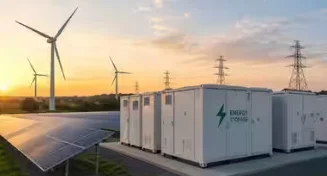
India is considering a major change in the way new renewable energy projects are designed, with the Central Electricity Authority (CEA) proposing mandatory energy storage alongside certain new solar and wind installations.
Under the draft technical standards, ground-mounted solar and onshore wind projects commissioned from July 1, 2027 would be required to install co-located Energy Storage Systems (ESS). The proposal is aimed at improving the reliability of renewable power and helping the electricity grid manage fluctuations in generation.
The proposed initial requirement would be storage capacity equivalent to at least 10% of the project’s installed generation capacity, with a minimum storage duration of two hours. For example, a 100 MW renewable energy project would need at least 10 MW of storage capable of storing energy for two hours.
The proposed requirement would become stricter from July 1, 2029. Eligible ground-mounted solar and onshore wind projects commissioned after that date would need to maintain the same 10% storage capacity but with a minimum duration of four hours.
Why storage is becoming important
Solar and wind power are variable sources of electricity. Solar generation, for instance, is concentrated during daylight hours, while electricity demand can remain high in the evening. Energy storage can help shift surplus renewable electricity to periods when generation is lower or demand is higher.
The government has already identified storage as an important component of India’s clean-energy expansion. According to the CEA’s projections, India could require around 411.4 GWh of energy storage capacity by 2031-32 to integrate its growing renewable-energy capacity.
The proposed rules also seek to strengthen the ability of renewable plants to support the electricity grid. At least 15% of inverters in renewable energy plants commissioned from July 1, 2027, have been proposed to have grid-forming capability, while power-conversion systems associated with battery storage would also need to meet grid-forming requirements.
A push toward more reliable renewable power
The move comes as India rapidly expands solar and wind generation while working to maintain grid stability. Government data has highlighted the importance of storage in absorbing surplus renewable electricity and making clean power available when it is most needed.
CEA’s proposal is currently a draft, and stakeholders have been invited to submit suggestions, comments and objections by October 4, 2026. The final requirements could therefore change following consultations.
If implemented, the proposed framework would make battery and other storage technologies an increasingly important part of India’s renewable-energy infrastructure, potentially reducing curtailment and improving the ability of solar and wind projects to deliver electricity when the grid needs it most.