


Qualcomm backs Ultrahuman's next-generation ring
The funding round includes participation from Qualcomm Ventures, Labcorp, Alpha Wave, Blume Ventures, Nexus Venture Partners and Alteria Capital.
Of the $70 million raised, $65 million comes through primary equity while $5 million is structured as debt, according to founder and CEO Mohit Kumar.
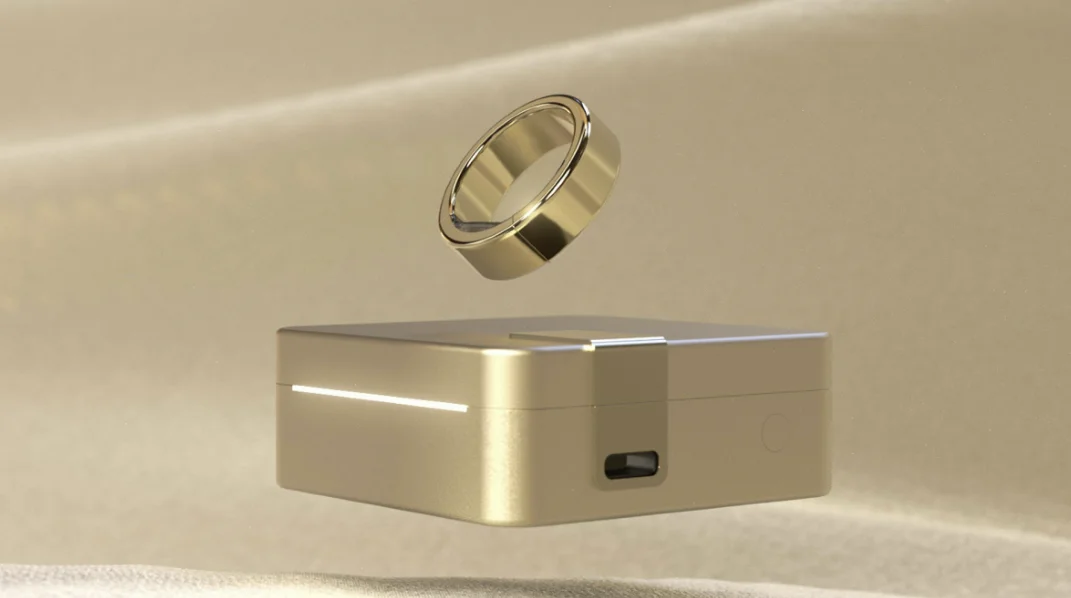
Ultrahuman is also working with Qualcomm on a new smart ring that will replace the Nordic Semiconductor chip used in its current products with Qualcomm silicon.
The additional computing capability could allow more software and algorithms to run directly on the ring instead of relying heavily on a connected smartphone or cloud services.
From health tracker to computing device
Smart rings today are primarily designed to monitor metrics such as heart rate, movement and sleep. Ultrahuman wants to change that model.
The company sees the ring becoming a small computing platform where programs and algorithms can operate locally. It also wants to eventually allow developers to create their own software and features for the device.
This could turn the smart ring from a passive health-monitoring wearable into a more active interface between users, applications and other devices.
AI, gaming and device control
Ultrahuman is exploring several new applications for its rings. These include using the device as a pointer or mouse, a gaming controller, a car key and an interface for interacting with AI applications.
The ring could have an advantage over conventional controllers because it can simultaneously capture physiological information such as heart rate, temperature and movement.
That could enable new gaming and AI experiences that respond not only to physical actions but also to a user's physiological state.
Existing Ring Air and Ring Pro will get new capabilities
Ultrahuman is not waiting for its Qualcomm-powered ring to arrive before testing the concept.
The company plans to bring some of these capabilities to its existing Ring Air and Ring Pro through a software update by the end of September.
The update is expected to include features that allow the ring to work as a game controller, interact with AI applications and support new capabilities created by third-party developers.
Ultrahuman's business is growing
Ultrahuman currently has an annual revenue run rate of approximately $140 million, according to Kumar. That represents growth of around 45% from the previous year.
The company expects the figure to reach $200 million by January 2027. It has sold approximately 800,000 rings so far.
Around 12% of its users also pay for PowerPlugs, the company's subscription-based software features.
US remains a major growth market
The United States continues to be Ultrahuman's largest market, although the company faced a setback there because of its patent dispute with rival Oura.
Ultrahuman returned to the U.S. market with its redesigned Ring Pro this year. The company says demand for the device is currently 18 to 20 times higher than its available supply in the country.
The fresh funding will also support expansion in markets such as India and the UAE, along with spending on clinical research and product development.
Labcorp partnership expands health ambitions
Ultrahuman is also exploring a deeper relationship with Labcorp to combine wearable data with blood-test information.
The companies are examining whether signals captured by the ring, when combined with biological data from blood tests, could eventually help identify health risks linked to areas such as cardiovascular health, fertility and aging.
This could push Ultrahuman beyond wearable fitness tracking toward a broader personalized health platform.
Conclusion
Qualcomm's $70 million investment represents more than financial backing for Ultrahuman. It supports the startup's ambition to transform the smart ring from a health-tracking wearable into a personal computing and AI interface.
With greater on-device computing, developer support, AI integration and gaming capabilities, Ultrahuman is betting that the future of wearable computing may not be limited to smartwatches. The company instead sees the finger-worn device as a potential always-available interface for interacting with software, AI and the physical world.