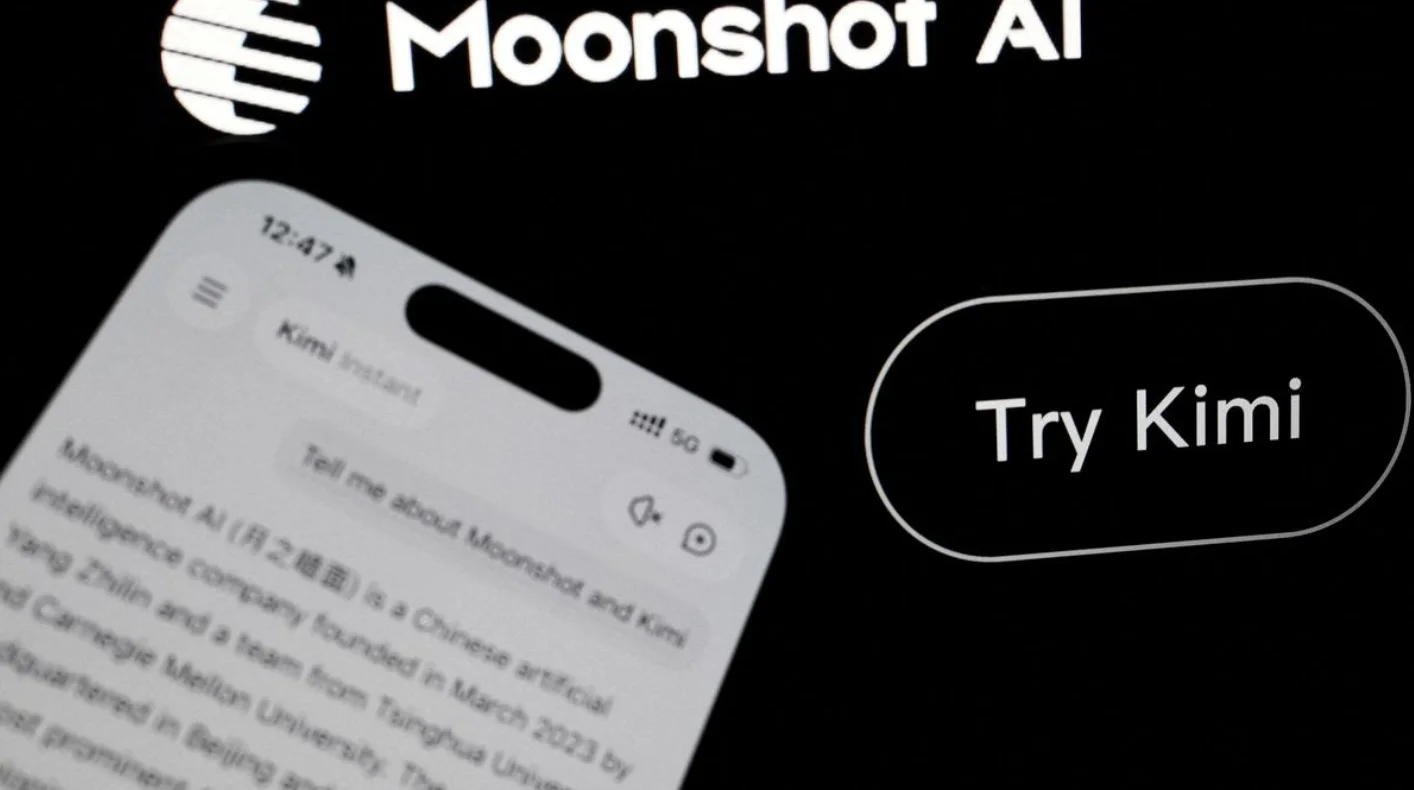
China's Moonshot AI is negotiating with Microsoft, Amazon and Google's cloud businesses over potential revenue-sharing agreements for its Kimi K3 artificial intelligence model, according to people familiar with the discussions.
The talks could result in one of the first major revenue-sharing arrangements between a Chinese AI company and a leading US cloud provider, although the negotiations are still at an early stage and may not ultimately produce agreements.
Moonshot is seeking as much as 30% of revenue generated from K3-related services hosted on Microsoft Azure, Amazon Web Services and Google Cloud, according to the sources, who spoke on condition of anonymity because the discussions are private.
The proposed terms are reportedly similar to arrangements Moonshot has discussed with some major customers using its open-weight model.
Several important issues remain unresolved.
These include how the revenue should be divided between Moonshot and the cloud providers, how much access each party should have to relevant data and how the companies would independently verify token usage.
Token consumption is particularly important because AI services are increasingly priced according to how much computing and model usage customers generate. Accurate measurement is therefore essential when determining how much revenue each party is entitled to receive.
The discussions come as Kimi K3 gains attention for its performance in independent evaluations.
Arena.ai ranked K3 first in a benchmark focused on building web interfaces, while Artificial Analysis has reported performance comparable with OpenAI's GPT-5.5 and Anthropic's Claude Opus 4.8 on complex, multi-step tasks.
K3's size is another reason a cloud partnership could be important for Moonshot.
The model is an open-weight system, meaning customers can download and modify it. But analysts say relatively few companies are likely to run a model with around 2.8 trillion parameters entirely on their own infrastructure because of the enormous computing resources required.
For Moonshot, access to major cloud platforms could therefore provide a practical route into the enterprise market.
Microsoft, Amazon and Google already operate some of the world's largest cloud computing networks. Hosting K3 through their infrastructure would make it easier for businesses to use the model without having to build their own large-scale computing systems.
The potential agreements are particularly notable because of the broader tension between Washington and Beijing over advanced technology.
The United States has imposed restrictions on the export of advanced AI chips to China, citing national security concerns. At the same time, Chinese AI companies have been developing models that increasingly compete with leading Western systems.
Moonshot itself has come under scrutiny from US officials.
US Treasury Secretary Scott Bessent said last month that Moonshot could potentially be added to a US trade blacklist. American officials have accused the Beijing-based company of obtaining information from Anthropic's advanced model Fable and using it to help develop Kimi K3, as well as illegally acquiring Nvidia chips.
Moonshot has rejected suggestions that K3's performance was achieved through distillation from another company's model. The company has said its performance improvements came from original changes to the underlying architecture.
Neither Microsoft, Google nor AWS has commented on the potential agreements. Moonshot also did not respond to a request for comment about the discussions.
Moonshot has already entered similar arrangements with smaller cloud providers, according to people familiar with the matter.
In July, Chinese IT services company Chinasoft International announced that it had reached a revenue-sharing agreement with Moonshot, although the companies did not disclose how the revenue would be divided.
The company was founded in 2023 by Carnegie Mellon-trained AI researcher Yang Zhilin and has received backing from several major Chinese technology companies, including Alibaba.
Moonshot raised more than $2 billion in May and is reportedly preparing for a potential Hong Kong listing.
A deal with one or more of the US cloud giants could significantly expand the commercial reach of Kimi K3.
It could also give Moonshot access to enterprise customers that might otherwise be reluctant or unable to deploy such a large model independently.
For the cloud companies, hosting another competitive AI model could strengthen their model portfolios and give customers more choice. But the potential arrangements also carry regulatory and geopolitical complications because of Moonshot's status as a Chinese AI company.
The talks therefore reflect a complicated reality in the global AI industry.
Technology companies in the US and China are competing intensely to develop advanced models, while cloud providers and AI developers still have strong commercial incentives to work across those technological boundaries where regulations allow.
For Moonshot, the negotiations could provide an important new distribution channel for K3.
For Microsoft, Amazon and Google, the discussions could offer access to a fast-growing Chinese-developed model that is attracting attention for its performance and relatively low costs.
But the commercial details remain unresolved.
The parties still need to determine how revenue will be shared, what data can be accessed and how K3 usage will be measured and audited.
Until those questions are settled, there is no certainty that any of the three discussions will lead to a formal partnership.
If an agreement does eventually emerge, it could nevertheless become an important example of how AI model developers and cloud platforms structure commercial relationships across geopolitical boundaries.