



AI Is Moving Beyond the Lab
For years, many major AI breakthroughs remained concentrated in research institutions and technology-company laboratories.
That is changing rapidly with the rise of generative AI, AI assistants, coding tools and automation. These technologies are increasingly being incorporated into everyday workflows, making AI a practical part of modern work rather than simply an experimental technology.
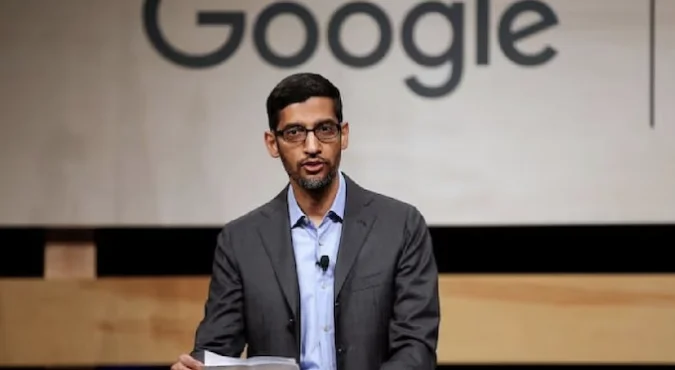
Pichai’s Message to Students
Pichai encouraged students to prepare for a technology landscape that is changing at unprecedented speed.
Rather than simply learning how to use AI tools, students need to understand how the technology works and how it can be applied to solve complex problems. Creativity, experimentation and the ability to develop new solutions will remain important as AI capabilities expand.
AI Could Transform Jobs
The rapid adoption of AI is expected to change the nature of many jobs.
Some repetitive tasks may increasingly be handled by AI and automation, while human skills such as creativity, judgement, problem-solving and decision-making could become even more valuable.
Students entering the workforce may therefore need a combination of technical knowledge, communication skills, critical thinking and the ability to work effectively with AI systems.
IITs Have an Important Role
India’s IITs have long played an important role in technology education and research.
As AI becomes increasingly important to the global economy, institutions such as IIT Kharagpur could contribute through advanced research, industry partnerships and the development of practical AI applications.
Closer collaboration between universities, startups and technology companies could also accelerate innovation.
From Research to Real-World Solutions
The next phase of AI development will not simply be about creating increasingly powerful models.
The bigger challenge will be applying AI to real-world problems in sectors such as healthcare, education, agriculture, transport, financial services and manufacturing.
Students and researchers could play a major role in turning AI research into practical solutions that have measurable social and economic impact.
A Major Opportunity for India
India has several advantages in the AI race, including a large young population, a strong technology workforce and rapidly expanding digital infrastructure.
Indian students and researchers could use these strengths to develop AI applications tailored to local needs while also creating products capable of competing in international markets.
Responsible AI Matters
The rapid growth of AI also creates challenges around responsible use.
Data privacy, cybersecurity, misinformation and algorithmic bias are among the issues that need to be addressed as AI becomes more deeply embedded in society.
Future AI professionals will therefore need to understand not only technical capabilities but also the ethical and social consequences of deploying these systems.
Why Pichai’s Message Matters
Pichai’s message reflects the broader transformation taking place across the technology industry.
AI is no longer simply a technology that may become important in the future. It is already changing how people work, learn and create, and the pace of that change is accelerating.
Conclusion
Sundar Pichai’s message to IIT Kharagpur highlights a major shift in the AI landscape: the technology is rapidly moving from research laboratories into everyday work and life.
For Indian students, this creates both an opportunity and a challenge. Learning to use AI tools will be useful, but understanding the technology and developing the ability to build new solutions could be even more important. With stronger collaboration between IITs, researchers, startups and industry, India has an opportunity to play a significant role in the next phase of the AI revolution.