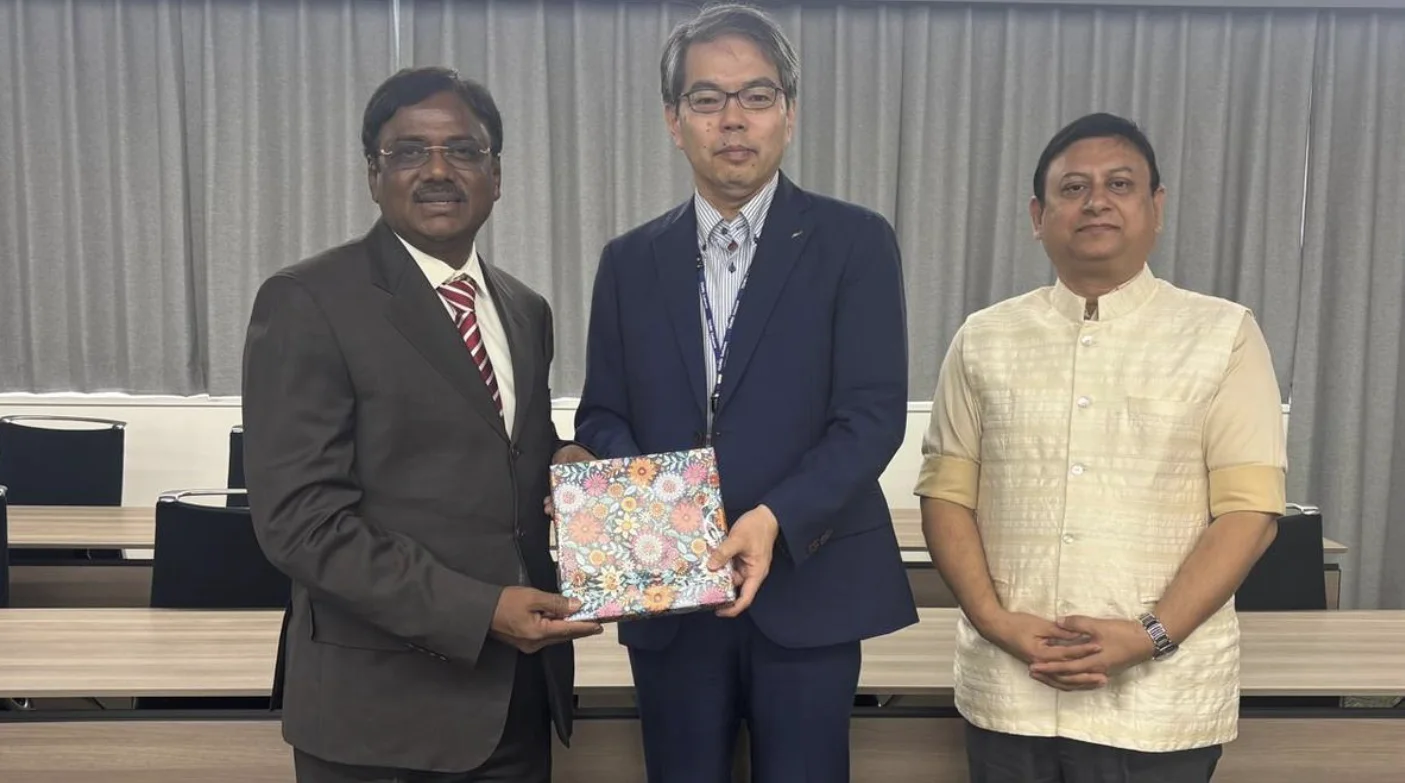
Telangana's efforts to prepare its young workforce for international employment opportunities have received a boost with Telangana Skills University entering into a partnership with a Japanese education and skills-training institute.
The collaboration is aimed at providing students with skills that can help them compete for employment opportunities in Japan and other international markets.
A key focus of the partnership is expected to be Japanese language training along with technical and vocational skills aligned with industry requirements.
For students aspiring to work in Japan, professional qualifications alone may not be sufficient.
Language proficiency, familiarity with Japanese workplace culture, technical competence and professional discipline can all play an important role in securing and sustaining employment.
The new partnership is intended to bring these elements closer together through structured skills training.
Japan has been facing growing demand for skilled workers in several sectors amid an ageing population and a shrinking domestic workforce.
This has created opportunities for foreign workers with relevant skills and qualifications.
For Telangana's young population, Japan can therefore represent an additional international employment destination.
However, accessing those opportunities requires candidates to understand both the technical requirements of the job and the broader expectations of the Japanese workplace.
Japanese language education is particularly important.
Depending on the occupation, employers may require varying levels of Japanese proficiency.
Training students before they enter the job market can help reduce one of the major barriers faced by foreign workers moving to Japan.
The partnership can also provide students with exposure to Japanese workplace practices, communication styles, professional etiquette and organisational culture.
Such training can help young workers adapt more easily once they enter Japanese companies.
Telangana Skills University was established with a strong focus on industry-oriented education and employability.
The university's broader approach is centred on developing practical skills alongside formal academic qualifications.
The Japan partnership adds an international dimension to that model.
Japan has employment opportunities in areas including healthcare, elderly care, manufacturing, automobile, engineering, electronics, hospitality and construction.
The exact opportunities available to students will depend on the training programmes developed under the partnership and the requirements of participating employers.
However, aligning training with real industry demand can make skills programmes more effective than purely classroom-based education.
Students could potentially benefit from practical training, industry exposure and specialised certification.
The partnership could also provide an avenue for Japanese experts and institutions to contribute to training programmes in Telangana.
That would give students direct exposure to international standards and professional practices.
Japanese industry is widely associated with strong emphasis on quality, precision, workplace safety, discipline and continuous improvement.
Understanding these principles can benefit students even if they ultimately choose to work outside Japan.
The collaboration could therefore have benefits beyond overseas employment.
Students trained according to international industry standards may also become more employable within India.
Another important component will be the connection between training and actual employment.
Skills programmes are more effective when students are linked with employers, recruitment agencies or recognised international employment pathways after completing their courses.
The partnership could potentially support such connections as it develops.
Students seeking employment in Japan will also need accurate information about visa requirements, employment contracts, insurance, working conditions and living costs.
International employment involves more than obtaining a job offer.
Candidates must understand the legal and practical aspects of moving to another country.
Providing such guidance alongside technical and language training can help students make informed decisions.
The partnership could also create opportunities for internships, industry visits, expert-led training and joint skill-development programmes.
Such initiatives would allow students to gain exposure to real-world working environments before entering the workforce.
For Telangana, international partnerships of this nature can help expand the state's skills-development ecosystem.
Instead of preparing young people only for domestic employment, institutions can increasingly train them for global labour markets.
Japan's demand for skilled workers creates a particularly relevant opportunity.
The partnership could also help Telangana Skills University understand how Japanese employers assess candidates and what competencies they expect from international workers.
That knowledge can be incorporated into future courses and training modules.
The university could potentially develop specialised programmes around Japanese language proficiency and sector-specific skills.
Such programmes could help create a pipeline of trained candidates for Japanese companies and employment opportunities.
The initiative could also benefit students from smaller cities and rural areas.
Access to international employment information and structured training is often concentrated in major urban centres.
A university-based programme can potentially make such opportunities more accessible to a wider group of students.
At the same time, students need to be prepared for the realities of working abroad.
Cultural adaptation, communication, financial planning and understanding workplace expectations are important parts of international career preparation.
A comprehensive programme that combines these areas with technical training could improve students' chances of making a successful transition.
The partnership also comes at a time when international mobility is becoming an increasingly important component of skills development.
Countries facing workforce shortages are looking abroad for trained workers, while young people in countries such as India are seeking opportunities in global labour markets.
Skills institutions can play an important role in connecting these two trends.
Telangana Skills University's collaboration with the Japanese institute could become one such bridge.
The long-term impact, however, will depend on implementation.
The number of students trained, the quality of language instruction, industry recognition of qualifications and the availability of genuine employment opportunities will determine the partnership's effectiveness.
Employment-linked training will be particularly important.
If students complete courses without a clear pathway to recognised jobs, the benefits of the programme could be limited.
If training is closely aligned with employer requirements, however, it could create a sustainable talent pipeline.
There is also potential for the partnership to expand over time.
Initial cooperation may focus on language and skills training, while future stages could include internships, industry placements, joint curriculum development or deeper institutional collaboration.
Such an expansion would strengthen the connection between education and employment.
For Japanese employers, a structured pipeline of trained candidates from Telangana could provide access to a young and skilled workforce.
For Telangana, the arrangement could create new international career pathways for its students.
The partnership therefore has the potential to serve the interests of both sides.
It also highlights the growing importance of global employability in skills education.
Students increasingly need more than academic qualifications.
They need practical skills, communication abilities, cultural awareness and the capacity to adapt to different professional environments.
International collaborations can help educational institutions provide that broader preparation.
The Japan partnership could also encourage students to consider careers that they may not previously have viewed as accessible.
Healthcare, manufacturing, engineering, electronics and other sectors can provide international career opportunities for candidates with the right combination of qualifications and skills.
Language training will remain an important component of that preparation.
Japanese proficiency can make a significant difference in workplace communication and everyday life in Japan.
The university's role could therefore extend beyond conventional technical education to include language and cultural preparation.
Another important consideration will be maintaining the quality of training.
International employment programmes must ensure that students receive accurate information and recognised training rather than simply being promised overseas opportunities.
Clear communication about eligibility, costs, employment conditions and visa requirements will be essential.
A transparent and industry-linked model would help build confidence among students and their families.
The partnership could eventually become a template for similar collaborations with other countries.
As demand for skilled workers grows in different parts of the world, Telangana's skills institutions can potentially create specialised training programmes for multiple international labour markets.
Japan provides an important starting point because of its demand for skilled foreign workers and its distinctive workplace requirements.
For the students involved, the biggest potential benefit is the opportunity to gain skills that are directly connected to a real international employment market.
For the university, the partnership offers an opportunity to internationalise its skills-development approach.
For Japanese institutions and employers, it could help create a more structured pathway to access trained talent from India.
Overall, the collaboration between Telangana Skills University and the Japanese institute represents a significant step towards linking Telangana's youth with international employment opportunities.
Its success will depend on how effectively language training, technical education, industry exposure and employment support are integrated.
If those elements are implemented successfully, the partnership could help create a new generation of Telangana workers equipped not only with academic qualifications but also with the skills and cultural understanding needed to compete in a global workforce.