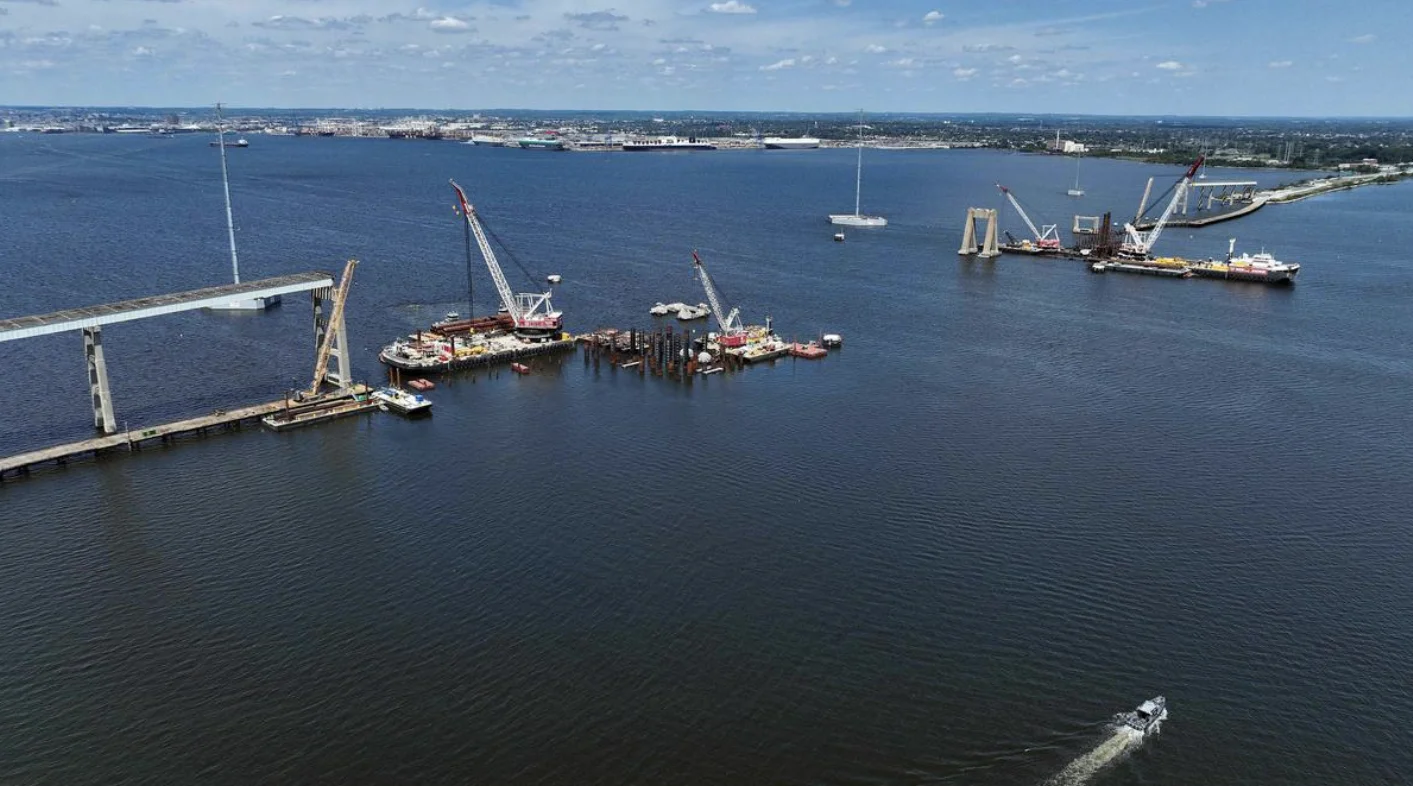
A US federal judge has dismissed most of the remaining civil claims against the owner and operator of the Dali container ship, which crashed into Baltimore’s Francis Scott Key Bridge in March 2024, causing the bridge to collapse.
The ruling represents another major development in the extensive legal proceedings arising from the disaster. While many claims for indirect financial losses have been rejected, some claims involving direct physical damage will continue.
On March 26, 2024, the Dali struck a support structure of the Francis Scott Key Bridge after losing power. The bridge collapsed into the Patapsco River, killing six construction workers who were carrying out maintenance work on the structure.
The disaster also severely disrupted operations at the Port of Baltimore and affected shipping, transportation and businesses across the region.
Why Were Most Claims Dismissed?
A number of companies and organisations sought compensation after suffering financial losses because of the bridge collapse.
Businesses reported lost revenue, additional transportation expenses, shipping delays and disruption to port operations.
However, US District Judge James Bredar dismissed many of these claims, finding that the claimants did not have the necessary direct property interest in the damaged bridge.
The ruling means that businesses cannot necessarily recover damages simply because they suffered financial consequences from a major infrastructure failure.
The 1927 Supreme Court Principle
A key part of the ruling was the legal principle established by the US Supreme Court in the 1927 Robins Dry Dock case.
Under this principle, parties generally cannot recover purely economic losses resulting from a maritime accident if they do not have a direct proprietary interest in the property that was physically damaged.
The Baltimore bridge collapse affected a large number of businesses, but many of those companies had no ownership interest in the bridge itself.
That distinction proved crucial in the latest ruling.
Star Bulk Claim Rejected
Among the companies affected was Star Bulk, which said its vessels were unable to reach a berth at the Port of Baltimore because of the bridge collapse.
The company sought compensation for lost earnings and profits.
The court rejected the claim because the losses were considered economic consequences of the disruption rather than direct physical damage to property in which Star Bulk had the required proprietary interest.
Some Physical Damage Claims Can Continue
The judge did not dismiss every claim.
Baltimore's claim involving physical damage to a water main beneath the bridge was allowed to continue.
Similarly, some claims by Baltimore County relating to physical damage to waterways caused by debris from the collapsed bridge were permitted to move forward.
Claims involving direct physical damage to cargo aboard the Dali were also allowed to continue in part.
The distinction is important because these claims involve identifiable physical damage rather than only lost income or business opportunities.
Maryland Already Reached a Major Settlement
The latest decision comes after several major settlements had already reduced the number of outstanding claims.
Maryland reached a $2.25 billion settlement with Grace Ocean and Synergy Marine, the owner and operator of the Dali.
The agreement resolved claims brought by Maryland and its agencies arising from the bridge disaster.
Families of the workers who died in the collapse also reached separate settlements with the ship's owner and operator.
Major Impact on Baltimore Port
The collapse of the Key Bridge had consequences far beyond the loss of the bridge itself.
The accident disrupted access to the Port of Baltimore, one of the major shipping hubs on the US East Coast.
Ships were unable to reach certain areas, while transportation routes and logistics operations were affected.
Businesses connected to shipping, trucking, cargo handling and other industries reported financial losses as a result.
However, the latest ruling makes clear that financial losses alone do not automatically create a legal right to compensation.
Civil Litigation Has Narrowed
The legal battle initially involved a large number of claims from businesses, government entities, insurers and other affected parties.
Many claims have already been settled or withdrawn.
The latest ruling further narrows the scope of the remaining litigation, leaving mainly claims involving direct physical damage.
The decision does not eliminate all potential liability for the Dali's owner and operator. The remaining claims will continue through the court process.
Why the Ruling Matters
The case is significant because it reinforces the longstanding limits on claims for purely economic losses following maritime accidents.
A major accident can have a wide economic impact, affecting hundreds of businesses and workers.
However, under the legal principle applied by the court, not every party that loses money because of an accident can automatically seek compensation from the party responsible for the physical damage.
A direct property interest or qualifying physical damage can make a major difference.
The Wider Legal Fallout
The bridge collapse has generated several different legal proceedings, including civil claims and criminal investigations.
The Dali's power failure and the events leading up to the collision have also been examined by US authorities.
The continuing litigation is expected to focus increasingly on the remaining claims involving physical damage rather than broad economic losses.
What Happens Next?
The surviving claims involving the water main, waterways and cargo will continue through the legal process.
The latest ruling could also serve as an important reference in future maritime cases involving major infrastructure failures.
For businesses affected by large-scale accidents, the decision highlights the difficulty of recovering losses that are purely financial and not directly connected to damaged property.
Conclusion
The latest ruling in the Baltimore Key Bridge collapse case is a significant development for the Dali's owner and operator, with a US federal judge dismissing most of the remaining claims for indirect economic losses.
However, claims involving direct physical damage to a water main, waterways and cargo have been allowed to continue.
With Maryland already having reached a $2.25 billion settlement with the Dali's owner and operator, and several other claims already resolved, the court's latest decision significantly narrows the remaining civil litigation.
The case nevertheless remains active, particularly over claims involving direct physical damage caused by the 2024 bridge collapse.