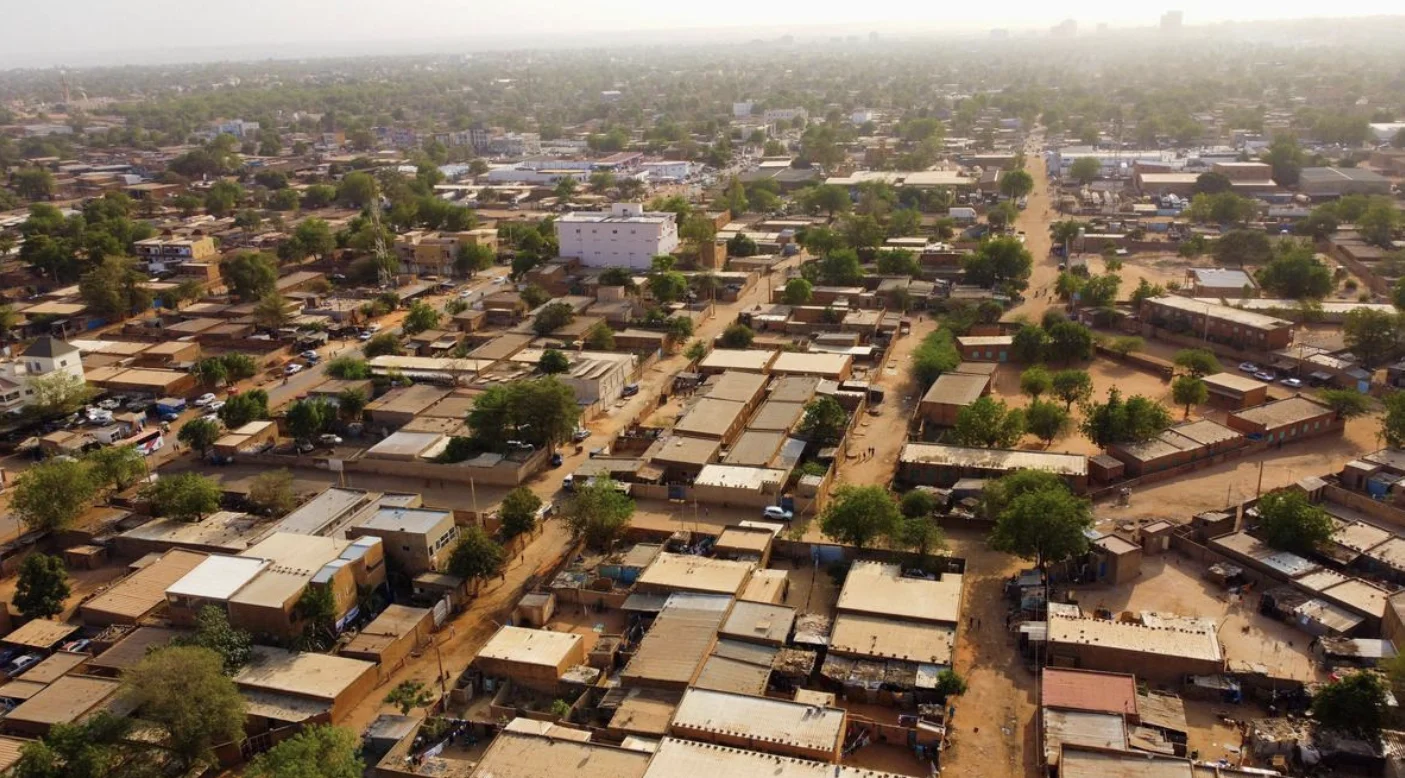
Niger’s capital Niamey was rocked by heavy gunfire and explosions early Saturday, with shots reported around the city’s international airport and near the presidential palace.
The incident initially had an unclear cause, but later reports indicated that a group of soldiers may have attempted a mutiny and targeted several strategic locations in the capital.
Security forces were deployed to regain control as the military government faced another serious security challenge.
Airport and Presidential Palace Targeted
Witnesses reported sustained gunfire near Diori Hamani International Airport and the presidential palace.
The airport complex also contains Base 101, a major military installation that was reportedly targeted during the confrontation.
A witness described heavy and continuing exchanges of fire near the presidential palace, while further shooting was reported around the airport in the early morning hours.
Possible Military Mutiny
Later reports suggested that the violence may have been linked to an attempted mutiny by soldiers.
Several sources said mutinous troops targeted strategic sites in the capital, including the airport and areas around the presidency.
Earlier security reports had described the attackers as “terrorists”, meaning that the exact nature of the incident was not immediately clear.
The conflicting early accounts underline how uncertain the situation was during the initial hours of the confrontation.
Security Forces Move In
Niger’s security forces responded to the attacks and launched operations to regain control of strategic locations.
Defence Minister General Salifou Mody said loyalist forces were working to restore order.
A security source said some attackers had been neutralised while others fled the area.
However, reports indicated that the situation around Base 101 remained fluid for some time, with security forces continuing operations.
State Broadcasters Temporarily Disrupted
The violence also affected Niger’s state broadcasting infrastructure.
State television and radio were reportedly offline for a period during the unrest, although the government issued messages urging calm and said security forces were responding to the situation.
The disruption added to concerns about the seriousness of the attacks on strategic locations in the capital.
Niger Has Been Under Military Rule Since 2023
Niger has been ruled by a military government since July 2023, when a coup removed President Mohamed Bazoum and brought General Abdourahamane Tiani to power.
The junta initially promised to improve security in the country, which has faced years of attacks by jihadist groups.
Since taking power, the government has also moved away from traditional Western partners and strengthened relations with Russia.
Persistent Jihadist Threat
Niger remains at the centre of a broader security crisis in Africa’s Sahel region.
Armed groups linked to al-Qaeda and Islamic State continue to operate in Niger, Mali and Burkina Faso.
Despite promises by military governments in the three countries to improve security, deadly attacks have continued.
Niamey’s airport has itself been targeted in previous attacks this year, making the latest violence particularly significant.
New Challenge for Tiani Government
The latest incident represents another potential challenge to General Tiani’s government.
If the violence is confirmed to have been an internal military mutiny, it could indicate growing dissatisfaction within parts of the armed forces.
Nigerian security forces have suffered heavy losses while fighting jihadist groups, and persistent insecurity has remained one of the government's biggest challenges.
Niger’s Changing Foreign Policy
Since the 2023 coup, Niger has significantly changed its foreign policy.
The country has reduced its cooperation with Western governments, strengthened relations with Russia and joined Mali and Burkina Faso in the Alliance of Sahel States (AES).
The three countries have also broken away from the regional ECOWAS framework.
These changes have made Niger an increasingly important player in the geopolitical competition surrounding the Sahel.
Uranium Sector Adds to Tensions
Niger is an important producer of uranium and also has significant oil and gold resources.
The military government has been tightening state control over the uranium industry after disputes with foreign mining companies.
Recently, uranium permits previously associated with French company Orano and Canadian miner GoviEx were reportedly reassigned to state-backed companies.
The developments have further strained Niger’s relations with some Western partners.
Situation Remains Under Watch
The government has said that security forces are working to restore order, but the full details of the incident remain unclear.
Authorities have not immediately disclosed the number of attackers, their demands or the precise military units involved.
Some reports indicated that fighting around Base 101 continued after the initial clashes, while government officials maintained that the situation was being brought under control.
Regional Significance
The latest violence comes against the backdrop of wider instability across the Sahel.
Military governments in Niger, Mali and Burkina Faso are simultaneously dealing with jihadist insurgencies, political tensions and changing alliances.
Another attempted military uprising in Niger could have consequences beyond the capital, particularly if it exposes divisions within the security establishment.
Conclusion
The gunfire and explosions reported across Niamey, including near the international airport and presidential palace, have raised fresh concerns about Niger’s political and security stability.
While initial reports were uncertain about the nature of the incident, subsequent accounts pointed to an attempted military mutiny targeting strategic sites. Loyalist security forces moved to regain control, while the government urged people to remain calm.
The episode comes three years after General Abdourahamane Tiani seized power in a coup and promised to improve security. With jihadist attacks continuing and tensions within the military potentially growing, the latest incident could become an important test for Niger’s military government.