





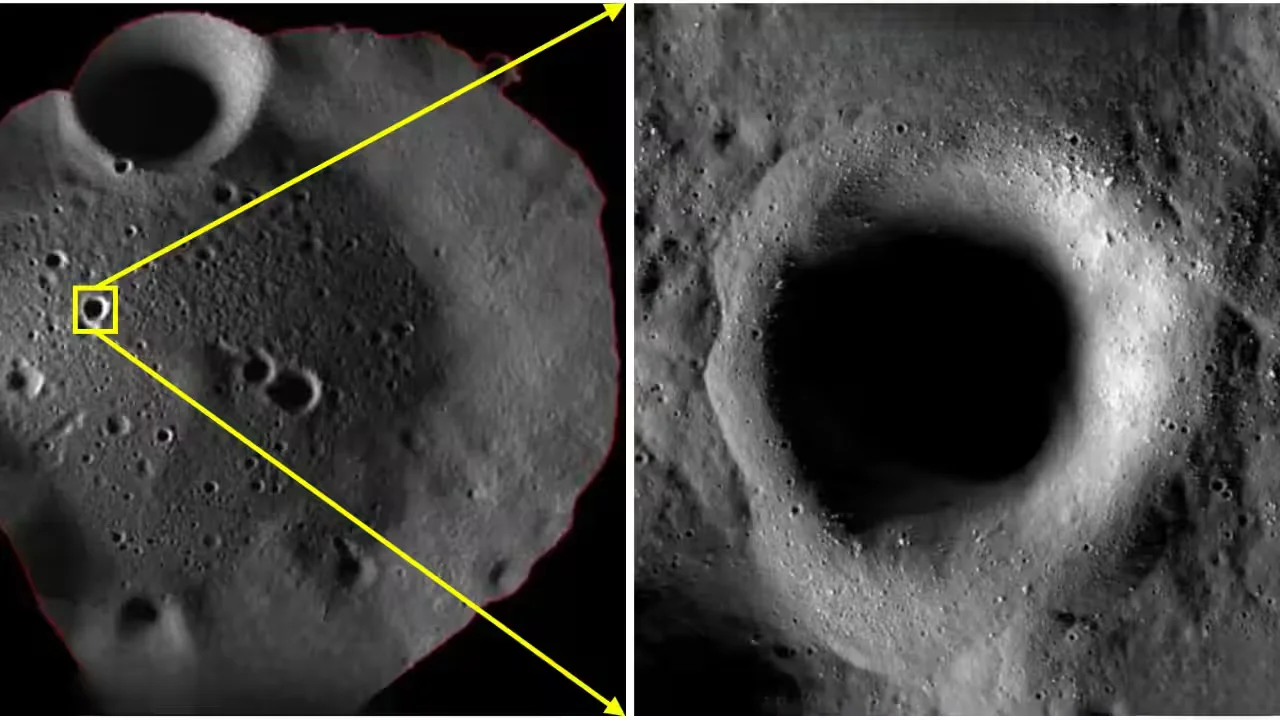
ISRO has achieved another major milestone in lunar exploration. Scientists analysing Chandrayaan-2 orbiter data have found strong evidence of subsurface water-ice beneath craters near the Moon’s south pole. Researchers from the Physical Research Laboratory (PRL), Ahmedabad used the orbiter’s Dual Frequency Synthetic Aperture Radar (DFSAR) to identify the ice deposits.
The study revealed that ultra-cold regions inside permanently shadowed craters, where temperatures drop to nearly -248°C, may preserve billions of years old ice beneath the lunar surface. The discovery is expected to play a crucial role in future Moon missions and long-term human exploration plans.