


Former Chief of Defence Staff General Anil Chauhan has confirmed that an Indian munition hit the Kirana Hills area in Pakistan during Operation Sindoor, while making clear that the location was not deliberately selected as a target.
Speaking at an event at the Vivekananda Centre in New Delhi, Chauhan explained that Indian forces had deployed loitering munitions in the Sargodha area to search for radar installations.
Kirana Hills is located around 10 kilometres north of Sargodha and has long been associated with Pakistan's strategic and nuclear infrastructure. This connection had led to speculation over whether the area was deliberately attacked during the military operation.
According to Chauhan, that was not the case.
He said the Indian loitering munition was searching for radar targets in and around Sargodha. The weapon had a limited operational lifespan and could remain in the area for only a certain period while looking for a target.
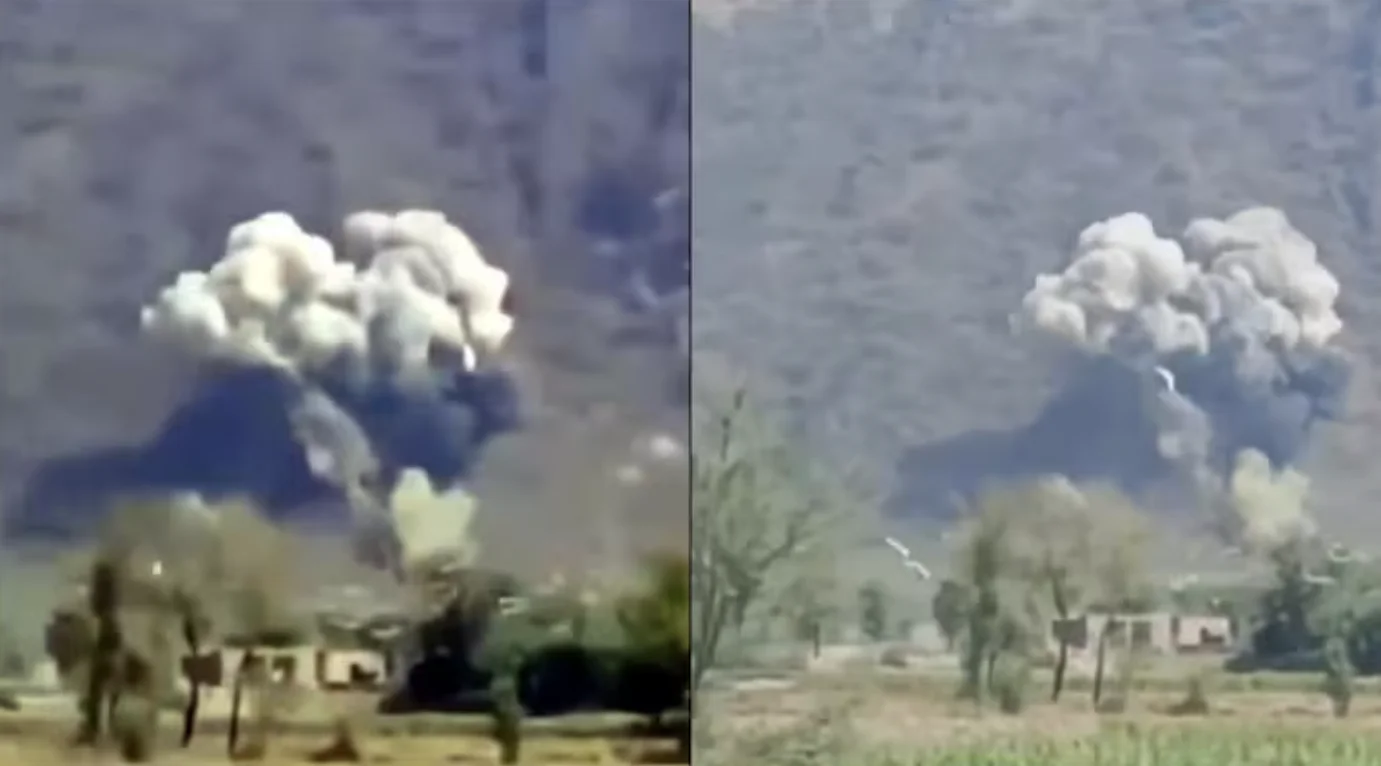
When the munition failed to locate the intended radar target within that period, it eventually ran out of fuel and struck one of the hills in the Kirana Hills area.
The explanation provides additional context to earlier statements by Indian Air Force officials that Kirana Hills had not been deliberately targeted.
Chauhan referred to Air Marshal AK Bharti, who served as the Indian Air Force's Director General of Air Operations during Operation Sindoor, and said Bharti had correctly clarified that Kirana Hills was not selected as an intended target.
The issue had attracted considerable attention because of the strategic importance associated with Kirana Hills. Any deliberate strike on an area linked to Pakistan's nuclear infrastructure could have carried significant implications amid the tensions between India and Pakistan.
Chauhan's account instead suggests that the impact was connected to a wider operation against radar systems around Sargodha.
Loitering munitions are designed to remain in an area while searching for a suitable target. Their ability to stay airborne for a limited period allows them to wait for a target to appear or be identified.
But that capability also comes with operational constraints. If a target cannot be located within the weapon's available endurance, the munition eventually has to terminate its mission.
Chauhan's explanation indicates that this was what happened near Kirana Hills.
The former CDS also provided details about another planned mission during Operation Sindoor involving Skardu in Pakistan-occupied Kashmir.
He said the Indian Air Force had received approval to strike a target at Skardu. However, deteriorating weather conditions made the mission impractical, forcing the operation to be changed.
According to Chauhan, another target was subsequently selected at Bholari.
The Indian Air Force later carried out a strike on a hangar at Bholari. Images of the operation became some of the most widely circulated visuals associated with the May 10 air campaign.
The comments provide a broader picture of how target selection during Operation Sindoor was influenced not only by intelligence and operational priorities but also by conditions on the ground and in the air.
The Kirana Hills episode is particularly significant because it had generated questions over whether India had deliberately attacked an area connected with Pakistan's nuclear infrastructure.
Chauhan's latest explanation offers a different account: the weapon was searching for radar installations around Sargodha, did not find its intended target within its operational window and ultimately struck the hills after exhausting its fuel.
The clarification also highlights the role of loitering weapons in modern military operations. Such systems can search for targets rather than simply flying to a predetermined location, but their effectiveness depends on factors including sensor performance, target availability and operational endurance.
Further official disclosures about Operation Sindoor could provide additional information about the missions conducted, the weapons used and the targets selected during the operation.
For now, Chauhan's account establishes the key point that Kirana Hills was hit during the operation, but according to his explanation, it was not an intentional strike on the area's strategic or nuclear facilities.