


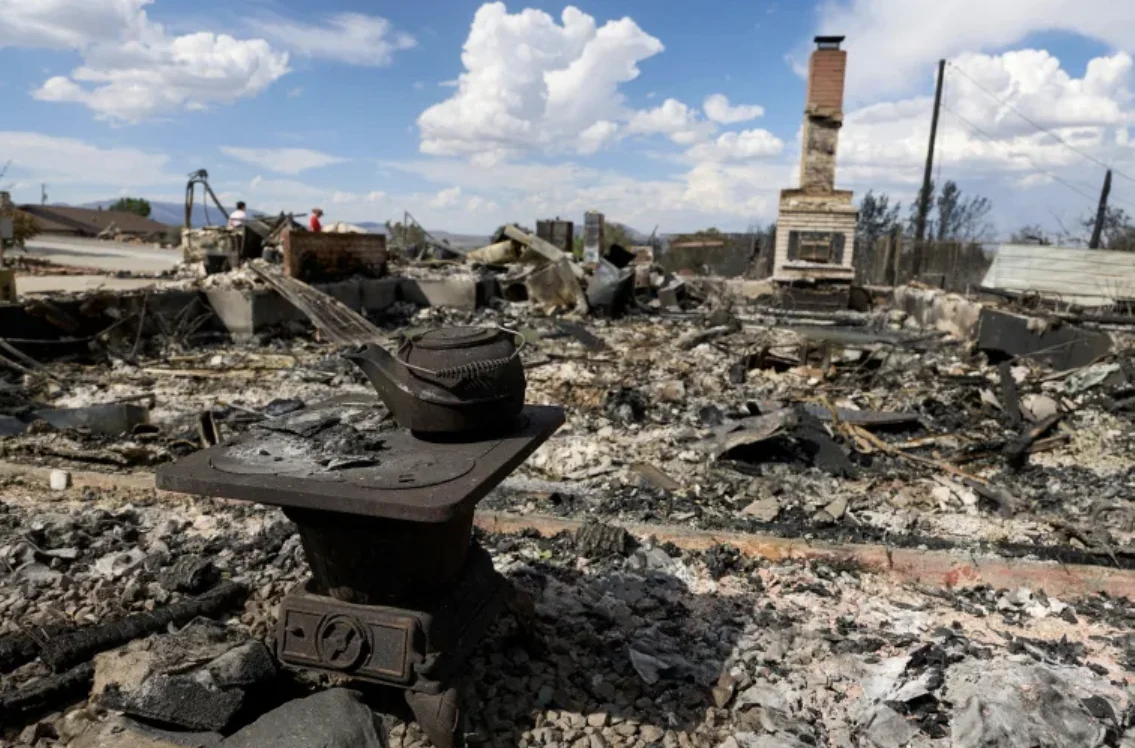
A major wildfire in Nevada continues to threaten communities as firefighters work to bring the blaze under control. The fire is currently only about 27 percent contained, while thousands of residents remain displaced from their homes.
Authorities have ordered evacuations in areas considered vulnerable to the advancing flames. Families forced to leave their homes are staying at temporary shelters, with relatives or in other safe locations until officials determine that it is safe to return.
Fire crews are working around the clock to prevent the wildfire from spreading further. However, weather conditions have made the operation more difficult.
Strong winds can quickly change the direction of a wildfire and push flames into previously unaffected areas. Dry vegetation is also providing fuel, allowing the fire to spread rapidly across open land.
Emergency officials have been working to establish containment lines around the active sections of the fire. These lines are designed to slow the advance of the flames and prevent them from reaching additional communities.
Ground crews are being supported by aircraft and other firefighting resources where necessary. Aerial operations can help firefighters reach difficult areas and reduce the intensity of active fire fronts.
Despite the progress made so far, the fact that only 27 percent of the wildfire has been contained means the situation remains fluid. Firefighters are closely monitoring changes in wind direction, temperature and humidity as they plan their next operations.
Residents who have been ordered to evacuate have been told not to return until authorities issue an all-clear. Officials are also urging people in nearby communities to remain alert and follow emergency notifications.
The evacuation process has affected thousands of residents. For many families, the uncertainty is compounded by concerns about their homes, belongings, pets and local businesses.
Authorities are also trying to keep roads clear for emergency vehicles. Residents have been encouraged to avoid unnecessary travel in affected areas so that firefighters, ambulances and other emergency teams can move freely.
Smoke from the wildfire is another concern. Air quality can deteriorate significantly when large areas of vegetation burn, potentially affecting communities far from the main fire zone.
Officials may advise residents to limit outdoor activity when smoke levels become elevated. People who are particularly sensitive to poor air quality may need to take additional precautions.
The wildfire is also threatening natural habitats. Large fires can destroy vegetation and affect wildlife, forcing animals to move away from their normal habitats.
Once the fire is fully contained, authorities will begin a more detailed assessment of the damage. That process will include evaluating affected homes, infrastructure, vegetation and other property.
For now, the immediate priority remains protecting lives and stopping the fire from spreading. Firefighters will continue working on containment lines while emergency officials monitor conditions across the affected region.
The Nevada wildfire highlights the challenges faced by communities during periods of dry weather and strong winds. Under such conditions, fires can spread quickly and become difficult to control even when significant firefighting resources are deployed.
Thousands of displaced residents are waiting for authorities to determine when they can safely return home. Until then, evacuation orders and emergency measures are expected to remain in place in the most affected areas.