


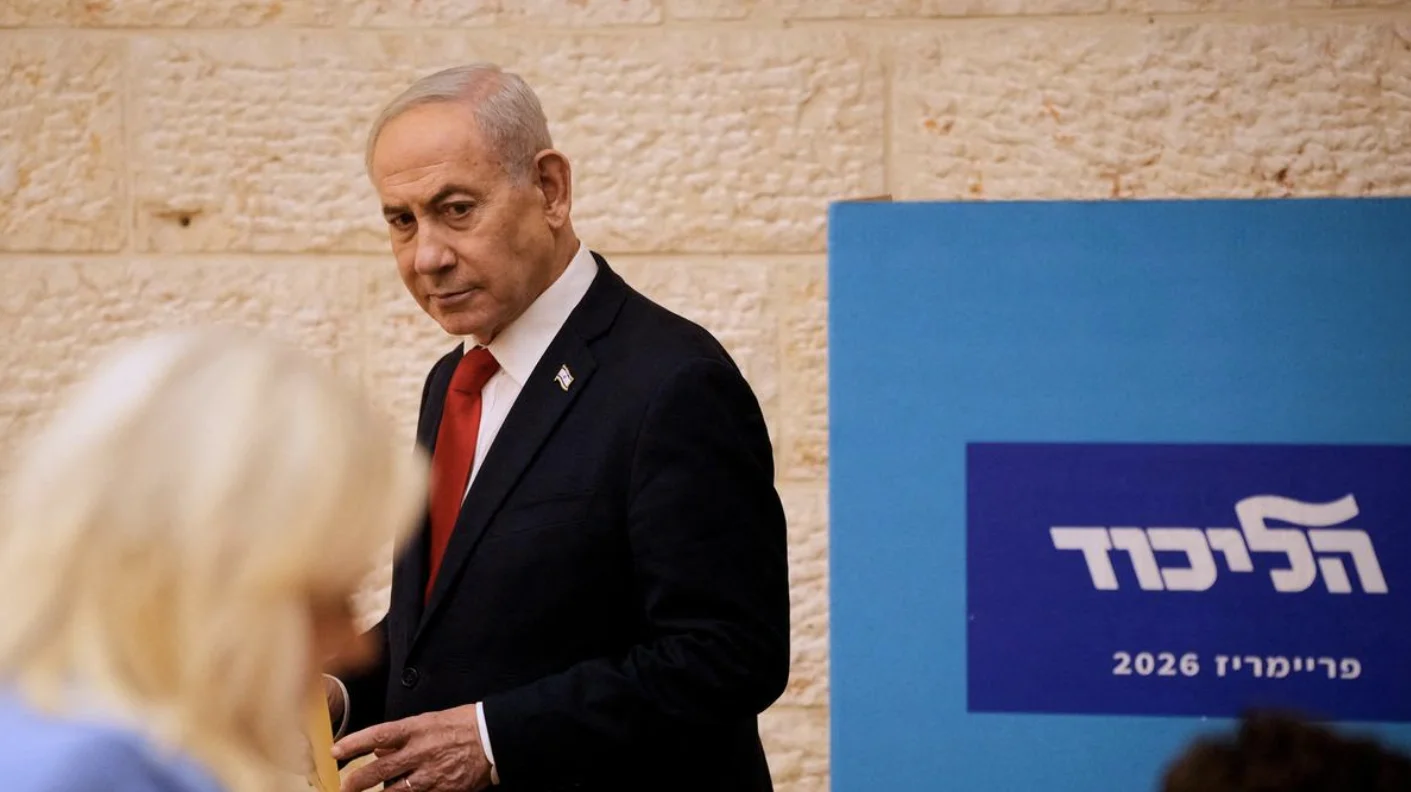
Israeli Prime Minister Benjamin Netanyahu has expressed strong doubts about the possibility of reaching a diplomatic agreement with Iran, saying he does not believe an accord can be reached with the country's current leadership.
Netanyahu said he discussed the possibility of diplomacy with Iran during a recent meeting with US President Donald Trump. However, speaking at an event at an Israeli settlement in the occupied West Bank on Tuesday, he said he remained convinced that an agreement with Iran's rulers was unlikely.
The comments underline Netanyahu's long-standing scepticism about negotiations with Tehran.
He has for years opposed diplomatic arrangements with Iran and was a vocal critic of the 2015 nuclear agreement negotiated under former US President Barack Obama.
Netanyahu had previously been cautious about openly criticising Trump while the US president pursued the possibility of a negotiated settlement with Iran.
His latest remarks, however, make clear that the Israeli prime minister remains deeply opposed to relying on diplomacy alone to resolve the confrontation.
At the same time, Netanyahu strongly endorsed Trump's latest campaign of economic pressure against Iran.
Trump recently announced a new round of measures aimed at putting further pressure on the Iranian economy, describing the campaign as an “economic D-Day”. The measures come after years of sanctions that have already placed significant pressure on Iran's economy.
Netanyahu praised Trump's decision to pursue the economic option and said the US president was taking the approach in a particularly forceful manner.
According to Netanyahu, the strategy goes beyond targeting Iran itself. Washington is also seeking to increase pressure on people, organisations and other entities that assist the Iranian government.
He described the move to tighten restrictions on those supporting Tehran as an important element of the campaign.
The Israeli leader has long argued that Iran poses a major security threat to Israel.
Israel accuses Iran's government of supporting armed groups including Hezbollah and Hamas, both of which are regarded by Israel as major security threats. The relationship between Tehran and these groups has been a central source of tension in the region.
Netanyahu also warned that Israel would respond forcefully if Iran launched another attack.
He said Israel would defend itself and warned that any new Iranian attack could trigger a response much stronger than previous Israeli military actions.
The remarks come at a particularly sensitive time for relations between Iran, Israel and the United States.
The three countries remain caught between military confrontation, economic sanctions and attempts to explore possible diplomatic solutions.
Trump has increased economic pressure on Tehran while showing reluctance to return to a full-scale war, according to reports. The US president has faced pressure over the economic consequences of the conflict, including rising energy prices.
Netanyahu, meanwhile, appears to favour sustained pressure on Iran rather than a return to negotiations without significant concessions from Tehran.
His latest comments suggest that Israel sees economic measures as an important alternative to immediate large-scale military action.
The situation remains complicated by the lack of trust between the parties.
Any future diplomatic agreement would likely have to address multiple issues, including Iran's nuclear programme, sanctions, regional security and Tehran's relationships with armed groups in the region.
Reaching agreement on those issues would be difficult even under normal circumstances. The current military and political tensions make the prospect of negotiations even more uncertain.
Iran has also objected to the expansion of US economic pressure.
Tehran has warned against countries supporting Washington's sanctions and has criticised the use of unilateral economic measures as part of the wider confrontation.
The dispute therefore extends beyond the direct relationship between Washington and Tehran.
Countries trading with Iran or maintaining economic ties with the country could also face pressure if the United States expands sanctions or targets organisations that continue doing business with Tehran.
For Netanyahu, however, the immediate priority remains limiting what he considers the Iranian threat to Israel.
His remarks show that he sees little value in relying on diplomacy with the current Iranian leadership and instead supports continued economic and, if necessary, military pressure.
The comments also demonstrate the close alignment between Netanyahu and Trump on increasing pressure on Tehran, even though the two leaders may differ on the extent to which military action should be used.
For now, there is no clear indication that a new diplomatic breakthrough between Iran and the United States is imminent.
Netanyahu's position is unequivocal: he does not believe an agreement can be reached with Iran's current leadership. At the same time, he is supporting Trump's latest attempt to weaken Tehran economically rather than immediately returning to a full-scale military confrontation.
Whether Trump's economic campaign can eventually create conditions for negotiations remains uncertain.
For the moment, however, the latest statements from Jerusalem indicate that Israel is preparing for continued pressure on Iran rather than expecting a quick diplomatic settlement.