A devastating fire at a government hospital in Islamabad has killed at least 14 newborn babies, turning what should have been a place of care and recovery into the scene of one of Pakistan's most tragic hospital disasters in recent years. Local media, citing hospital sources, put the death toll at 15.
The fire broke out on Wednesday morning inside the nursery of the Mother and Child Centre at Pakistan Institute of Medical Sciences (PIMS), one of the country's major government-run medical facilities.
According to reports, the blaze started shortly before 7am local time on the third floor of the building. Emergency teams were called to the hospital and eventually brought the fire under control.
The nursery housed newborn babies who were receiving medical treatment and care. Because of their fragile condition, evacuating the infants during the fire was particularly difficult.
Only one infant was reported to have been rescued, according to local broadcaster Geo TV.
The deaths have triggered shock across Pakistan and prompted an immediate response from the country's political leadership.
Prime Minister Shehbaz Sharif expressed his condolences to the families who lost their children and ordered authorities to launch an immediate investigation into the circumstances surrounding the fire.
He also said that those found responsible would face the strictest action.
The exact cause of the fire has not yet been officially established.
However, Geo TV, citing rescue sources, reported that the blaze may have started because of a short circuit involving a malfunctioning air-conditioning unit. Investigators will need to establish whether an electrical fault was responsible and whether other safety failures contributed to the rapid spread of the fire.
The tragedy has renewed concerns about fire safety in Pakistan's public buildings.
Building fires are relatively common in the country, with safety regulations and building codes often criticised for weak enforcement.
Earlier this year, at least 65 people were killed when a major fire swept through a crowded shopping complex in Karachi.
Wednesday's incident is particularly distressing because it occurred inside a hospital nursery, where the victims were newborn children who depended entirely on medical staff and caregivers.
The circumstances of the fire also raise questions about the hospital's emergency preparedness.
Investigators are expected to examine the condition of the electrical infrastructure, air-conditioning equipment, fire alarms, emergency exits and evacuation procedures.
The response of hospital staff and emergency services will also be assessed as part of the investigation.
For a neonatal unit, emergency evacuation presents unique challenges. Newborns may require ventilators, oxygen, incubators or other medical equipment, making rapid movement much more complicated than evacuating healthy adults.
Hospitals therefore require specially designed emergency procedures to ensure that vulnerable patients can be moved quickly when a fire or other disaster occurs.
The PIMS hospital is a major public medical institution that serves large numbers of patients. Like many public hospitals in Pakistan, it operates within a system that has faced concerns over funding shortages, overcrowding and management problems.
The latest tragedy has brought those wider problems back into focus.
While the immediate priority is to determine what caused the fire, authorities will also face pressure to establish whether the hospital's safety systems were functioning properly.
Questions are likely to include whether the fire detection system provided sufficient warning, whether emergency exits were accessible, whether firefighting equipment was operational and whether staff had received adequate training for a neonatal emergency.
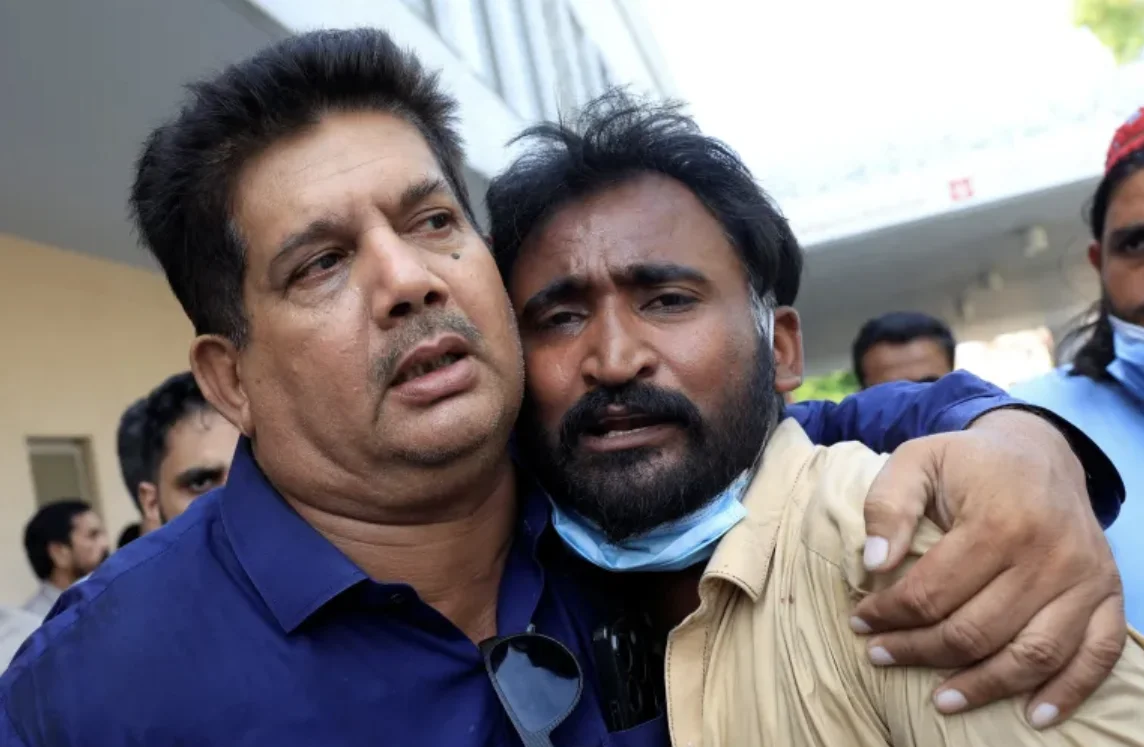
Families of the victims are now waiting for answers about how the tragedy occurred and whether it could have been prevented.
The government has promised a prompt investigation, but the findings will be important not only for the affected families but also for hospitals across Pakistan.
If investigators identify failures in electrical systems, fire protection or emergency procedures, authorities could face calls to conduct safety inspections at other medical facilities.
The incident also highlights the particular risks faced by newborn patients.
Unlike older children or adults, babies in neonatal units cannot evacuate themselves. Their survival during an emergency depends entirely on the readiness of medical personnel and the availability of suitable evacuation equipment.
This makes fire prevention especially important in such facilities.
Although the initial reports point towards a possible electrical fault, officials have yet to establish the definitive cause. It would therefore be premature to attribute the deaths to any single failure before the investigation is completed.
There is also a discrepancy in the reported death toll.
Pakistan's prime minister's statement referred to 14 newborn deaths, while Geo TV, citing hospital sources, reported that 15 babies had died.
Authorities are expected to provide further clarification as the investigation progresses.
For now, the tragedy has left families grieving and raised serious questions about safety standards inside Pakistan's public healthcare system.
The immediate task for investigators will be to establish exactly how the fire started, how quickly it spread and why so few babies could be rescued.
Beyond the investigation, the incident is likely to fuel renewed calls for stronger fire-safety enforcement in hospitals and other public buildings across Pakistan.
The deaths of the newborns have turned the incident into one of the country's most serious recent hospital fires, and the investigation ordered by Prime Minister Shehbaz Sharif will determine whether preventable safety failures contributed to the disaster.