



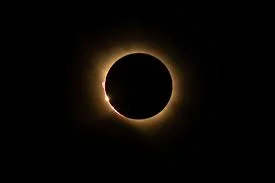
August 12, 2026, offered a spectacular experience for skywatchers and astronomy enthusiasts as a rare celestial event unfolded across several parts of the world. A total solar eclipse was visible in regions including Spain, Iceland, Greenland and northern Russia.
The eclipse drew large crowds, particularly in Europe, as it marked the first total solar eclipse visible across mainland Europe since 1999. Thousands of people gathered at open spaces and specially designated viewing locations to witness the rare phenomenon.
A solar eclipse occurs when the Sun, Moon and Earth align closely in a straight line. During a total solar eclipse, the Moon moves between the Earth and the Sun, completely blocking sunlight in certain areas. As the Moon’s shadow falls across the Earth, parts of the affected regions experience darkness in the middle of the day.
Although totality lasted less than two minutes at its longest, the brief spectacle created a memorable experience for skywatchers.
The eclipse was visible across several parts of Spain, attracting spectators to viewing centers and open public spaces. People in Madrid, Zaragoza, Bilbao, Valencia and Asturias gathered to witness the celestial spectacle. In Madrid, the eclipse reached its peak at around 6:32 p.m., while totality lasted from several dozen seconds to nearly two minutes in different locations.