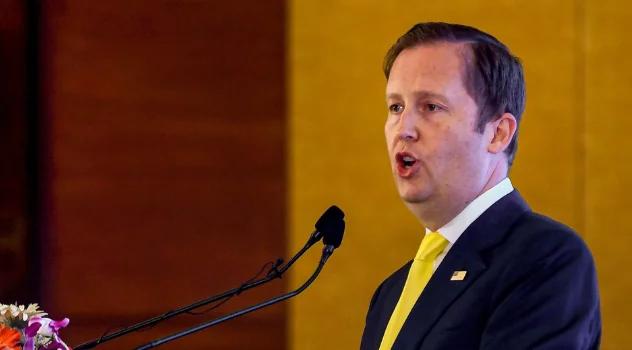



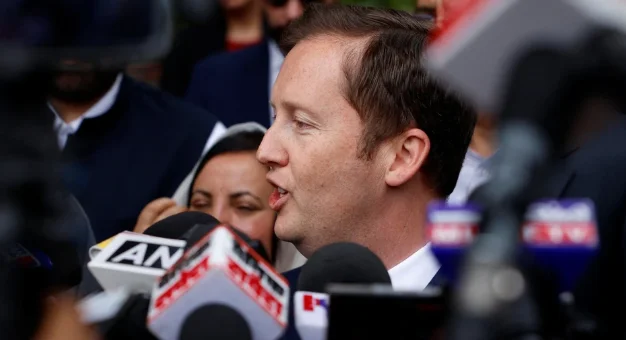
The Ministry of External Affairs (MEA) has responded to US Ambassador to India Sergio Gor’s remarks about an alleged request from the Indian side to avoid questions during Prime Minister Narendra Modi’s meeting with US President Donald Trump at the G7 Summit in France.
MEA sources said discussions regarding arrangements for a leader’s public appearance are “normal practice” before any VVIP visit. They said India had communicated its standard protocol for such engagements to the US side.
What Did Sergio Gor Say?
According to Gor, Indian officials had conveyed a preference for having the media present but not allowing questions during the public interaction between Modi and Trump.
Gor said he passed the message to Trump before the meeting. However, once the leaders appeared before the media, Trump invited journalists to ask questions, turning the interaction into a much longer press engagement.
MEA Calls It Standard Protocol
Government sources clarified that discussions about how leaders interact with the media are part of the routine preparations for VVIP visits.
The sources said the Indian side was simply communicating its standard practice for such events and that such logistical and procedural discussions should not be viewed as unusual.
Why Did India Take a Cautious Approach?
MEA sources also pointed to the unpredictable nature of interactions involving President Trump. They referred to his interactions with other foreign leaders and said Indian officials preferred a cautious approach during the meeting.
The Modi-Trump meeting took place on the sidelines of the G7 Summit in France on June 17, where the two leaders discussed several bilateral and international issues.
Political Debate Intensifies
Gor’s comments have triggered a political debate in India, with opposition voices questioning why the Indian side allegedly wanted to avoid questions from journalists.
The government, however, has maintained that its communication was part of normal VVIP visit arrangements rather than an attempt to restrict media interaction.