US-China AI Rivalry Enters a New Phase
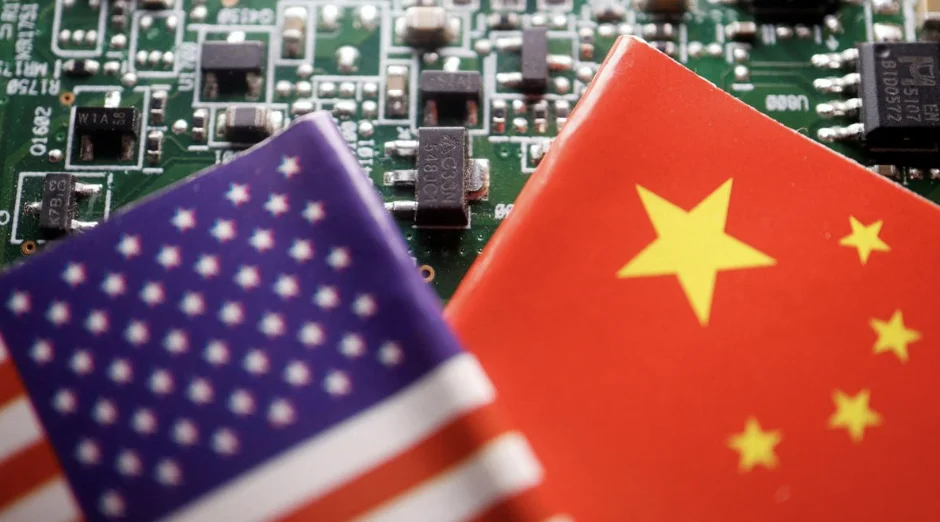
The competition between the United States and China for leadership in artificial intelligence is moving beyond technology companies and into international diplomacy.
Washington is preparing to tell dozens of countries involved in AI cooperation that they may have to choose between the US-led technology ecosystem and China's rival framework.
The message reflects growing US concerns that countries cannot maintain close cooperation with both sides while remaining fully integrated into Washington's strategic AI network.
Countries Could Be Asked to Pick One Side
The United States is expected to warn partner countries that membership in competing AI frameworks could be incompatible.
For Washington, artificial intelligence is no longer simply a commercial technology.
AI is increasingly linked to national security, military capabilities, economic competitiveness, advanced computing and control over critical technology supply chains.
As a result, the countries participating in America's AI partnerships are becoming strategically important.
What Is Pax Silica?
The US-led Pax Silica initiative was created to strengthen supply chains supporting artificial intelligence and advanced technologies.
Its focus includes semiconductors, critical minerals and other resources required to build and operate sophisticated AI systems.
Countries including Japan, Australia, South Korea and Kazakhstan have been associated with the initiative.
China Is Building Its Own AI Network
China is simultaneously expanding its international cooperation in artificial intelligence.
Beijing has established the World Artificial Intelligence Cooperation Organization as part of its effort to build a broader international AI network.
The competing initiatives reflect a growing divide between the technology ecosystems being developed by Washington and Beijing.
Some countries are attempting to maintain relationships with both sides, but Washington increasingly views that approach as a potential strategic risk.
Why Kazakhstan Has Become Important
Kazakhstan is one of the countries whose position has attracted attention because of its links to both AI initiatives.
Its participation in the US-backed framework while also engaging with China's rival organisation illustrates the dilemma facing countries that want to maintain technology and economic relationships with both major powers.
Washington's latest approach appears designed to discourage other countries from following the same path.
Why AI Has Become a Geopolitical Issue
Artificial intelligence has developed far beyond consumer chatbots.
Advanced AI systems are increasingly being used in defence, cybersecurity, financial services, healthcare, industrial automation and scientific research.
Control over AI models, computing infrastructure, data and semiconductor technology could therefore influence economic and military power for decades.
This is why the US-China AI competition is increasingly being treated as a strategic rivalry.
Semiconductors Are at the Centre
Advanced AI systems require enormous computing power, which in turn depends on sophisticated semiconductor chips.
The United States has already imposed various restrictions on China's access to advanced semiconductor technology, while Beijing is investing heavily in developing domestic alternatives.
The AI race is therefore also a competition over chips, critical minerals, data centres, electricity, computing capacity and technical talent.
China's Rapid AI Progress
China has made rapid progress in artificial intelligence, increasing pressure on the United States to strengthen its technology partnerships.
Chinese companies have developed increasingly competitive AI models, including systems designed to offer strong performance at relatively low costs.
The growth of open-weight AI models has also raised concerns in Washington about China's ability to expand its technological influence internationally.
What Washington Wants
The United States wants to strengthen its own AI ecosystem while limiting China's access to critical resources and advanced technologies.
By bringing partner countries into a common network covering supply chains, technology standards and security policies, Washington hopes to create a stronger strategic advantage over Beijing.
The latest warning represents an attempt to turn technological cooperation into a more clearly defined geopolitical alignment.
Why This Is a Difficult Choice for Other Countries
Many countries have important economic relationships with both the United States and China.
The US remains a major source of advanced technology, investment and research partnerships, while China is a critical trading partner for much of the world.
Choosing one side could therefore create economic and diplomatic complications.
Countries that want to trade with China while relying on US technology may increasingly find themselves under pressure to clarify their strategic position.
Potential Impact on the Global AI Industry
The growing rivalry could eventually divide the global AI ecosystem into two major technology networks.
One could be centred around US companies, advanced semiconductor suppliers, cloud infrastructure and research institutions.
The other could develop around Chinese AI companies, domestic semiconductor technology and Beijing-backed international partnerships.
Such fragmentation could affect AI standards, technology access, chip supplies, data policies and the cost of advanced computing.
What It Could Mean for India
Countries such as India may face difficult choices as the US-China AI rivalry intensifies.
India has strong technology, investment and strategic relationships with the United States, while China remains a major economic and regional power.
For New Delhi, the situation could increase the importance of developing domestic capabilities in semiconductors, AI infrastructure, data centres and research.
A balanced approach could also become more difficult if Washington increasingly links technology cooperation to geopolitical alignment.
What Happens Next?
The key question will be how the United States formally communicates its expectations and how partner countries respond.
China is also likely to continue expanding its own international AI partnerships.
The latest development shows that the global AI race is no longer simply about which companies build the best models.
It is increasingly becoming a contest over technology, supply chains, strategic alliances and global influence.