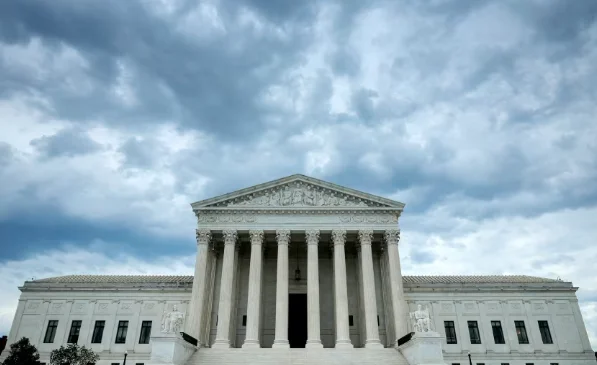
The US Supreme Court has cleared the way for President Donald Trump’s administration to move forward with parts of an executive order aimed at restricting mail-in voting ahead of the November 2026 midterm elections.
In a 6-3 decision, the court lifted a lower-court injunction that had blocked the order. However, the justices did not rule on the constitutionality of Trump’s election order. Instead, the decision focused on whether the states challenging the policy had legal standing to bring the case.
What Does Trump’s Order Require?
Trump’s executive order, issued in March, directs federal agencies to create lists of eligible voters and requires the US Postal Service (USPS) to deliver mail ballots only to voters appearing on those lists.
The administration has argued that the measures are intended to strengthen election security and prevent voting by ineligible individuals.
Legal Battle Not Over
Monday’s Supreme Court decision does not mean all of Trump’s proposed restrictions can immediately take effect.
A separate court injunction remains in place, potentially blocking an important part of the administration’s plan. Additional lawsuits are also expected as states and voting-rights groups continue challenging the order.
States Raise Concerns
A coalition of 23 states and the District of Columbia challenged Trump’s order, arguing that the federal government is overstepping its authority over elections.
Critics say election administration is traditionally handled by individual states and warn that changing mail-ballot procedures shortly before the midterms could create confusion for voters and election officials.
Midterm Elections Add Urgency
The timing of the ruling is particularly significant because states are preparing to distribute ballots for the November elections.
North Carolina is scheduled to begin sending ballots to overseas and military voters on September 4, with other states expected to follow soon. This leaves election officials with limited time to make major changes to mail-ballot procedures.
Potential Impact on Voters
Voting-rights organizations have warned that sudden changes could make it harder for some voters to participate, particularly those who rely heavily on mail voting.
Supporters of Trump’s policy argue that stricter verification requirements could improve election security and ensure that ballots are delivered only to eligible voters.