


India Takes a New Step Towards Grassland Conservation
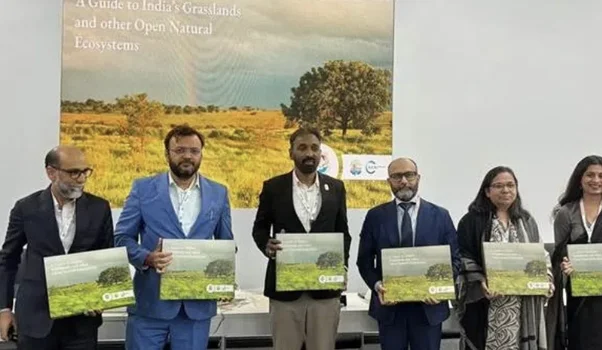
India has taken a significant step towards recognising and conserving grasslands and other open natural ecosystems.
The country has introduced its first dedicated guide to Grasslands and Open Natural Ecosystems, highlighting the ecological importance of landscapes that have often been treated as vacant or wasteland.
The new guide is expected to support more informed conservation, land-use planning and ecosystem management.
What Are Open Natural Ecosystems?
Open Natural Ecosystems are naturally occurring landscapes where trees are relatively sparse and grasses, shrubs and other low-growing vegetation dominate.
They include grasslands, savannas, scrublands, dry landscapes and certain rocky or semi-arid ecosystems.
Each ecosystem has its own combination of climate, soil, vegetation and wildlife.
Moving Beyond the 'Wasteland' Label
One of the biggest challenges facing open natural ecosystems is their classification as wasteland.
When such landscapes are viewed as unused land, they can become vulnerable to conversion for infrastructure, industry, plantations or other development projects.
However, the absence of dense tree cover does not mean that an ecosystem lacks ecological value.
The new guide seeks to encourage a more accurate understanding of these landscapes.
Important Habitats for Biodiversity
Grasslands support a wide variety of species, including birds, mammals, reptiles and insects.
Several species have evolved specifically to survive in open landscapes and depend on grasslands for food, shelter and breeding.
The loss or fragmentation of these habitats can therefore have serious consequences for wildlife.
Protecting Threatened Species
India's open ecosystems are home to several threatened and specialised species.
Grasslands and dry open habitats are particularly important for species such as the Great Indian Bustard.
Recognising these landscapes as valuable ecosystems can help conservation planners protect important habitats and reduce further fragmentation.
Role in Carbon Storage
Grasslands are not simply areas covered by green vegetation.
Their soils can store significant amounts of carbon, with extensive root systems contributing to carbon accumulation below ground.
Protecting healthy grasslands can therefore contribute to climate mitigation efforts while preserving biodiversity.
Supporting Soil Conservation
Grass and other native vegetation help hold soil together through their root systems.
This can reduce erosion caused by wind and water.
When natural vegetation is removed, soil degradation can accelerate, particularly in dry and semi-arid regions.
Conserving grasslands can therefore contribute to long-term soil health.
Importance for Water Systems
Open natural ecosystems can also influence water movement and soil moisture.
Natural soils allow rainfall to infiltrate the ground and can contribute to groundwater recharge.
When landscapes are heavily modified, water runoff can increase and natural water cycles can be disrupted.
Supporting Rural Communities
Many rural communities depend directly or indirectly on grasslands and other open ecosystems.
These landscapes can provide grazing resources, medicinal plants and other natural products.
Conservation policies therefore need to take local livelihoods and traditional ecological knowledge into account.
Implications for Land-Use Planning
The new guide could have important implications for infrastructure and land-use decisions.
Before allocating land for roads, industries, renewable-energy projects or urban expansion, planners can assess whether an area is part of an ecologically important open natural ecosystem.
Recognising the ecological value of such areas can lead to more informed decisions about development and conservation.
Restoration Requires a Different Approach
Restoring a grassland does not necessarily mean planting trees.
Grasslands have their own ecological processes and species composition.
Effective restoration may require the use of native grasses, appropriate grazing management, consideration of natural fire regimes and protection of local soil and water conditions.
Value for Policymakers
The guide can provide a useful reference for government departments, forest officials, conservation organisations, researchers and land-use planners.
Identifying and mapping open natural ecosystems can help authorities assess their ecological value and develop targeted conservation strategies.
Importance in a Changing Climate
Climate change is increasing the importance of protecting resilient natural ecosystems.
Grasslands provide multiple ecosystem services, including biodiversity protection, carbon storage, soil conservation and support for water systems.
Maintaining these ecosystems can therefore contribute to both climate mitigation and adaptation efforts.
Challenges Ahead
Launching a guide is only the first step.
Implementing its recommendations on the ground will require coordination between central and state governments, local authorities, conservation groups and communities.
Development pressure, land conversion, infrastructure projects, agricultural expansion and other competing demands can continue to threaten open natural ecosystems.
Need for Better Recognition
One of the most important outcomes of the new guide could be a change in how India's open landscapes are perceived.
Instead of considering them empty spaces waiting for development, policymakers and the public can recognise them as functioning ecosystems with measurable ecological and social value.
Conclusion
India's first dedicated guide to grasslands and Open Natural Ecosystems represents an important development in the country's conservation efforts.
Grasslands are not empty or useless landscapes. They are functioning ecosystems that support biodiversity, store carbon, protect soil, influence water systems and contribute to rural livelihoods.
Better identification, scientific management and community participation will be essential if India is to protect these ecosystems and preserve their ecological value for future generations.